
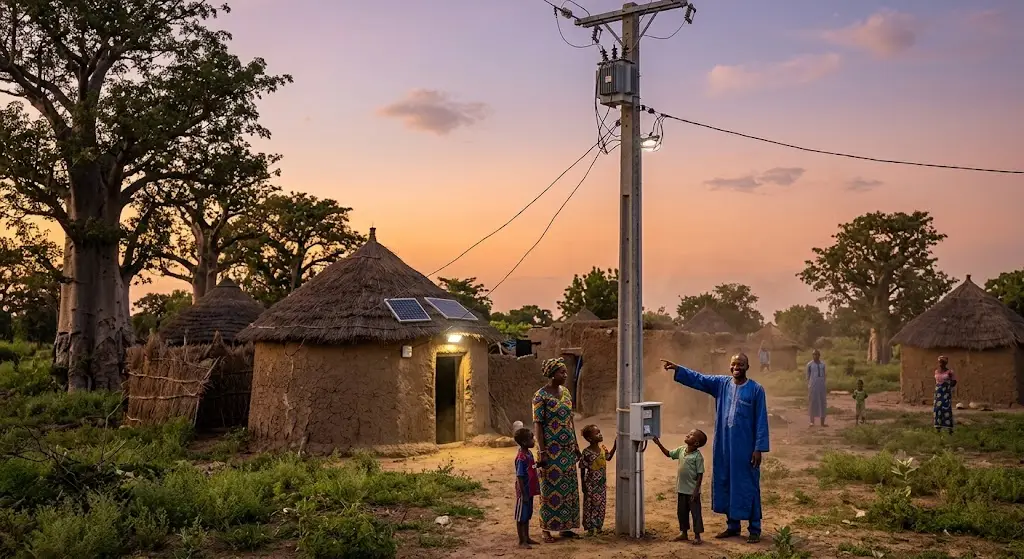
Access to electricity: residual financing needs estimated at 395.8 billion CFA francs
Residual financing needs estimated at 395.8 billion CFA francs for universal access to electricity in Senegal, by 2029, particularly in rural areas with 6,471 localities remaining to be electrified. This is what emerges from data published Monday by the Minister of Energy and Oil.
The State of Senegal, through the Ministry of Energy and Oil and the Ministry of Economy, Finance and Planning, will bring together technical and financial partners, the private sector and civil society on October 6 in Dakar around one objective: achieving universal access to electricity in Senegal.
Five years after the 2021 round table organized around this theme, Senegal has taken decisive steps. The remaining path is now costed, located and budgeted, according to the Ministry of Energy and Oil.
Thus, according to data made public on Monday by the authority, the national rate of access to electricity is currently at 86.2% across the country and for rural areas, it is at 69.8%. During the 2021 round table, the ministry indicates that 237 billion FCFA were mobilized from technical and financial partners (PTF). And today, the residual financing needs are 395.8 billion FCFA, with 6,471 localities remaining to be electrified by 2029.
Continue investments in rural electrification
The objective is now to achieve universal access to electricity by 2029, focusing efforts on areas that are still insufficiently covered. This ambition is based on continued investments in rural electrification and on solutions adapted to the characteristics of the localities to be served,” we read in the document from the Ministry of Energy.
For supervision, it aims to guarantee each citizen, wherever they live, “fair, reliable, sustainable and affordable access” to electricity, while contributing to the reduction of territorial disparities and socio-economic development.
Also read: National program for universal access to electricity: Aser connects 15 villages between Kolda and Sédhiou
It should be noted that this round table, beyond taking stock, will allow stakeholders to present the priority strategies and programs for universal access to electricity, as well as the government’s financing plans for their implementation.
But also to formalize new projects, financing and partnerships, and generate new commitments in favor of universal access to electricity; to launch a reinforced dynamic of engagement with the private sector, by presenting the opportunities and modalities for business participation in the implementation of national priorities.
It will also be an opportunity to accelerate the realization of identified commitments, financing and partnerships, particularly within the framework of the National Energy Compact, by strengthening the mechanisms of governance, coordination and dialogue between stakeholders, and by agreeing on the main milestones for their implementation.
Mariama DIEME
