
TER: connect, open up, develop
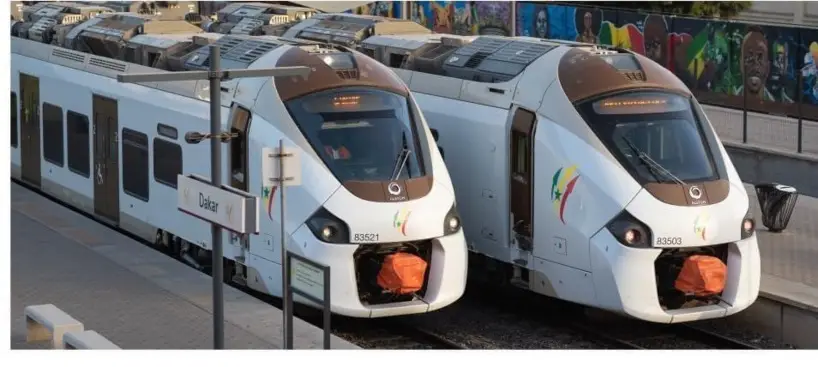
Monday September 28, 2026, the Minister of Land and Air Transport, Serigne Abdoul Ahad Ndiaye, commissioned the second phase of the Regional Express Train, with the opening to the public of the section linking Diamniadio to Blaise Diagne International Airport (AIBD). The TER now directly serves the Diass airport area.
The new section represents approximately 19 kilometers of electrified double-track railway line. It brings the total length of the TER to 55 kilometers between Dakar and the AIBD.
These additional 19 km undoubtedly have a significant economic impact. The TER, through its ability to reduce distances, and therefore time, is gradually contributing to modifying the economic structure of the Senegalese capital.
In an urban area faced with recurring traffic jams, reducing the duration and uncertainty of travel means at the same time increasing the rate of useful travel, for the benefit of populations in the periphery. The TER thus allows residents of the areas served to get closer to employment, education and service centers, mainly concentrated in Dakar.
But the issue goes beyond mobility. The TER can, in fact, effectively contribute to modifying the economic geography of Dakar. Diamniadio, already designed as a new urban and economic hub, benefits from an additional rail connection which brings it very close to Dakar.
Improving accessibility increases attractiveness while stimulating visions for real estate and commercial investments in this area. Basically, the economic success of the TER will not be measured only by the number of passengers transported daily. If accompanied by a coherent policy of development and economic attractiveness, the TER can become one of the instruments for the transformation of Dakar into a more connected metropolis.
O.BA
