
Gas, mines and agriculture: the drivers of Senegal’s economic transformation
Ahmadou Al Aminou Lo’s government wants to rely on a set of structuring projects to accelerate the country’s economic transformation.
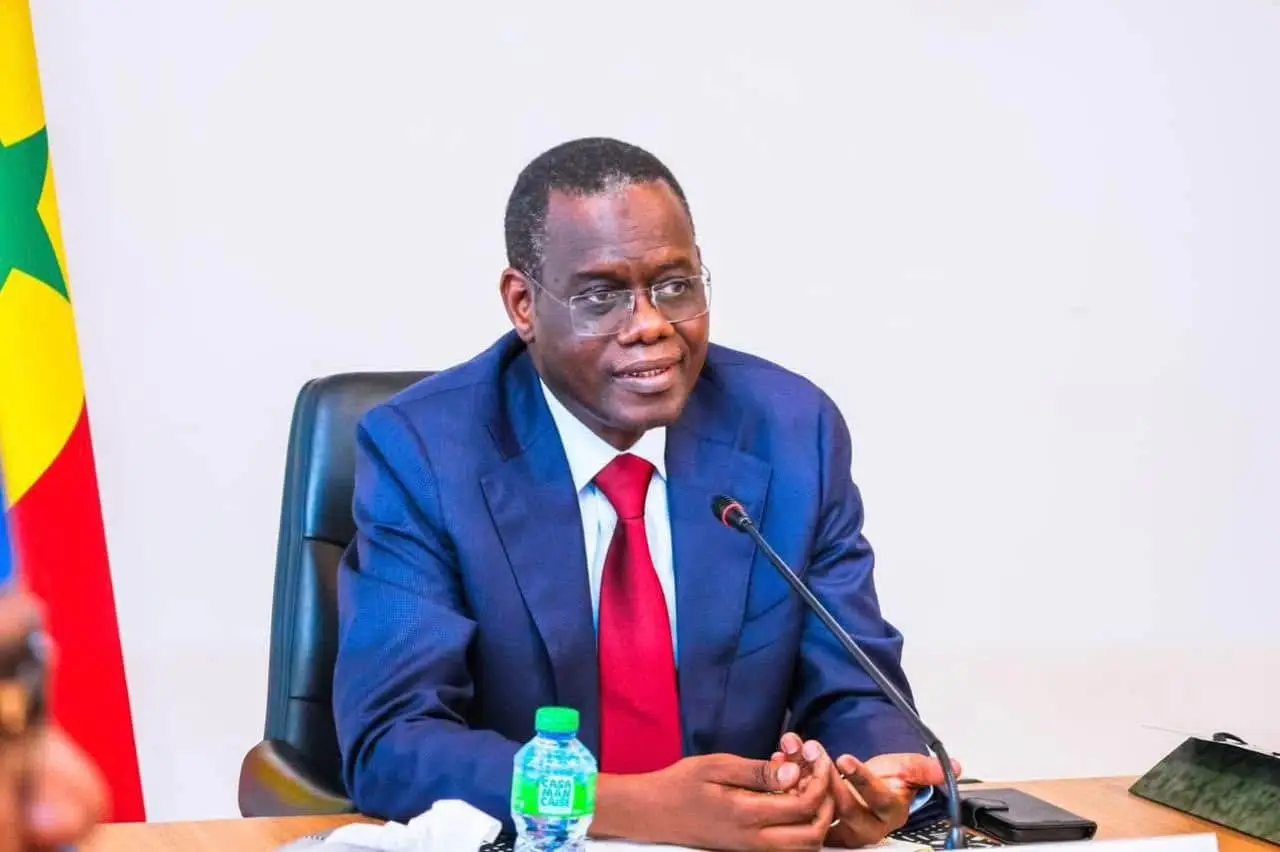
This is one of the main directions set out by Prime Minister Ahmadou Al Aminou Mohamed Lô in his General Policy Declaration (DPG), presented this Tuesday, September 8 before the National Assembly.
In his speech, the head of government identified several “catalytic projects”, designed to remove the main blockages that slow down development and create a ripple effect throughout the economy.
In the energy and heavy industry sector, three major projects are expected to mark the decade. The first concerns the gas development of Yakaar-Teranga, the first phase of which is estimated at between 5 and 10 billion dollars, depending on the model that will be adopted after the studies.
The government is also banking on the Senegal Gas Network, intended to transport gas from production areas to energy infrastructure, with a first phase notably linking the Grand Tortue Ahmeyin project to the Gandon power plant.
The third axis concerns the SAR 2 project, which provides for the modernization of refining as well as the development of an associated petrochemical complex. The ambition is clear: to make energy resources a lever for industrialization and the creation of added value.
The mining sector is also among the priorities announced in the DPG. The government plans the development of iron and metallurgy in the South-East pole, around a regional mining hub covering in particular Kédougou and Falémé.
Phosphates and fertilizers constitute the other major mining project, with projects concentrated in the North-East and Diourbel-Louga poles. The Matam phosphates and fertilizers industrial project stands out for its more integrated approach. It should be backed by a research center and a university, reflecting the desire to combine the exploitation of natural resources, innovation and training.
Agriculture and agro-industry also occupy a central place in this government strategy. A nitrogen fertilizer factory is planned to cover national needs and supply the regional market. At the same time, the government is planning the development of the three agropoles North, West and East, as well as a vast agro-industrial project which should ultimately reach 10,000 hectares.
Through these projects presented to the deputies as part of his General Policy Declaration, Prime Minister Ahmadou Al Aminou Mohamed Lô thus expressed the government’s ambition to make energy, mining resources and agriculture the pillars of a more productive and industrialized economy.
The challenge will now be to transform these orientations and announcements into effectively financed and executed projects, capable of producing the expected results in terms of employment, economic sovereignty and wealth creation.
CG DIOP
