
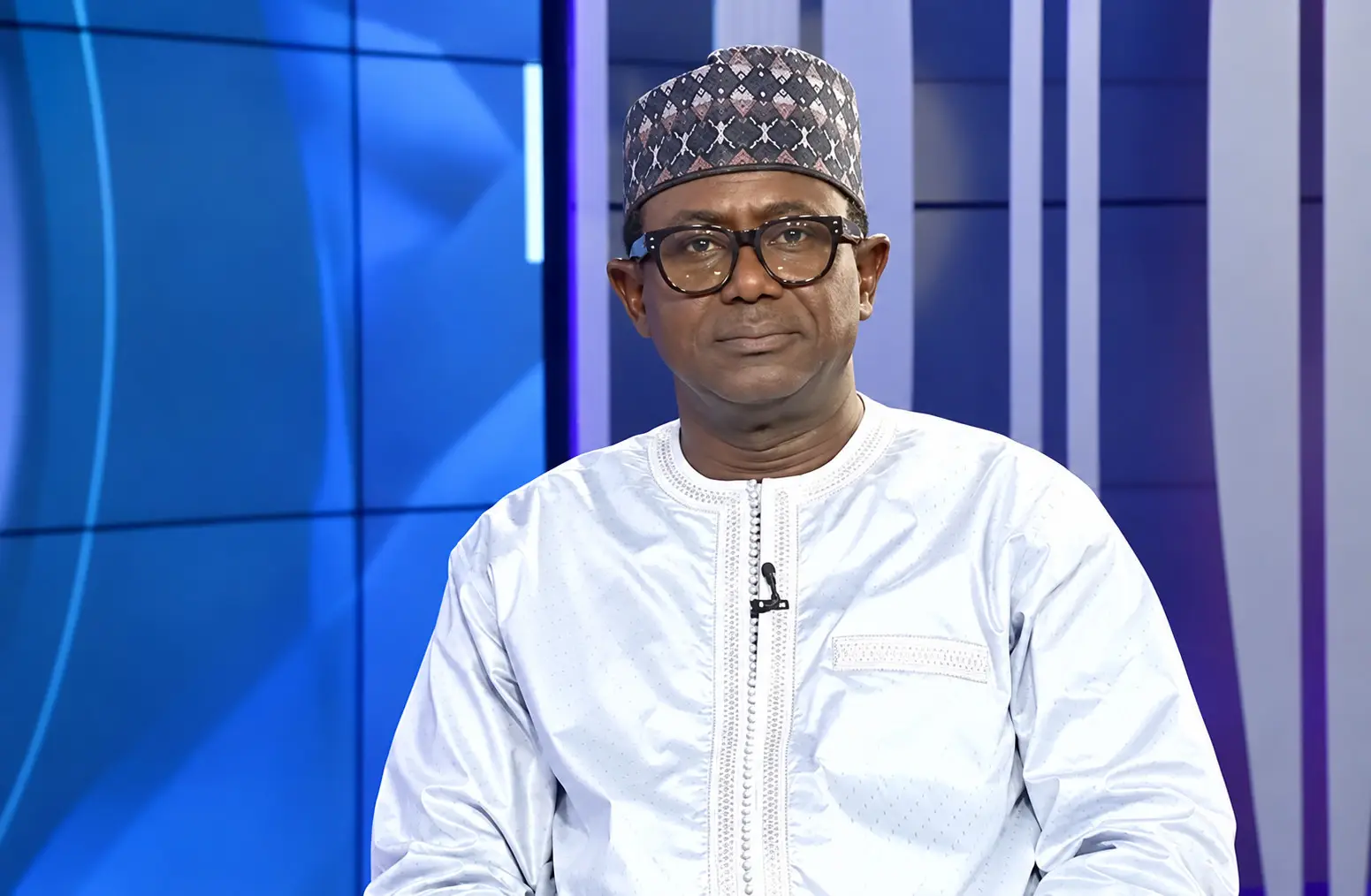
Budget, debt and investment: Seydou Diouf calls for preserving the capacities of the economy
The draft amending finance law reflects a new configuration of Senegalese public finances, marked in particular by a budget deficit projected at 7.6% of gross domestic product (GDP), compared to 5.4% initially forecast. Revenue is now expected at 5,848.7 billion CFA francs, while expenditure is expected to reach 7,583.9 billion.
Speaking on this new budgetary situation at RTS, the former president of the Finance Commission, Seydou Diouf, believes that the decisions made by the State must take into account the level of maturity and the urgency of investment projects. He considers that certain investments can be deferred when the necessary studies are not sufficiently advanced, unlike those with a priority nature.
The former parliamentarian also gives an important place to the treatment of debt. He mentions several mechanisms, notably the rescheduling of maturities, reprofiling, moratorium or even refinancing under more favorable conditions. The objective, according to him, is to reduce the pressure of repayments on public finances and to preserve the margins necessary for financing priority sectors, such as agriculture, health and education.
Seydou Diouf insists, at the same time, on the importance of dialogue with the International Monetary Fund (IMF). He believes that the validation of Senegal’s strategy could facilitate discussions with its various financial partners.
Concerning energy subsidies, increased to 790.3 billion CFA francs, he pleads for better targeting of beneficiaries. According to him, the level of support should not be the same for all consumers, regardless of their consumption levels. This orientation should, in his view, go hand in hand with a strengthening of social protection mechanisms.
Beyond budgetary issues, the former parliamentarian calls for strengthening the place of the private sector in the creation of wealth and jobs. He believes that the State cannot, on its own, sustainably support investment and growth.
“The economy is first and foremost a question of trust. We must restore confidence in our economic space,” he declared, calling for a more favorable environment for investors, in particular through reflection on taxation and regulations.
For Seydou Diouf, the creation of wealth by the private sector must also contribute to expanding the State’s tax revenue. He thus calls for “putting the economy back at the heart of the debate”, in a context where budgetary constraints impose new trade-offs.
