
Senegal: MUCTAT in Europe to attract billions of euros to housing and new towns
From September 9 to 15, Minister Moussa Bala Fofana led a mission to Milan, Lille and Paris. On the menu: a 3.5 billion euro agreement, the Thiès eco-district and the renewal of Dakar.
Investors, industrialists, financiers, researchers, diaspora: for a week, the delegation from the Ministry of Urban Planning, Construction, Territories and Development (MUCTAT) toured Italy and France. According to the ministry’s communication, the mission is part of “an approach initiated for two years” to open the urban and real estate sector to private capital.
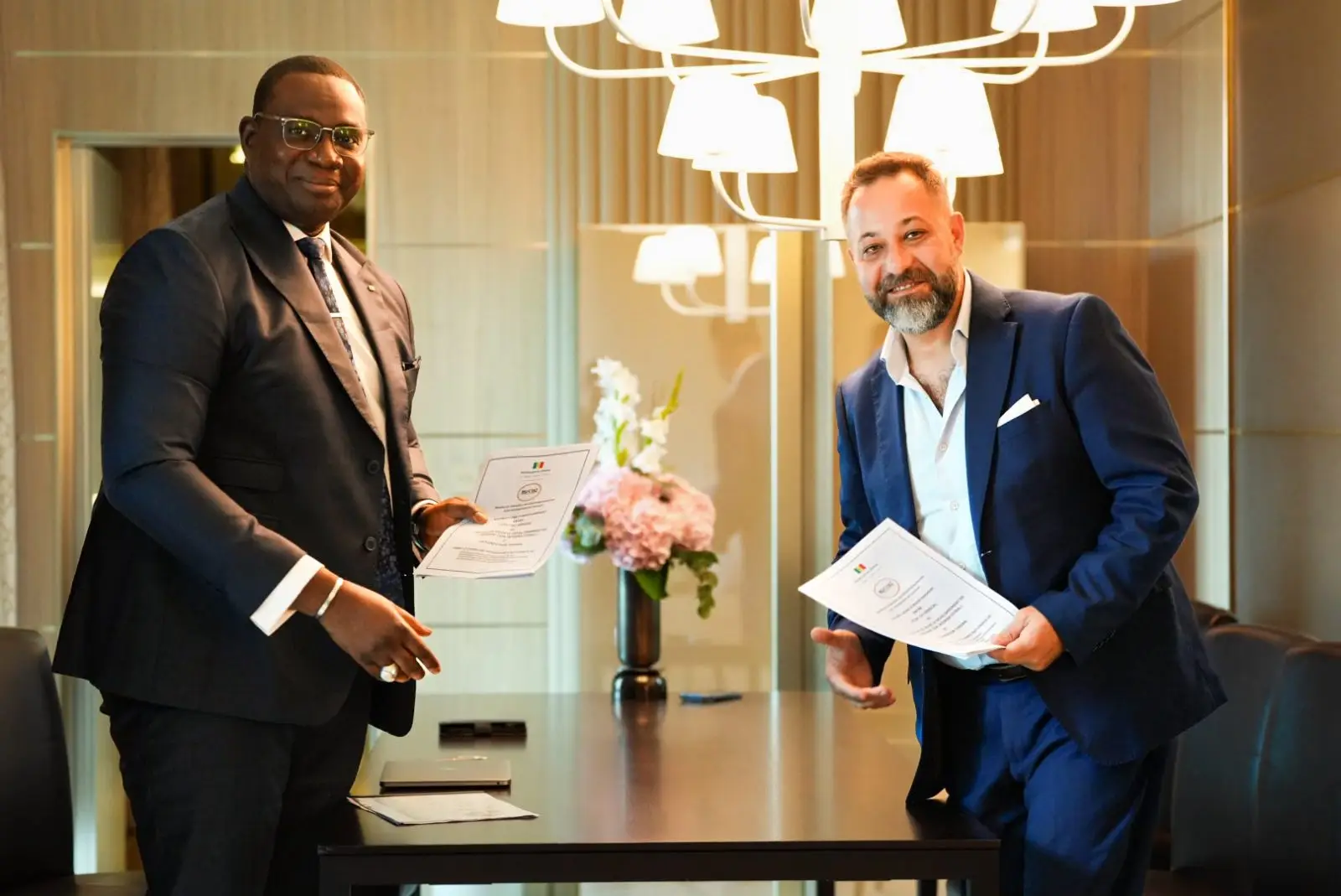
First highlight: the signing in Milan of an investment agreement between MUCTAT, the IDA International Group and the THESAN Foundation. It concerns 3.5 billion euros over seven years, or approximately 2,300 billion FCFA, according to the ministry. A 50 million euro pilot project must be activated “immediately”. Sicilian construction and materials companies have also expressed interest in the Senegalese market.
A land offer to attract investors
To convince its partners, Dakar highlights 35,000 hectares mobilized: 15,000 for industrial zones and 20,000 for housing. The State is also planning a VRD pre-financing model. A digital platform for access to housing, which already has more than 300,000 applicants, will be officially launched in October during the SENHABITAT forum.
The strategy is also based on eight territorial hubs, with rice in Casamance, salt in Kaolack, agro-industry in Diamniadio and livestock in Matam. A ninth, virtual pole would be dedicated to the diaspora.
On September 14, the delegation was received at Auchan headquarters in Villeneuve-d’Ascq, with the NHood and Projex teams. The discussions focused on urban renewal and new towns. A team must go to Senegal to identify priority sites, before a possible convention. The delegation is also invited to the international investors’ meeting in Cannes in March 2027.
Paris: Thiès, showcase of the new urban policy
In Paris, the flagship project was the Thiès eco-district, with the Alpha Group, Build Africa, Manergy and the NGE-TSO-SADE group. It covers 1,600 hectares and plans a first phase of 2,000 housing units. The stated ambition is to break “with the dormitory town model”.
Among the advanced innovations: the local “Teranga” mortar, based on flint and phosphogypsum, which could reduce the costs of roads and various networks by 75%, as well as an urban cooling network and the reuse of treated wastewater. The Airport-Thiès rail link is included in the consideration.
For Dakar, the ministry mentions dedensification, renaturation and reconstruction of degraded areas. In Colobane, a “suspended building” pilot project would consist of building above the road to free up land and reorganize commerce.
For Thiès, the pre-financing of VRD is estimated between 50 and 100 billion FCFA, according to the “buyer-pays” principle: development costs would be recovered via sales and off-plan operations. Steps have been taken with the AFD and the World Bank. An SPV must bring together the land and assets of new towns to secure investments.
Heading for January 2027
The timetable is tight: selection of the financial partner between September and October 2026, finalization of the arrangement before the end of December, start of the first phase of the eco-district in January 2027. The overall objective is 110,000 housing units, with investors sought in Europe, the United States and China.
At the end of the mission, the minister summarized the rest in one formula: “Focus on operational execution”. It remains to be seen whether the commitments announced in Milan, Lille and Paris will translate into actual funding.
