
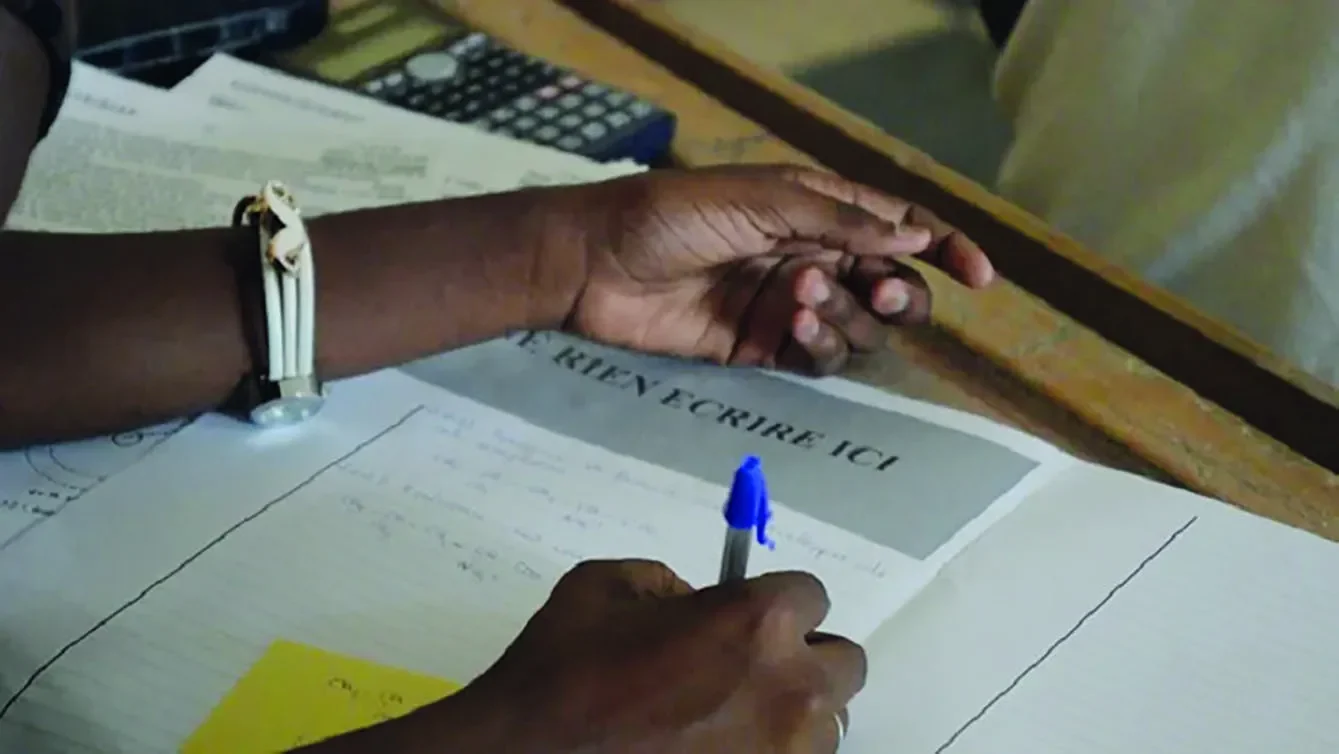
BFEM: a success rate of 53.38% in the first round
The first round of the 2026 Brevet de fin d’études nationaux (Bfem) resulted in a national admission rate of 53.38%. Statistics published by the Examinations and Competitions Department (Dexco) highlight contrasting performances depending on the academies. While several interior regions record remarkable results, the major urban centers continue to display success rates lower than the national average.
The first results of the Bfem 2026 examination confirm an overall positive dynamic. Out of 195,664 registered candidates, 192,856 actually took part in the tests, i.e. an attendance rate of 98.56%. According to the Directorate of Examinations and Competitions (Dexco) which communicated the results to “Soleil”, at the end of the corrections of the first group, 102,943 candidates were declared admitted, representing 53.38% of those present. Girls continue to be slightly ahead of boys with a success rate of 54.02%, compared to 52.46% among their male classmates. In certain academies such as Kaffrine or Sédhiou, boys nevertheless achieve superior performances, proof that the dynamics remain variable, depending on local contexts. Beyond these initial results, the outlook remains encouraging. Statistics show that 31.96% of candidates are allowed to take the second group tests.
According to the Director of Examinations and Competitions, Papa Baba Diassé, this configuration reveals, at this stage, an overall success trend of 84%, compared to 78.90% during the 2025 session, an increase of 5.10 points. An estimate which will however have to be confirmed at the end of the tests of the second group and the publication of the final results. Analysis of the results reveals, however, a contrasting landscape. The best performances are recorded by the academies of Kolda, which have a success rate of 74.82%, Kédougou (74.49%), Matam (72.81%) and Kaffrine (70.22%). These academies confirm the progress observed in recent years in several interior regions, where the efforts made in terms of educational supervision and student monitoring seem to produce significant results. Conversely, the academies with the largest numbers continue to pull the national average down. Thiès, which has 34,875 registered candidates, only records a success rate of 44.07%. Pikine-Guédiawaye, with more than 27,000 candidates, obtains 44.40%, while Rufisque (43.82%) has the lowest rate in the country. Fatick (48.16%) also remains below the 50% mark.
The Kolda Academy in the lead with 74.82% success. These results are a reminder of the challenges still faced by large school catchments, where high numbers often make the educational monitoring of students more complex. The other academies show performances closer to or higher than the national average. According to Dexco, Tambacounda recorded a 65.79% success rate, ahead of Sédhiou (64.07%), Ziguinchor (61.45%), Saint-Louis (59.67%), Kaolack (58.47%), Louga (54.54%), Dakar (54.41%) and Diourbel (54.02%). This distribution reflects sometimes significant differences between territories and highlights the margins for progress that remain in certain academies. According to Dexco, the statistics also highlight the strong mobilization of candidates. Across the entire territory, only 2,808 candidates were absent, representing an attendance rate of 98.56%.
Several academies, notably Dakar, even display attendance rates above 99%, testifying to the good organization of the exam and the commitment of the candidates. This session also marks an important step forward in the modernization of the publication of results. According to the Director of Examinations and Competitions, Papa Baba Diassé, the traditional crowd scenes in front of examination centers now belong to the past. Thanks to the QR code integrated into the invitations, candidates were able to consult their results directly from home, using their mobile phone, but also download and print their transcript online. This innovation is part of the digitalization strategy for national exams initiated by the Ministry of National Education and aims to offer a faster, more secure and more accessible service to candidates.
The appointment has already been set for eligible candidates. In a press release published last Saturday, the Ministry of National Education announced that the tests for the second group will take place on Tuesday July 21, 2026 from 7:30 a.m. throughout the national territory, as well as in Gambia and Saudi Arabia. Candidates authorized to take part are invited to present themselves at their examination centers with their invitation and a valid identity document. This final step will make it possible to know the final success rate for the 2026 Bfem session.
Daouda DIOUF
