
Agricultural equipment: up to 15 billion FCfa in overbilling revealed by the audit
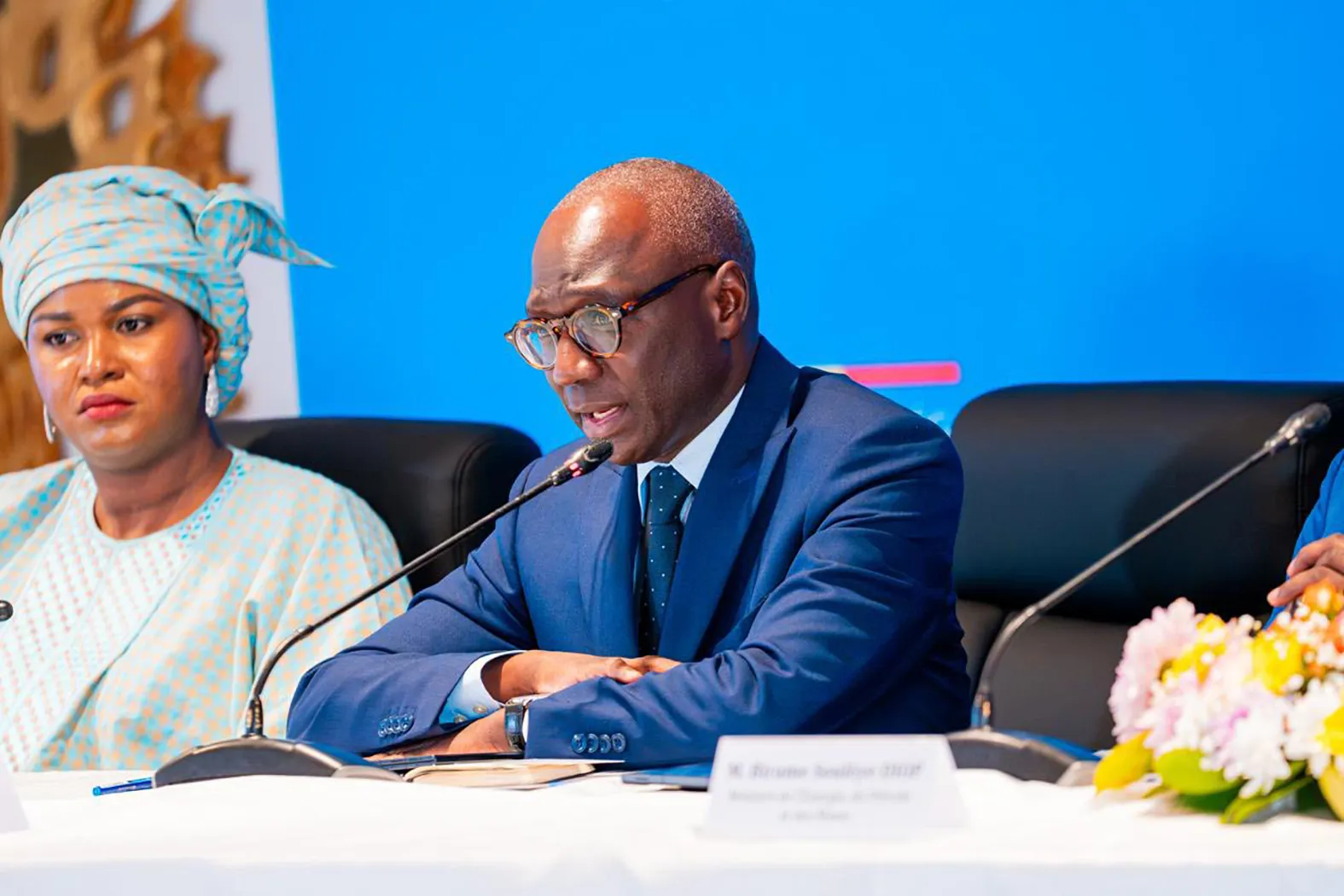
The agricultural sector does not escape the scrutiny of past contracts. During the press briefing devoted to the renegotiation of agreements in strategic sectors, the Minister of Agriculture, Mabouba Diagne, returned yesterday to an important agricultural equipment contract signed by the former government.
“In 2022, a contract for the supply of agricultural equipment and the construction of storage sheds was concluded for a total amount of 85.5 billion FCfa,” recalled the minister. According to him, the State has already made most of the payments while delivery remains partial. “The Government of Senegal paid 65.8 billion, but only 16.6 billion FCfa of equipment was actually delivered,” he said. However, some of the equipment would already be present on the territory. “The supplier imported equipment and hangars which are currently in Dakar for an amount estimated at 14.8 billion CFA francs, but this equipment has not yet been officially delivered,” said Mabouba Diagne.
The Government is not talking about requisition, he insisted, but rather about making available equipment already financed by the State. “This is not a requisition. We simply want this equipment, which has already been largely paid for by the State, to be made available to Senegal,” explained the minister. A technical audit also revealed financial anomalies. “Our teams have identified overbilling estimated between 15 and 17%, or an amount between 12 and 15 billion FCfa,” he declared. These conclusions, according to him, illustrate the need to review certain past commitments in order to preserve public finances.
“Our objective is simple: to guarantee that each franc spent by the State really corresponds to equipment useful to producers and the country’s food sovereignty,” said Mabouba Diagne. The minister assured that discussions are continuing in order to recover the equipment already paid for and to clarify the financial conditions of the contract. “We are doing everything to ensure that this material is quickly made available to Senegalese farmers,” he concluded.
By Pathé NIANG
