
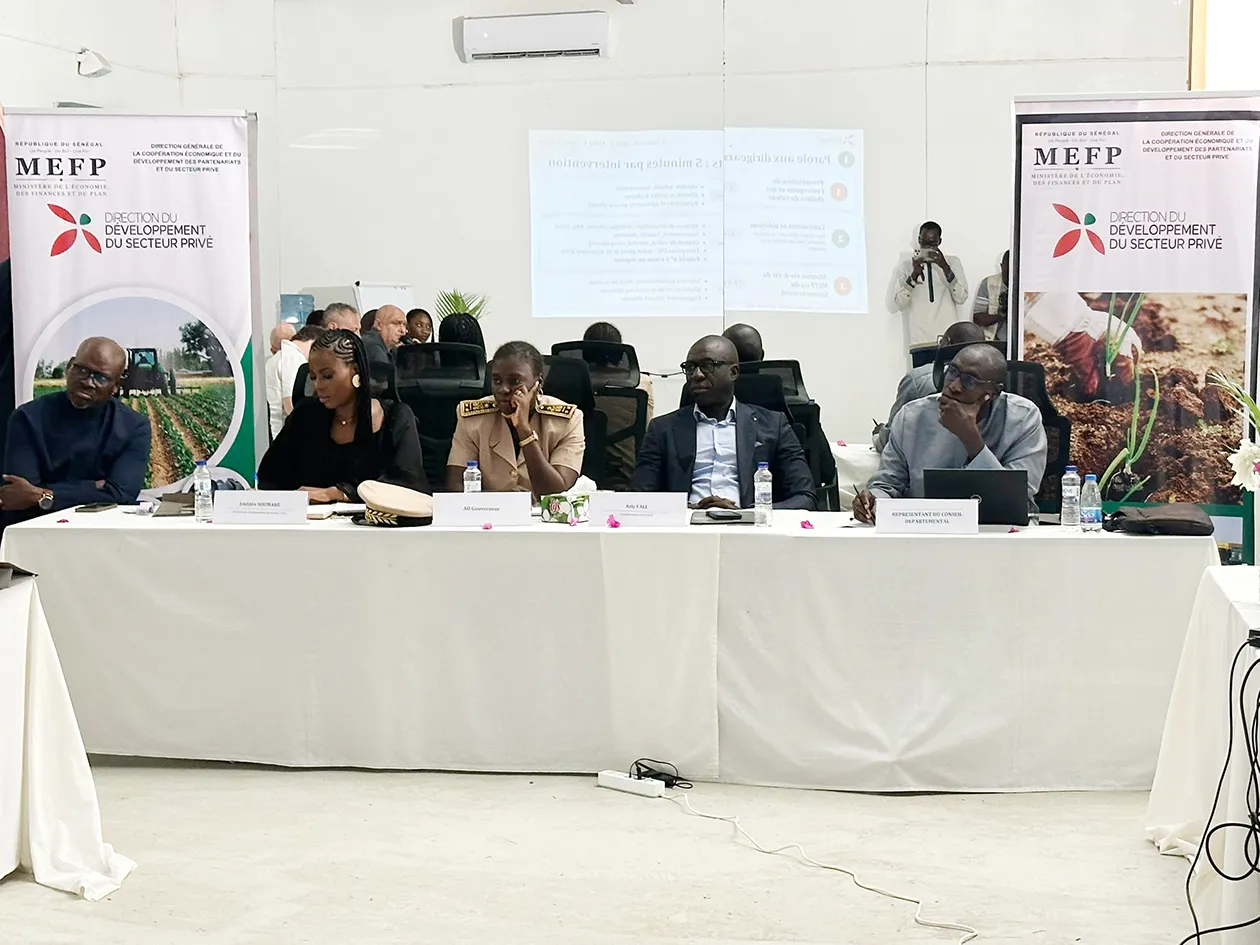
The State identifies the difficulties of businesses in the North Pole October 22, 2026
The Ministry of Economy, Finance and Planning opened two days of territorial consultation in Saint-Louis with strategic companies in the North Pole. This meeting aims to identify the constraints that hinder private investment and to identify concrete solutions to strengthen the competitiveness of local businesses, stimulate job creation and contribute to the implementation of “Vision Senegal 2050”.
Saint-Louis – Give more place to the private sector in the economic transformation of the country. This is the ambition of the territorial consultations organized on October 20 and 21, in Saint-Louis, by the Ministry of the Economy, Finance and Planning, in collaboration with the administrative authorities. The discussions bring together strategic companies around their difficulties, their development prospects and the measures expected from public authorities. For Khoudia Lèye Diouf, assistant to the governor of Saint-Louis in charge of development, this initiative offers a privileged framework for expression to economic players in the region. “This is an opportunity to listen to companies operating in the region, so that they can discuss the difficulties they face, but also formulate their recommendations,” she explained.
The contributions collected should make it possible to better guide public decisions and reinforce the ambitions of “Vision Senegal 2050”. Beyond the diagnosis, the authorities want to give an operational translation to the concerns expressed by business leaders. Aziz Fall, coordinator at the General Directorate of Cooperation, External Financing, Private Sector Development and Partnerships, insists on the need to move from the identification of economic actors to the search for solutions adapted to their needs.
“We are not going to solve all the problems in two days, but we are going to show that there is a new dynamic that is taking place,” he stressed. This approach should, according to him, make it possible to distinguish difficulties that can be resolved quickly from those requiring technical studies, reforms or structuring investments. Mr. Fall also emphasizes the opportunities offered by the development of the extractive sector, particularly gas exploitation. The challenge is for local companies to be able to take their place in the value chains generated by this activity. “This dynamic will not leave any value chain stranded, including the hydrocarbon sector,” he assured, reaffirming the State’s commitment to supporting the development of the private sector without sectoral discrimination. Included in the National Strategy for Private Sector Development and Investment Promotion 2025-2029, these consultations particularly target the rice, tourism and onion value chains, considered priorities in the North Pole. The work should result in a summary of constraints, prioritized recommendations and an action plan intended to improve the business environment.
Meetings between businesses and administration are also planned, as well as presentations of projects with high potential for wealth and job creation. The second day is devoted to thematic work, the examination of investment projects and visits to targeted companies. The expected conclusions must feed into a monitoring-evaluation roadmap in order to ensure the continuity of the commitments made.
For his part, the President and CEO of Senegal Agrogreen, Adama Ba, highlighted the main difficulties facing local businesses. They concern, he says, land, taxation and financing.
