
Innovation, financing and climate resilience: the State is considering housing October 23, 2026
Since yesterday, Thursday October 22, Dakar has hosted the International Habitat, Housing and Construction Exhibition in Senegal, which focuses on the theme: “Sovereign habitat: Sunu dekkuwaay”. This three-day meeting aims to create bridges between players in the housing sector in order to promote access to decent and sustainable housing and better controlled urban development.
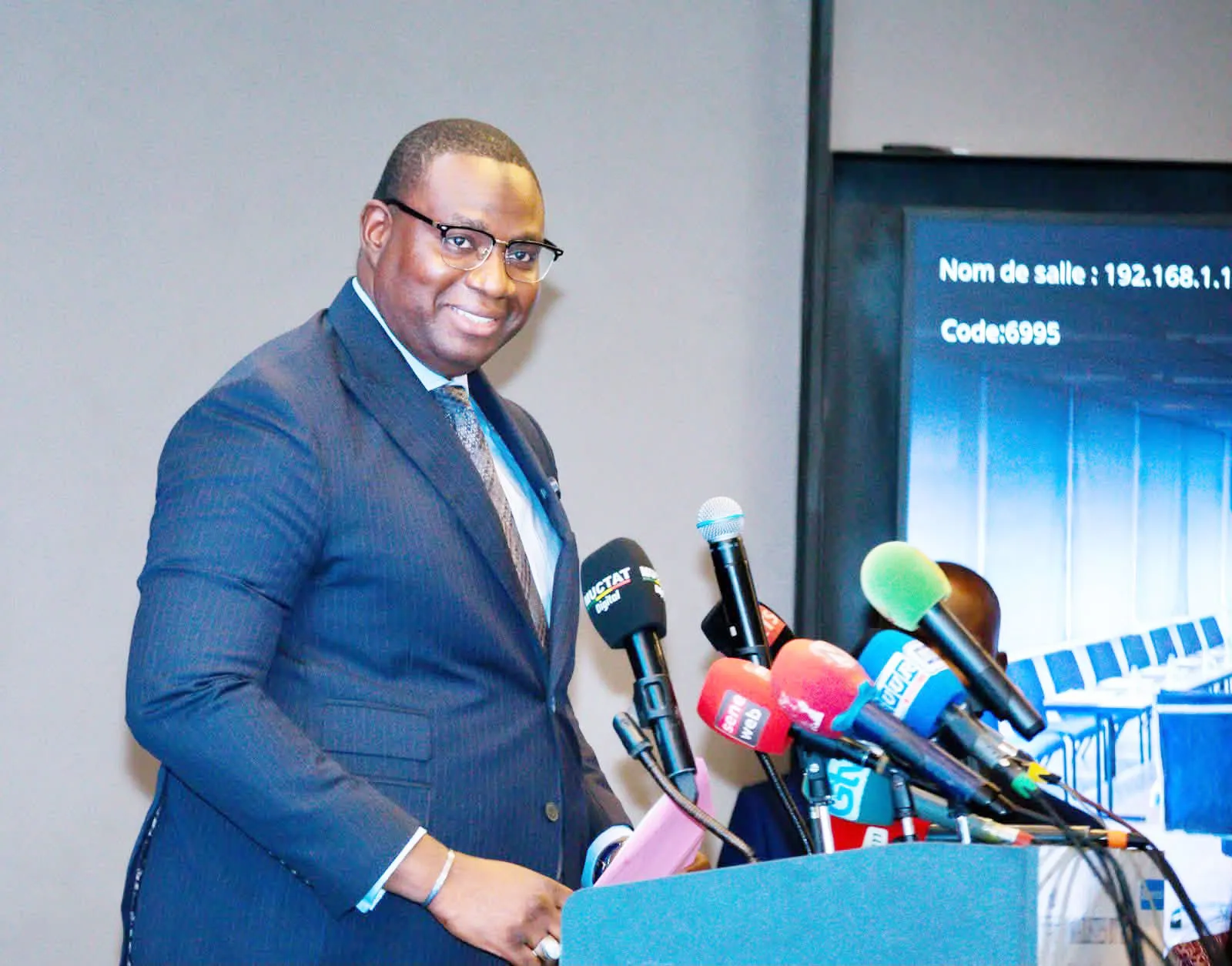
Placed under the theme: “Sovereign habitat: Sunu dekkuwaay”, the International Exhibition of Habitat, Housing and Construction in Senegal opened yesterday, Thursday October 22, in Dakar, for three days of exchanges and partnership. The objective of this edition is to promote solutions adapted to local realities based on the transfer of skills, urban planning, innovation, adapted financing and climate resilience. According to Moussa Bala Fofana, Minister of Urban Planning, Territorial Communities and Regional Planning, housing is a fundamental condition of human dignity, an inalienable social right.
For him, “in Dakar, more than one household in two is a tenant and the crushing weight of rents is stifling family budgets.” Continuing, he recalled that recurring floods, the precariousness of under-equipped neighborhoods and the dramatic tragedy of building collapses “are the symptoms of anarchic and uncontrolled urbanization in our cities”. However, the minister believes that a city must be born from a strategic vision, prior planning and coherent investments. Citizens must access affordable housing via direct purchase, rental purchase or supervised rental. In this perspective, Moussa Bala Fofana indicated that in each approved project, the State requires a republican balance of 50% social and affordable housing and 50% free housing, guaranteeing both social solidarity and economic profitability for investors.
Astou Rose Gaye, general director of the Senegal Housing Bank (Bhs), believes that access to decent housing should not be a privilege. Currently, she says, Senegal must produce housing that meets the legitimate expectations of the Senegalese while remaining compatible with their purchasing power. An interministerial council on housing planned According to Moussa Bala Fofana, it is planned, at the end of October, the holding of an interministerial council on housing, the organization of the round table of lessors and investors at the beginning of November 2026 and the laying of the first stone of the new City of Thiès in mid-December 2026. The Minister of Urban Planning, Territorial Communities and Regional Planning has also announced that in Dakar, Pikine, Guédiawaye, Thiès and Saint-Louis, the urban restructuring plan targets 300 hectares to generate 45,000 decent housing units, supported by a forecast investment of 1,100 billion FCFA over 15 years. Faced with the threat of degraded buildings, the State, he informs, has launched the National Plan for the treatment of buildings threatening ruin.
According to him, an audit identifies 14,000 constructions to be diagnosed nationally. For the minister, “in Dakar alone, notably in the Medina, Colobane, Biscuiterie and Grand Dakar, a first emergency tranche of 14 priority operations for 24.6 billion FCfa is being undertaken with the aim of rebuilding and rehousing in complete safety”. To reduce the national deficit, estimated at 500,000 housing units, the road map, indicates Mr. Fofana, targets the regular annual production of 33,000 housing units, thus injecting nearly 800 billion FCFA per year into the national economy.
Bada MBATHIE
