
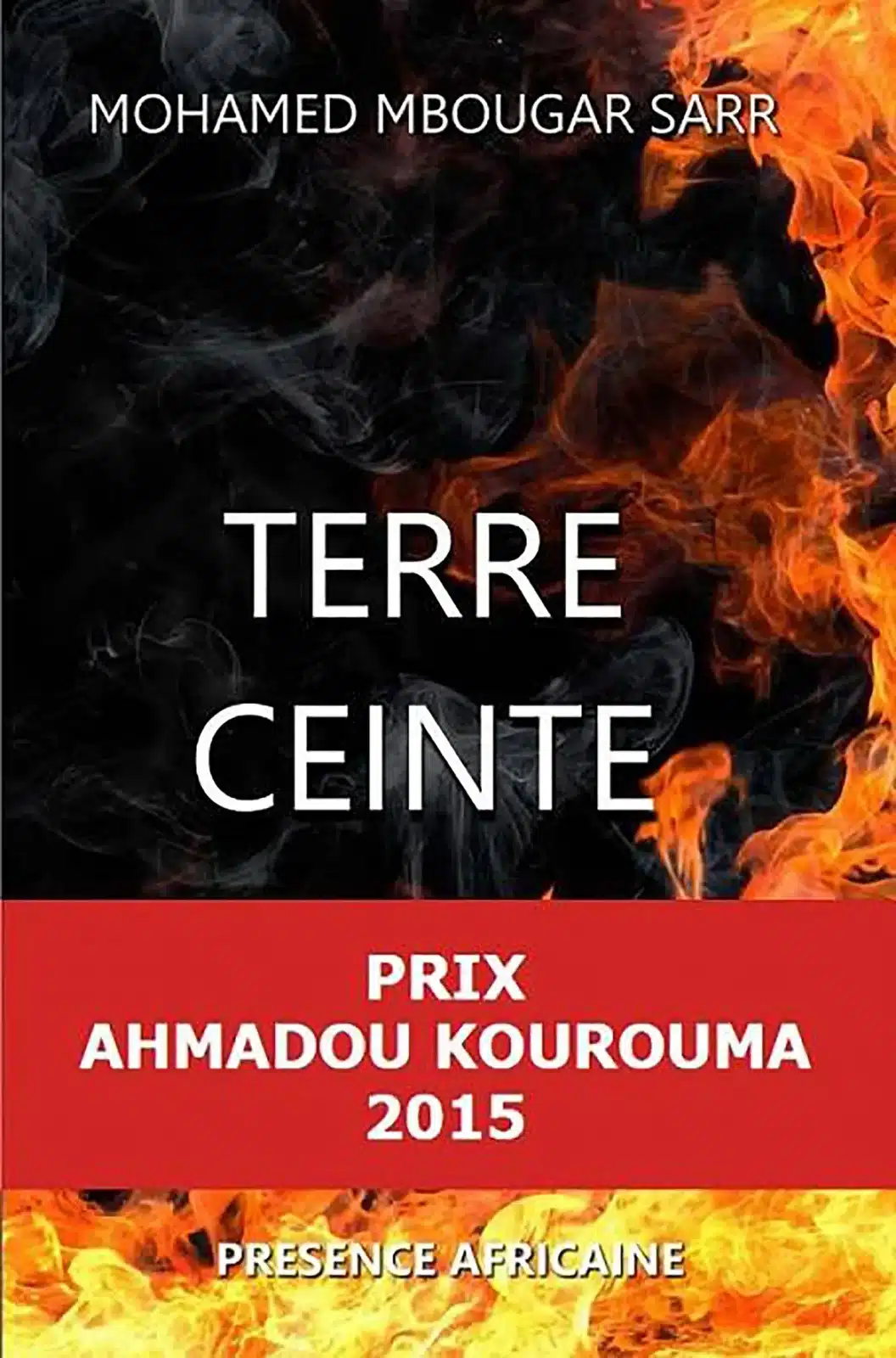
“Rounded Earth”, a city under the law of fear
In Kalep, love has an unfortunate tendency to be expensive, especially when men armed with religious certainties decide to distribute the good points of virtue and the bad reports of existence. Two young lovers pay the price, condemned in front of a crowd called to watch, while an entire city learns to live with the prohibitions of the “Fraternity”, its sermons, its surveillance and its sentences. In “Terre ceinte”, Mohamed Mbougar Sarr imagines a city caught in the grip of a religious power which would like to regulate consciences as minutely as behaviors, and confronts this mechanism of domination with a handful of men and women who choose clandestinity, conversations in the “Jambaar”, letters, memory and above all writing. Malamine, Déthié, Codou, Madjigueen, Ndeye Joor, Father Badji… live in a city where even an idea can take on the appearance of a crime, with an old human obstinacy which consists of continuing to think when someone has decided to think for you.
Two young people advance towards their last moment under the gaze of a crowd gathered in Kalep. Their love story crossed the limits set by the “Brotherhood”, a religious power established in the city for four years. The sentence falls with the coldness of a rule applied in the name of an absolute conception of faith.
Around the condemned, the inhabitants watch, some with fear, others with resignation, while the city witnesses a new demonstration of the authority exercised by those who claim to purify the city.
Mohamed Mbougar Sarr opens “Terre ceinte” with this scene of striking violence and immediately plunges the reader into an imaginary city taken under the influence of an authoritarian religious regime.
Kalep lives to the rhythm of the prescriptions of the “Brotherhood”, whose men monitor behavior, impose clothing rules, control places of sociability and sanction deviations with increasing severity. Religion occupies the entire social space.
The city is changing its face
In this city, faith now accompanies the law, the law accompanies surveillance, and surveillance shapes behavior. The inhabitants learn to weigh their words, their associations and their habits, while the men of the “Brotherhood” gradually impose their conception of a society consistent with their principles.
Malamine, a doctor at Kalep Hospital, observes this transformation from his workplace. For four years, he lived with the fear of dying and the desire to preserve his family.
The execution of the two young lovers upsets this inner balance. Their death causes him to become more aware and leads him to another way of living his responsibility. He chooses resistance.
With Déthié, professor at the University of Bantika, Malamine gathers around him several figures ready to participate in the struggle. Codou, Madjigueen, Old Faye and Father Badji join this clandestine community, each bringing their history, their convictions and their own way of confronting domination.
The “Jambaar” (anagram of Rambaaj) becomes their meeting place. The Père Badji tavern preserves the memory of an ancient Kalep, that of conversations, meetings and evenings shared around a drink.
Under the power of the “Brotherhood”, the establishment also welcomed the men of the regime, which gave the clandestine meetings a particular dimension. The resistance fighters must wait for the soldiers to leave, monitor their surroundings and choose their words precisely.
In this tavern, speech finds less freedom. The group is preparing a clandestine newspaper, intended to recount the events of Kalep from the point of view of those who experience them.
It is at this moment that writing takes a central place in the resistance. It allows facts to be preserved, information to be transmitted and the memory of a population subject to an official narrative to be preserved.
The power owns the weapons and the resistance owns the words. This opposition runs through the novel and gives literature a political function.
To write means to bear witness. To publish means to make violence visible. Circulating a newspaper means creating a space of freedom at the heart of a controlled society.
This collective resistance finds an intimate extension in the letters exchanged by the two mothers of the young executed lovers. Their correspondence shifts the narrative towards family pain and gives the victims an existence that goes beyond the sentence pronounced against them.
The letters carry the memories of a child, the wounds of a mother and the desire to preserve a family history in the face of the brutality of power.
The great story then enters the houses. It affects parents, spouses and children. It disrupts family relationships and transforms daily life into a space of vigilance.
Malamine also discovers this reality through his home, his wife Ndeye Dior Camara and his children, notably Ismaïla, whose journey accompanies the wounds caused by Kalep’s situation.
Mbougar Sarr gives this violence a profoundly human dimension. The characters live with their fears, their doubts, their contradictions and their hopes.
Malamine has the courage of a resistance fighter, but also the hesitations of a man attached to his family. Déthié brings intellectual reflection. Codou has a detailed knowledge of society. Madjigueen claims her freedom as a woman. Old Faye carries with him his military experience. Father Badji offers the group his place of refuge.
Their diversity gives the resistance its true depth.
Faced with them, the “Brotherhood” organizes the city around a rigid conception of religion. Abdel Karim Konaté represents one of the major figures of this authority and participates in the debates which run through the novel on the relationship between faith, power and truth.
Politics crosses intimacy
Mbougar asks an essential question here. Who has the right to define religious truth and transform this definition into a collective rule?
The question goes beyond Kalep and concerns the way in which a power can use religion to legitimize its decisions, designate behaviors deemed compliant and condemn those who deviate from it.
Faith enters the political domain and becomes an instrument of social control. The novel thus opens a space for reflection on the relationship between religion and freedom.
Mbougar observes how a particular interpretation of religion can become a political norm and then spread to the whole of society through surveillance and sanction.
Father Badji occupies a unique place in this reflection. His tavern provides a refuge for resistance fighters and his intelligence fuels confrontations with representatives of power.
Through his exchanges with Abdel Karim Konaté, the novel makes speech a place of intellectual confrontation, with two conceptions of religion and power facing each other.
The battle takes place on several grounds. Guns control the streets. Words work on consciences. Letters maintain memory. The clandestine newspaper constructs another reading of the events.
Kalep then carries several realities at the same time. The city belongs to the men of the “Brotherhood”, while its memory remains in the minds of those who have known another life.
Old places of sociability, lost habits and family memories maintain the possibility of another future.
The title “Encircled Earth” takes on its full depth. The land designates Kalep, a city enclosed within the borders of a power which claims to organize all collective existence.
The closure also affects consciences, families and individuals, to the point of creating in everyone a feeling of internal confinement.
Mbougar then constructs a novel about freedom, memory and speech. Through Malamine and his companions, he shows the birth of resistance in a society dominated by fear.
Through the two mothers (Aïssatou and Sadabo), he gives mourning an intimate voice. Through the clandestine newspaper, he entrusts writing with a testimonial function.
Literature collects the dead, accompanies the living and preserves the words that those in power would like to erase. It gives the characters the opportunity to tell their own story and transforms their experience into collective memory.
In Kalep, the authorities have the strength and capacity to punish. Faced with them, men and women choose writing, speaking, solidarity and transmission.
Two young lovers had been brought before a crowd to serve as an example. Their story ended up producing a memory.
Kalep remains a surrounded land and at the heart of this fence, speech continues its path.
By Amadou KEBE
