
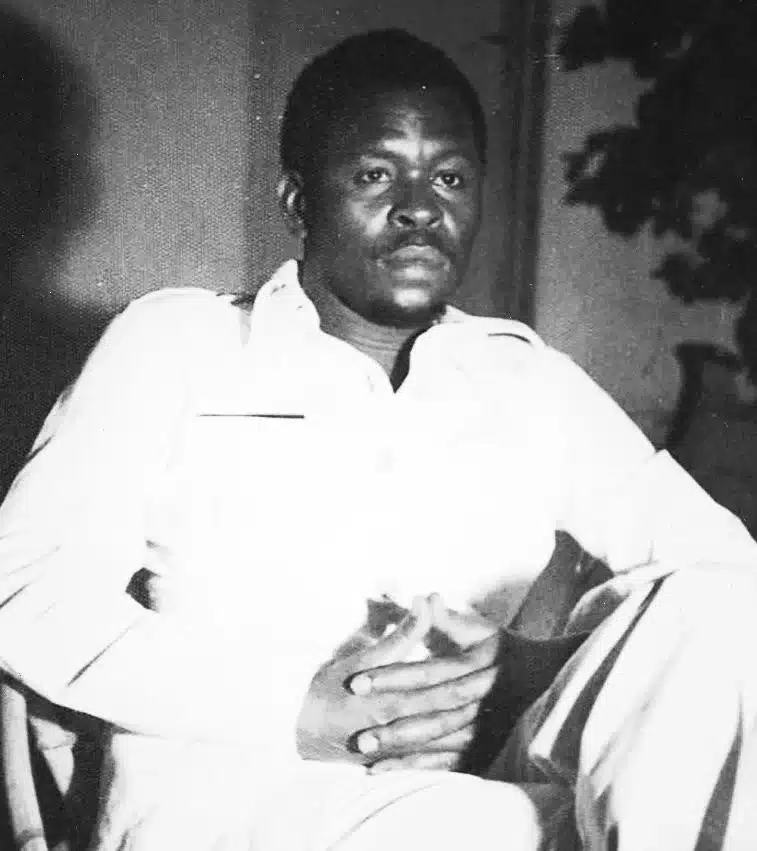
Ababacar Samb Makharam, the filmmaker who wanted to give Africa a camera
On October 7, 1987, Dakar lost one of its cinema figures. At just 52 years old, Ababacar Samb Makharam passed away, leaving behind a journey that combines camerawork, directing, acting and commitment to an African cinema capable of telling its own stories.
Before going behind the camera, the man had first learned to look. From 1966 to 1970, he worked as a cameraman at Actualités Sénégalaises, in contact with this raw material which would nourish his eye as a filmmaker: the men, events and realities of a Senegal in full transformation. It also participates in the UNESCO educational television pilot project, devoted in particular to broadcasts on adult education. An experience which already testifies to his interest in cinema and audiovisual at the service of transmission.
But Ababacar Samb Makharam does not just film others. He also slides in front of the camera. As an actor, he plays in several French and African productions, multiplying the experiences and encounters which contribute to forging his artistic identity.
Read also: Ababacar Samb Makharam honored among “140 giants of the African continent”
However, his ambition goes beyond the plateaus. In Dakar, he created Baobab Films, his own production company. A choice which reflects a desire to take part in the construction of a true African film industry, by giving the continent’s creators spaces to produce and present their views.
This conviction also led him to invest in the professional structures of African cinema. From 1972 to 1977, he held the position of secretary general of the Pan-African Federation of Cinematographers (FEPACI). To this responsibility was added, in 1976, that of president of the jury of the Carthage Cinematographic Days, a sign of the recognition he enjoyed in the world of African cinema.
Cameraman, actor, producer and professional manager, Ababacar Samb Makharam will have crossed the cinema through several doors. But behind this diversity of functions a single line emerges: that of a man who believed in the power of images and in the need for Africans to control their own narrative.
Thirty-nine years after his death, his name remains attached to a generation of pioneers who contributed to making African cinema a space of creation, transmission and cultural affirmation.
YEAR
