
My commitment against malnutrition August 30, 2026
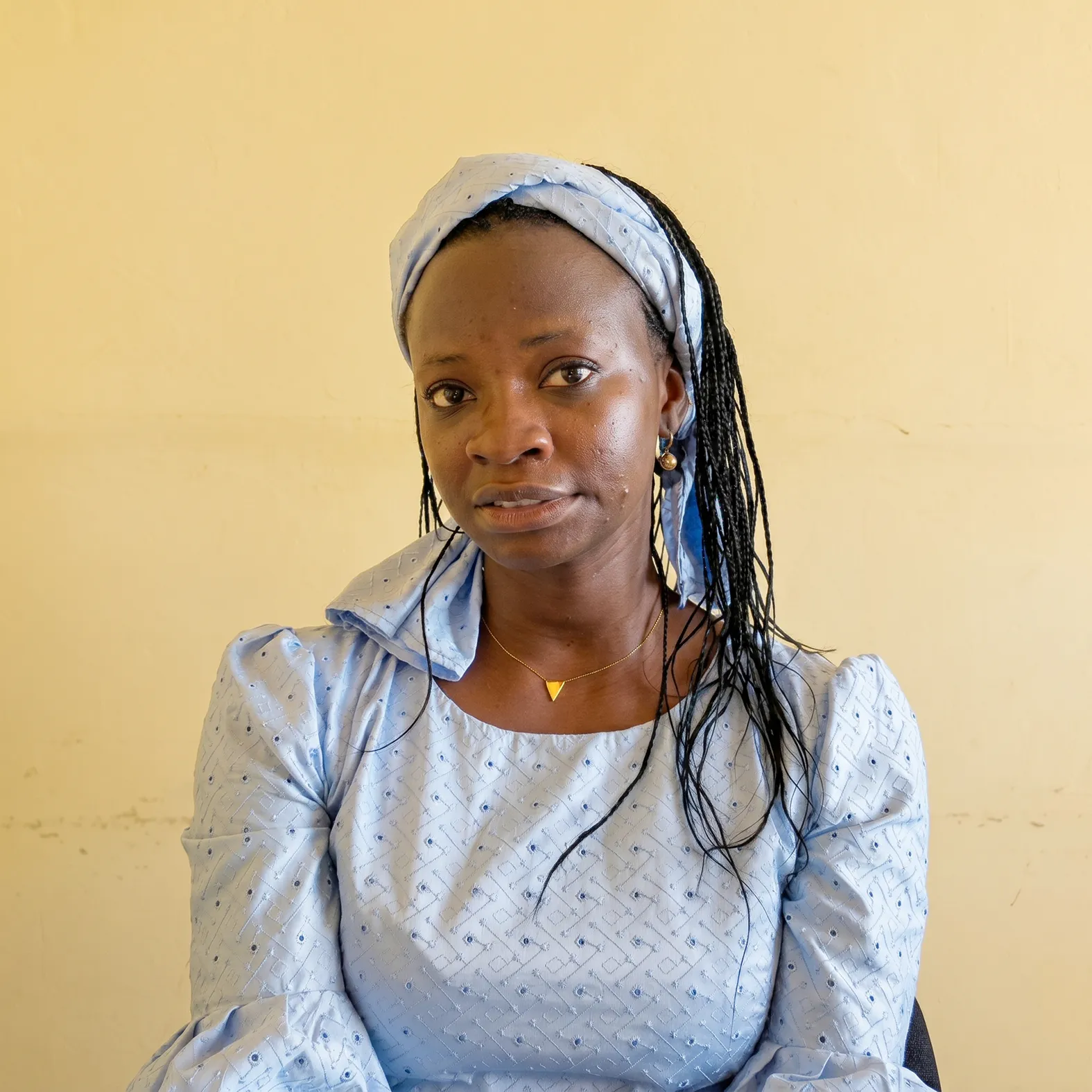
For Fansar Souané, the development of the country must go through the terroirs. Since her return from France, she has set up a small and medium-sized business to provide a response to the nagging question of child malnutrition which is rife in Pakao and surrounding areas.
In his office located upstairs, at the back of the premises of the Sédhiou Regional Chamber of Commerce located in the Kabeum district, Fansar Souané could not do otherwise on this weekend morning.
Asked on the phone, she explains her interlocutor in detail, her eyes at the same time focused on the small screen of her computer, she scrolls continuously.
Busy of course, but the little taps on the door of her office do not escape her. “Yes, come in,” she replies when we give two weak knocks at the entrance.
Eldest daughter of the Souané family, from Sandiniérie, Fansar is co-founder and manager of the company “Bergers du sud”. A very special small and medium-sized company, located in natural Casamance, in the Sédhiou region.
A choice which is not by chance since this unit concentrates its activities in the processing of cereals for children and pregnant women, in a region hit by child malnutrition.
So, by setting up this small installation, Ms. Diallo and her associates want to fight against the scourge.
The idea, she says, is to offer products of high nutritional quality from local products which are very rich. “Our mission is how to facilitate access to nutritious and sustainable food by working on products that have high nutritional qualities,” repeats Fansar Souané.
Development through terroirs
The Sédhiou region where it has installed its units is the first in the country in cereal production.
“By producing a variety of foods and natural chips, we are working to reduce the consumption of imported products whose composition is sometimes debated. But above all to focus on malnutrition education, since we also train women and young people in this regard,” she comments.
Fansar Souané is known for her determination and courage to see these initiatives through to the end.
Each time, she gives a special touch to the economic events organized by the Chamber of Commerce at the local level.
For her, the development of the national economy must go through the regions, like China or Egypt.
With the agri-food industry, the ability to create opportunities for producers and labor for local populations, particularly young people looking for immersion in business, is a personal commitment.
“Upstream of production, by taking raw materials from farmers, we create jobs. We welcome young people on internships, such as those from the Higher Institute of Professional Education (Isep) in Bignona, the Agroforestry Training Center in Bounkiling and the Higher Institute of Management (Ism) for the management part,” she confides with passion.
Fansar Souané also does not hide the desire that drives him. That of making things happen locally.
“There are a lot of opportunities, but they remain underexploited. We can do it. Nature has given us a lot of wealth, it is up to us to agree to take risks to move things forward positively,” she believes.
This challenge of contributing to the development of one’s region, of one’s country in particular, has grown stronger over the years.
Multidisciplinary training
Born in Dakar where she attended the “Notre-Dame du Cap-Vert” primary school in Pikine, then at the Lycée international Bilingue de Ouakam, Fansar Souané continued her secondary studies at the Lycée Ibou Diallo where she obtained her baccalaureate.
She joined Gaston Berger University for first-year studies in sociology.
The following year, she went to France.
“I did a degree in economic and social administration with a specialization in human resources. It is a multidisciplinary training that prepares us to enter public and private administration. It allowed me to have an understanding of economics and politics, among other things,” she says.
In France, Fansar was not idle, she obtained other diplomas such as a master’s degree in business administration at Paris 1.
A diploma that will quickly click.
So, returning to Senegal, she opted for the agri-food industry.
“I told myself that we have to put something in place. I targeted the agricultural sector because with all the yield why not promote this local production by targeting infant food,” she wonders.
Today, infant flour processed from local rice, within the “Vergers du Sud”, is receiving positive feedback.
“When children eat this product, they are often full and do not want to eat anything else,” assures Fansar Souané.
The “Vergers du Sud” benefits from the generosity of nature since to this rainfed rice and corn, the main raw material, “no additives, even less coloring are added to this food; it is a product that meets the nutritional needs of babies,” argues Fansar Souané.
However, the distribution of children’s food products produced within the “Vergers du Sud” is not visible in other regions of the country. This is due to the question of logistics. Added to this is the cost of energy, which sometimes weighs heavily on the operating budget.
By Jonas Souloubany BASSÈNE
