
WTO agreement on fisheries subsidies: African craftsmanship between hope and vigilance
Entering into force on September 15, 2025, the WTO Agreement on Fisheries Subsidies opens new perspectives for African artisanal fishing. Players in the sector hope in particular to reduce the pressure on industrial fleets, while warning of the challenges linked to control, financing and state capacities.
MBOUR – The World Trade Organization (WTO) Agreement on fisheries subsidies opens a new page in the governance of fisheries resources. In Africa, its entry into force raises both hopes and concerns, particularly within artisanal fishing organizations. Recently gathered in Mbour during a webinar dedicated to the “issues, opportunities and challenges” of this agreement, sector players insisted on the need to make this new instrument a real tool for protecting fishing communities. Entering into force on September 15, 2025, the Agreement aims in particular to prohibit subsidies that contribute to illegal, unreported and unregulated (IUU) fishing, fishing for overexploited stocks as well as certain activities carried out on the high seas without regulation. It also provides special and differential treatment provisions for developing and least developed countries.
Persistent pressure
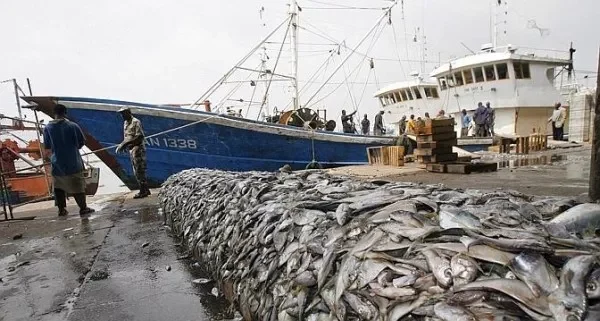
In Africa, artisanal fishing plays an important role in the food security, employment and income of millions of people. Women also constitute an essential link in the chain, particularly in the processing and marketing of fishery products. However, this sector remains under strong pressure. Indeed, according to a continental study carried out by the African Confederation of Artisanal Fishing Organizations (CAOPA), with the support of DNS Consulting, the Institute for Development Research (IRD) and the German Federal Ministry for Economic Cooperation and Development (BMZ), several difficulties are highlighted. The organizations interviewed report in particular incursions by industrial vessels and activities related to fishing in areas reserved for artisanal fishing. A situation which increases the pressure on already weakened resources and reduces the possibilities for activity of local communities. Additionally, the issue of subsidies is also a point of concern. According to the study, around 70% of the organizations surveyed indicate that their members do not benefit from any fuel subsidies. At the same time, artisanal fishermen face competition from industrial fleets which benefit from different support mechanisms.
An opportunity to secure
Presenting the results of the study, Dr Hamady Diop believes that the WTO Agreement constitutes an opportunity for African artisanal fishing, but an opportunity that must be secured. According to him, the new disciplines could notably contribute to reducing certain supports favoring industrial fishing and long-distance fishing in African waters. States also have room to invest in fisheries monitoring, safety at sea, post-harvest infrastructure and community livelihoods. However, the realization of these opportunities will largely depend on the capacity of countries to mobilize available financing. This is precisely one of the major challenges addressed by the study. In several countries, stock assessment capacities remain insufficient. However, the absence of reliable scientific data can limit the ability of States to make appropriate decisions and to fully benefit from the flexibilities provided for by the Agreement. National capacities in terms of notification, transparency and monitoring also appear limited. Added to this is the poor consideration of certain stakeholders, notably women processors and fishermen in continental waters. The study, which mobilized 37 organizations from 25 African countries and the five regions of the continent, thus underlines the importance of better participation of professional organizations in the definition of national implementation policies. For those involved in artisanal fishing, it is not enough that international rules exist. They still need to be effectively applied and communities must be able to access financing mechanisms and support systems. The Agreement also has two dimensions. The first component, now in force, concerns in particular subsidies linked to IUU fishing, overexploited stocks and certain unregulated high seas fishing activities. The Agreement Committee is operational and the Fisheries Fund has started approving funding. The second part, devoted in particular to disciplines relating to overcapacity and overfishing, however, remains under negotiation. Further discussions must continue in the coming years.
A decisive implementation
For artisanal fishing organizations, several questions therefore remain decisive: access to the flexibilities provided for developing countries, transition periods, taking into account subsidies granted to industrial fleets and the fight against distant-water fishing. Beyond international negotiations, it is above all national implementation which will be decisive. States will need to strengthen their control capacities, improve the collection of data on resources and facilitate access to financing.
The issue is also social. In many African communities, fishing is not just an economic activity. It represents an essential source of food, jobs and income. For players in the sector, the WTO Agreement must therefore not become an additional constraint for small fishermen. Rather, it must help to rebalance the relationship between artisanal fishing and industrial fishing, protect resources and support the communities that depend on them.
