
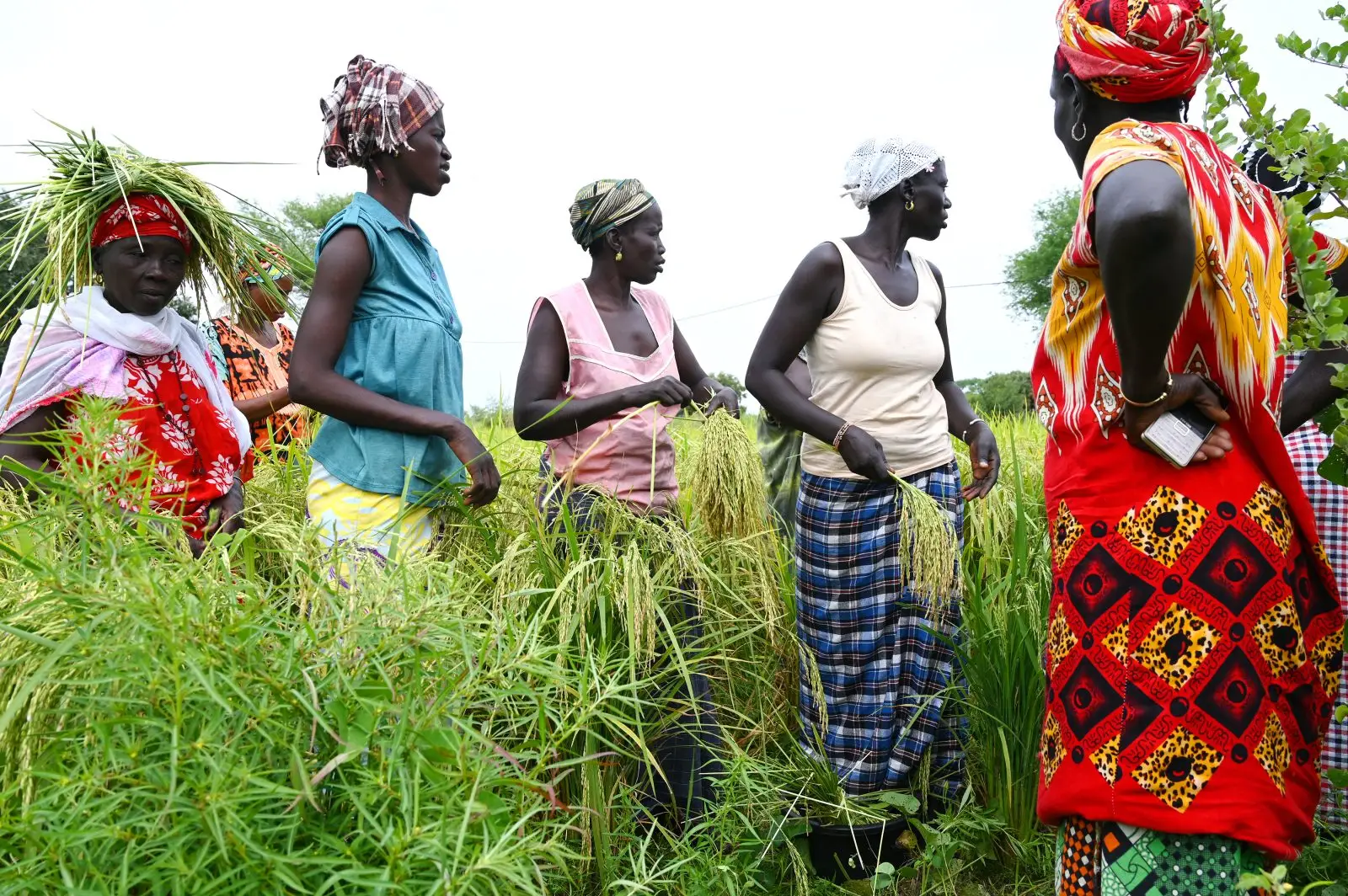
Rural women: at the heart of agriculture, but still far from resources August 29, 2026
In Senegal, rural women contribute significantly to agricultural production and food security. However, they remain faced with strong inequalities in access to land, equipment and financing.
Access to agricultural equipment remains significantly unbalanced between women and men. Available data shows that 68% of motorized equipment, including tractors, motor pumps and mechanization equipment, is owned by men, compared to only 32% by women.
Women are mainly present in post-harvest processing activities, but they still have few structured commercial outlets. A handicap which limits their ability to take full advantage of their agricultural activity.
458.4 billion CFA francs generated
However, their contribution to the agricultural economy is far from marginal. According to a joint analysis by the National Agency for Statistics and Demography (Ansd) and UN Women, carried out in 2022, female entrepreneurship in informal agriculture generated 458.4 billion CFA francs, or 27% of the total added value of the agricultural sector.
A considerable economic weight, which contrasts with the weak control exercised by women over farms and productive resources.
A right to land still difficult to exercise
These gaps reflect structural inequalities in access to and control of land. However, the Senegalese legal framework formally recognizes equality between men and women in terms of access to land. In practice, the application of this principle remains difficult. Custom frequently conflicts with the law and obstructs its application.
This disparity is reflected in the parity index relating to responsibility for agricultural plots. At the national level, the parity index measuring the proportion of women among those responsible for agricultural plots stands at 0.2, which means that, for every ten plot managers, barely two are women.
Casamance, a relative exception
However, the situation varies from one region to another. In the south of Senegal, particularly in Casamance, the parity index is higher, with 0.6 in Sédhiou and 0.3 in Ziguinchor.
These gaps can be explained in particular by socio-cultural configurations which historically grant women a more important role in land management. Elsewhere, access to land remains largely dependent on family or marital ties. In the vast majority of Senegalese regions, women obtain land mainly through their husbands, their family or the community.
12% of land, 15% of farms
Despite their major role in agriculture, rural women remain largely disadvantaged in access to resources. According to Ipar, they only own around 12% of agricultural land in Senegal in 2023 and only represent 15% of farm managers in 2024.
Access to land ownership remains particularly limited: only 2.7% of women have an individual title to the land they farm. 24.3% of them declare that they have rights to agricultural land, compared to 40.5% of men. Furthermore, 40.4% of women access land by borrowing, compared to 15.7% of men.
The differences are also found in the areas held. Households headed by women have on average 1.82 hectares, compared to 4.57 hectares for those headed by men.
96.3% participation in Niayes
In Niayes, 96.3% of women interviewed participate in horticultural activities, compared to 88.1% of men. However, less than 3% of those responsible for agricultural plots have benefited from formal agricultural training.
Another paradox: the average productivity of agricultural labor reaches 3,524 CFA francs per working day, with high levels of productivity on farms run by women. But this performance does not translate into equivalent income. Women producers earn on average 395,887 CFA francs, compared to 839,888 CFA francs for men, or almost half as much.
Find our entire report “Women’s access to agricultural land” in this weekend’s edition of Le Soleil.
Marième Fatou DRAMA
