
Social reintegration of prisoners: 418 recruitments announced in the prison administration
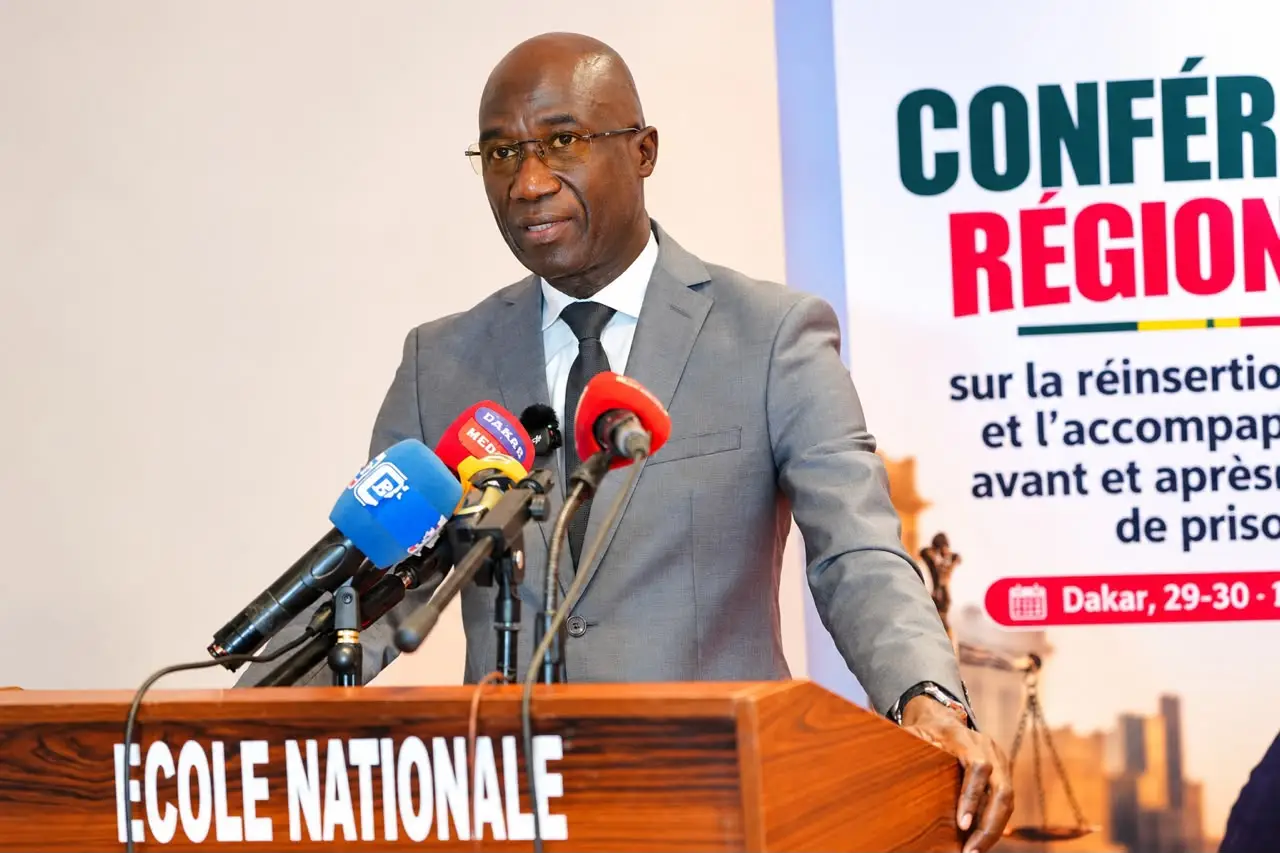
The government has authorized the recruitment of 418 agents within the Prison Administration for the year 2026. The announcement was made Thursday by the Minister of Justice, Minister of Justice, Me Moussa Sarr, during the opening of a regional conference devoted to social reintegration and support for prisoners before and after their release from prison.
These recruitments concern two inspectors, six controllers, ten administrative agents and 400 supervisors. According to the minister, these reinforcements should contribute to lightening the workload of prison staff and better reconciling the security of establishments with the support of detained people.
Organized with the support of the German Foundation for International Legal Cooperation (IRZ) and the National School of Prison Administration (ENAP), this meeting brings together participants from Germany, Morocco, Tunisia and Algeria. The discussions focus on mechanisms for preparing for release, professional training and monitoring of detained people after their release.
For Me Moussa Sarr, reintegration must begin upon incarceration and continue after release. “Punishing therefore does not mean giving up on rebuilding,” he stressed, insisting on the need to prepare the return of convicts to their families and communities, while preventing recidivism.
In this context, the minister highlighted several initiatives from the Prison Administration, including reintegration bakeries, a dairy production unit, an industrial training center, a mechanical garage and sewing workshops. These structures offer prisoners opportunities to learn and develop their skills.
Other projects are planned, including discussions with the Ministry of Higher Education to facilitate the registration of inmates holding a baccalaureate at the Cheikh Hamidou Kane Digital University. An educational support system in a prison environment is also planned, in collaboration with the Ministry of National Education. In the north of the country, land has also been made available to the Prison Administration to develop rice growing and prepare employment prospects upon release from prison.
Me Moussa Sarr also called on magistrates to use, when the legal conditions are met, sentencing mechanisms and alternatives to imprisonment, including conditional release, placement under electronic surveillance, probation and work for the benefit of society. These measures can help reduce pressure on prison establishments, which face persistent overcrowding.
The Minister of Justice finally recalled that reintegration constitutes a collective responsibility involving public authorities, local authorities, businesses, civil society organizations and families. The objective, he indicated, is to make detention not only a period of execution of the sentence, but also a time of preparation for return to society.
Salla GUEYE
