
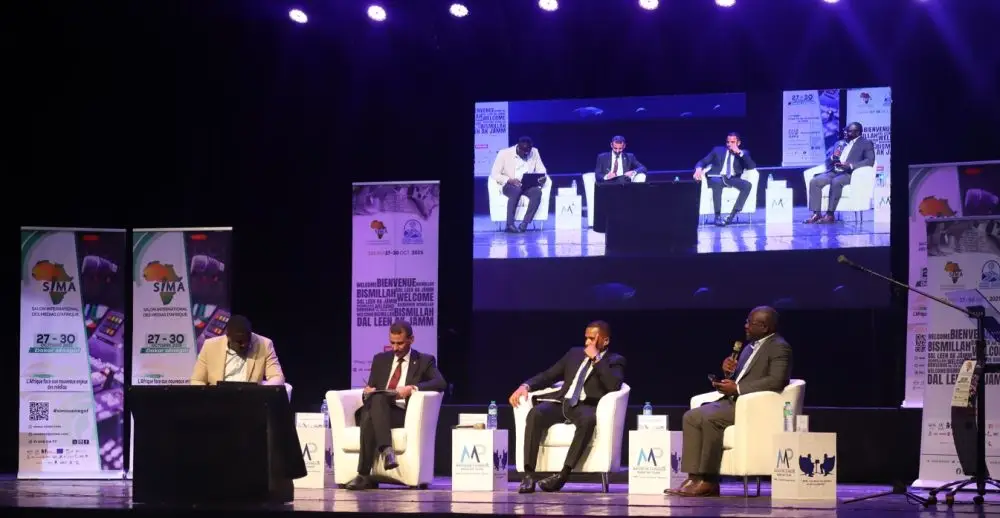
SIMA 2026: Dakar at the heart of discussions on African media changes
Between economic viability, artificial intelligence and continental cooperation, Dakar is the point of convergence of reflections on the future of African media, from October 8 to 11, as part of the second edition of the International African Media Exhibition (SIMA).
Dakar confirms its vocation as an African media crossroads. For four days, information professionals, public decision-makers, investors, institutions and partners meet in the Senegalese capital to debate the transformations of the African media landscape. Beyond professional meetings, SIMA aims to bring out avenues for reflection and possibilities for cooperation in the face of economic challenges.
The theme chosen for this second edition is “building a sovereign and efficient media ecosystem”. The choice of theme reflects a major concern. According to the organizers, it is a question of thinking about “how to guarantee African media to continue to produce quality information, to preserve their independence and to better control their economic development”.
At the official opening ceremony yesterday, the Minister of Communication and Dialogue with Institutions, government spokesperson, Dr Bakary Sarr, set the tone by recalling that media sovereignty cannot be considered a privilege reserved for countries with significant resources. It constitutes, according to him, “an issue of governance, independence and responsibility in an environment marked by profound transformations.
In the chronology of discussions, the organizers indicate that the first day is devoted to the media economy and new models. The challenge is to go beyond the observation of difficulties to think about concrete solutions, adapted to African realities.
The second axis of the show concerns technologies and artificial intelligence. In the midst of a transformation, journalism must deal with new production tools and accelerated methods of disseminating information.
The third day will be devoted to trust, ethics and regulation. These issues are inseparable from economic viability and technological innovation.
In this regard, Dr Bakary Sarr recalled the development by Senegal of a new regulatory framework through the Press Code. This reference places the debate within a broader reflection on the rules which must accompany the evolution of the sector and reconcile freedom of the press, editorial responsibility and regulatory requirements.
The fourth day is devoted to African skills and cooperation. It will put into perspective the need to strengthen professional capacities and encourage the sharing of experiences, report the initiators.
O.BA
