
Senegal-Côte d’Ivoire: the ambition of an economic partnership on a larger scale October 19, 2026
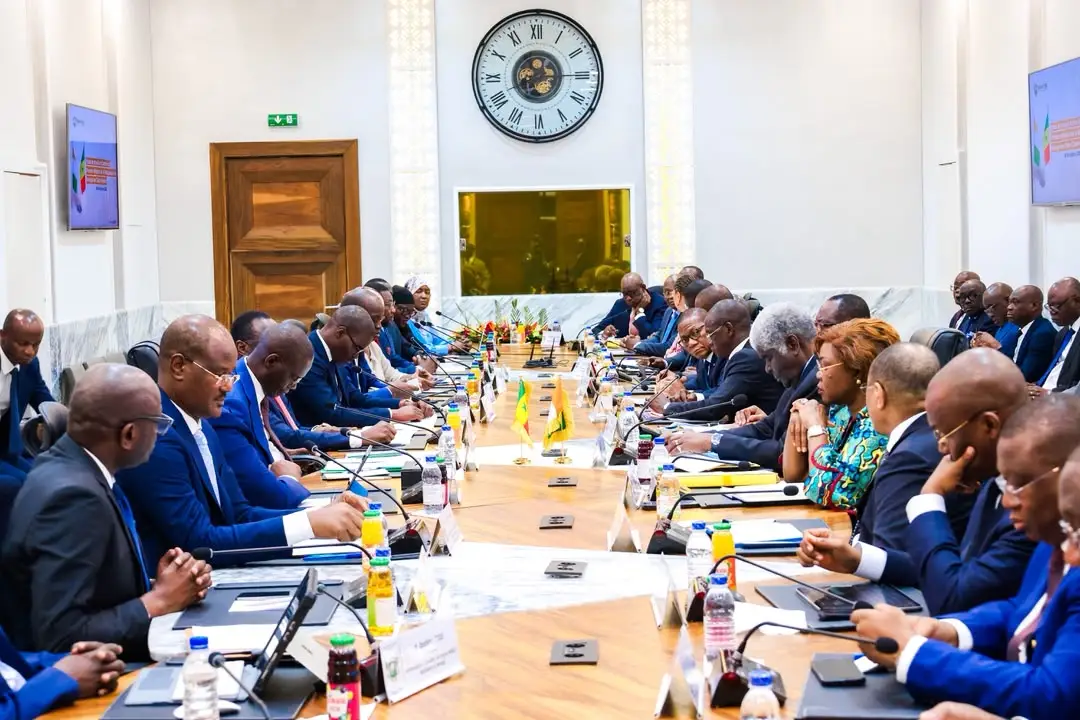
The working visit of Prime Minister Ahmadou Alhaminou Lô to Ivory Coast highlighted the need to strengthen trade and investments between the two countries.
Agriculture, industrial processing, energy and regional value chains are among the areas where Dakar and Abidjan wish to better exploit the complementarity of their economies.
Commercial exchanges to develop
Senegal and Côte d’Ivoire occupy an important place in the West African economy, particularly within the West African Economic and Monetary Union (UEMOA). However, the level of their commercial exchanges remains below the potential given to them by their proximity, their historical links and the complementarity of their activities.
According to the elements discussed during discussions between the two governments, the cumulative volume of bilateral trade is estimated at around 250 billion CFA francs. This figure, which remains to be confirmed before publication, supports the observation of a significant margin of progress.
To further benefit from their respective markets, the two countries wish to strengthen relations between economic operators, encourage cross-investments and facilitate partnerships between businesses. The revitalization of the Senegalese-Ivorian Chamber of Commerce is among the levers envisaged to bring together private actors and create new opportunities.
The challenge is to transform diplomatic proximity into economic projects, jobs and value creation. Exchanges between entrepreneurs, researchers and young project leaders could contribute to this dynamic, provided they lead to structured initiatives that are sufficiently solid to attract funding.
The two governments also intend to better coordinate their action in order to identify priority sectors, facilitate contacts between investors and give concrete follow-up to the proposals made during the visit.
Agriculture, a common strategic project
Food sovereignty constitutes one of the main areas of convergence between Dakar and Abidjan. The two countries have complementary experiences and capacities, likely to promote the sharing of knowledge, the development of agricultural processing and the structuring of value chains.
The cashew sector illustrates the possibilities for cooperation. The data mentioned during the discussions show a production of around 150,000 tonnes in Senegal, compared to 1.5 million tonnes in Ivory Coast. These volumes must be verified before publication. The Ivorian experience could nevertheless offer avenues for reflection in Senegal, particularly in improving production, industrial transformation and the organization of sectors.
Beyond the cashew nut, the discussions opened up prospects for cooperation in agricultural research and financing of the sector. The experience of the Interprofessional Fund for Agricultural Research and Advice (FIRCA) in Côte d’Ivoire could in particular be the subject of technical exchanges in order to identify practices likely to be adapted to Senegalese needs.
Livestock is also among the areas discussed, with possibilities for collaboration around artificial insemination and animal research. The two countries could also examine concerted responses to sheep needs as Tabaski approaches.
These avenues relate to the same priority: developing structuring agricultural projects, better adapting investments to the realities of the territories and strengthening production and processing capacities.
Fertilizers, energy and regional value chains
The planned cooperation goes beyond the agricultural sector alone. Both countries wish to develop regional value chains capable of better exploiting available resources and reducing certain external dependencies.
Fertilizer needs constitute a meeting point between agricultural and industrial issues. The discussions raised the possibility of exploring joint initiatives in this area, taking into account regional resources, production capacities and outlets.
The historical experience of Ivorian participation in the capital of the Chemical Industries of Senegal (ICS), in the 1970s, was also recalled. It illustrates the age of economic ties between the two countries and opens a reflection on new forms of industrial cooperation.
The link between food sovereignty and energy sovereignty is also highlighted. The possibilities for cooperation around gas, agricultural inputs and joint industrial projects could be examined in a regional approach.
The ministries responsible for the Economy and Planning are called upon to contribute to the identification and structuring of projects likely to mobilize public and private actors. Their role will be in particular to transform avenues of cooperation into concrete proposals, with clearly defined objectives and implementation methods.
Moving from intentions to funded projects
The success of this ambition will depend on the capacity of the two countries to organize the monitoring of the initiatives. Trade, investments and industrial partnerships cannot change scale without precise identification of needs, project leaders and financing mechanisms.
The participation of Côte d’Ivoire in Senegalese economic promotion initiatives was mentioned. A fair scheduled for December 15 to 26, 2027 would have been chosen as an opportunity to highlight partnership opportunities, with Côte d’Ivoire announced as guest of honor. However, the name of the event and the dates have yet to be confirmed.
Beyond this deadline, the objective is to increase sectoral meetings and exchanges between operators in order to bring about agricultural, industrial and commercial projects.
Ahmadou Alhaminou Lô’s visit to Ivory Coast thus highlights a common ambition: to give a more operational dimension to the Senegalese-Ivorian economic partnership. The proximity between the two countries constitutes an advantage, but it is the realization of investments, the development of sectors and the creation of jobs which will make it possible to measure the results.
By Cheikh Gora DIOP
