
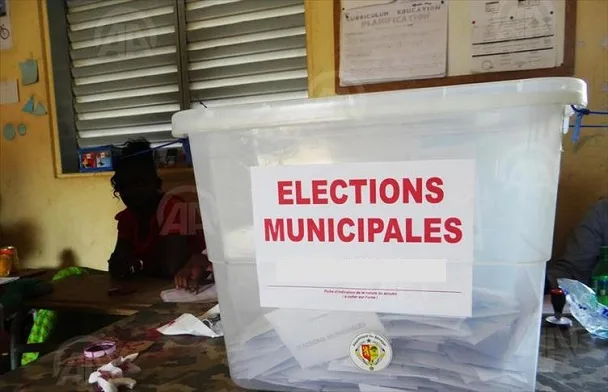
Local elections: the Supreme Court rejects the appeal of Modou Diagne and others
Seized in summary proceedings by Modou Diagne and four other applicants, the summary judge of the Supreme Court rejected their appeal aimed at forcing the authorities to undertake several preparatory operations for the next municipal and departmental elections. The rejection is based on the absence of a sufficiently serious emergency.
Introduced on August 21, 2026, the request was brought by Modou Diagne, Khalifa Ababacar Sall, Samba Sy, Oumar Sarr and Abdou Mbow. The applicants requested in particular to establish a failure of the minister responsible for elections, electoral administration and the Autonomous National Electoral Commission (CENA).
They considered that the delay in certain preparatory operations infringed the right to suffrage, the right to candidacy and the principle of equality before the ballot. They demanded in particular the revision of the electoral lists, the setting of the deposit and the publication of a provisional calendar.
The legal framework
To justify their appeal, the applicants invoked in particular articles L.236 and L.269 of the Electoral Code. They recalled that municipal and departmental councilors, elected on January 23, 2022, have a five-year mandate and maintained that their renewal must take place within thirty days preceding the expiration of the fifth year, i.e. no later than January 17, 2027.
The State of Senegal, for its part, raised the incompetence of the judge hearing the summary proceedings as well as the inadmissibility of the appeal, deemed premature.
Urgency at the heart of rejection
The Supreme Court rejected the arguments relating to incompetence and inadmissibility. It recalls in particular that the interim freedom order, provided for by article 85 of the organic law on the Supreme Court, can be initiated against an action or inaction of the administration when a fundamental freedom is seriously and manifestly impaired and an emergency situation is characterized.
It is precisely this last condition which was not retained. The judge recalls that articles L.230, L.236, L.265 and L.269 of the Electoral Code set the term of office of municipal and departmental councilors at five years. However, paragraphs 3 of articles L.236 and L.269 allow, when circumstances require, to deviate from the planned renewal deadline.
The Court also notes that, although Article L.63 provides that the date of the election is fixed by decree, no provision of the Electoral Code imposes a precise deadline for the issuance of this decree. The elections must, in any case, be held during the fifth year of the mandate.
The request rejected
For the judge, the absence, at this stage, of the decree setting the date of the elections therefore does not compromise their organization with regard to the law and current circumstances. Considering that the urgency is not sufficiently characterized, the Supreme Court thus rejected the request of Modou Diagne and the four other applicants.
The rejection is therefore based not on the incompetence of the judge or the inadmissibility of the appeal, but on the absence of the emergency condition required in the context of the interim relief.
CGD
