
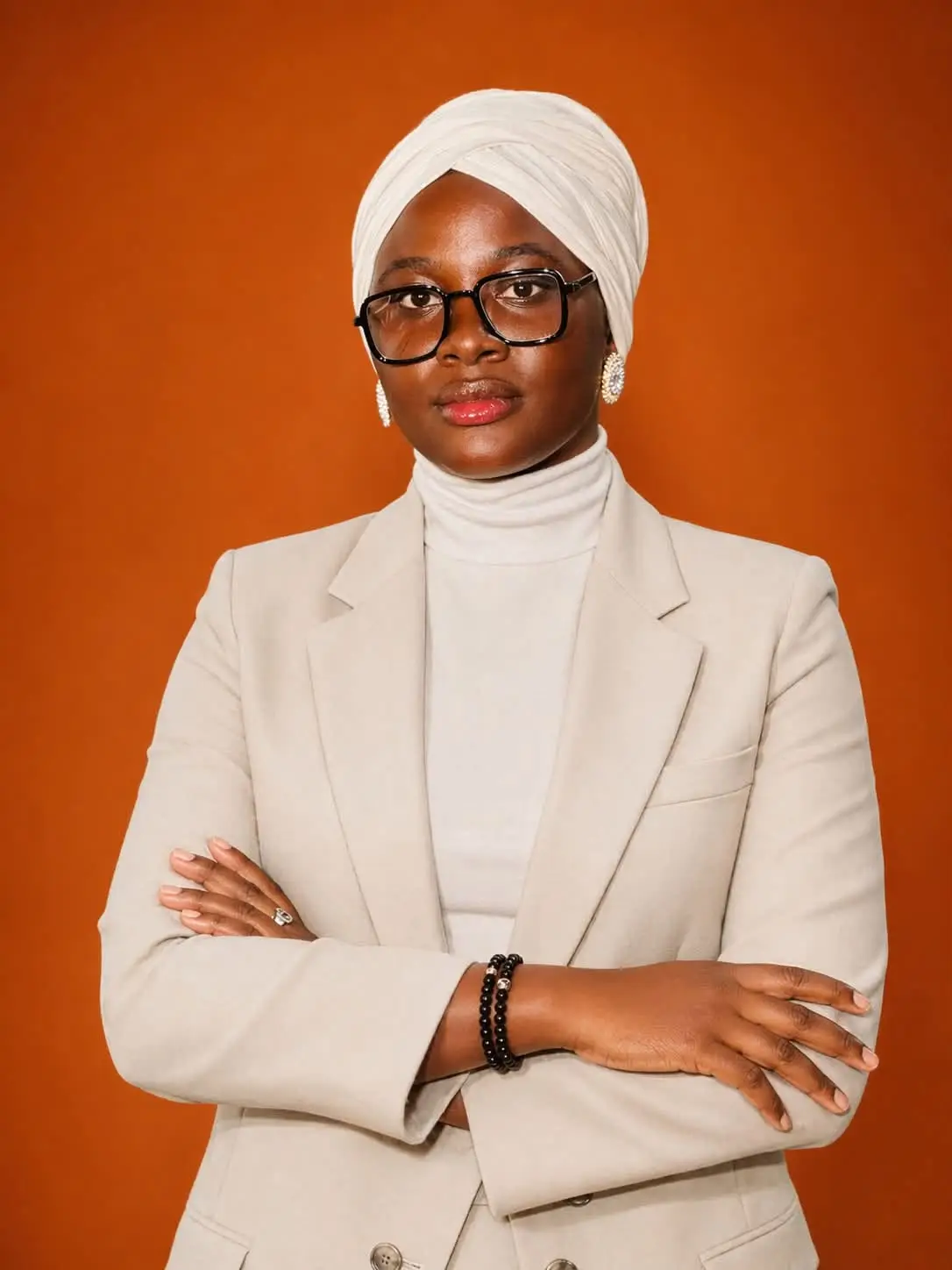
Fatou Ndiaye, first Senegalese selected, wants to make the country shine July 21, 2026
Second year journalism student at the Center for the Study of Information Sciences and Techniques (Cesti) and winner of second prize in the CJRS competition for best journalistic productions, Student category, Fatou Ndiaye will represent Senegal at the fourth edition of the Summer School of Writing and Journalism (EEEJ) scheduled from July 27 to August 8. This training of excellence brings together young talents from all over French-speaking Africa each year in Cotonou, Benin.
Beyond this selection, Fatou Ndiaye makes history by becoming the first Senegalese woman to represent the country at this prestigious school. A distinction that she welcomes with humility and a sense of responsibility. “It is first of all a pride, but a pride that comes with a responsibility. Representing Senegal means carrying a collective trajectory, that of all the people who did not have this opportunity and those who will come after. Being the first only makes sense if this place opens the way for other women,” she believes. According to him, this selection is a starting point, an opportunity to learn, to compare one’s practices with other journalistic traditions and to come back with tools to transmit, while having the feeling of having worthily represented one’s country.
For the future EEEJ participant, getting this place required several months of preparation. Candidates had to submit a draft article related to the theme of the edition, detailing the motivations, the journalistic methodology envisaged, the sources to consult as well as the expected impact of the subject. To this was added a three-page text intended to assess the quality of the writing, a cover letter, a curriculum vitae, administrative documents as well as a general knowledge test. The preselected profiles were then submitted to a one-hour interview before a jury.
Rigorous selection
“It is a long, rigorous and demanding process, which requires will, determination and resilience. The draft article must be strong enough to stand out from other applications. In the end, only fifteen participants are selected across the whole of French-speaking Africa and, for Senegal, a maximum of two profiles are generally selected,” explains Fatou Ndiaye.
This year, the theme of the EEEJ is “Flash, Clap and heritage”. For her project, the young Senegalese was interested in Camp de Thiaroye, the film co-directed in 1988 by Ousmane Sembène and Thierno Faty Sow. Her ambition is to show how cinema can become a tool of counter-history and collective memory. “I chose this film to show how Ousmane Sembène used cinema to reveal a truth that official archives have long disguised. The Thiaroye massacre was not officially recognized until 2024, thirty-six years after the film’s release. This shows that cinema can become a memory. My work will, however, remain journalistic, with the comparison of archives, testimonies and different sources so that the reader can form their own opinion,” she emphasizes.
Organized for two weeks and entirely financed by the Vallet Foundation, under the aegis of the Fondation de France, in collaboration with the NGO Bénin Excellence, this creative residency combines literary writing and journalism. Only fifteen participants are selected following a particularly demanding selection process.
Fatou Ndiaye will share this residence with Thierno Ndiaye (graduate of the 53rd class of Cesti). Their mission will be to fly the flag of Senegal high in this fourth edition.
Arame NDIAYE
