
Artists want to see life in pink July 21, 2026
“Art is priceless”, this phrase comes back tirelessly in the mouths of the island’s painters. This inestimable value means that many of them continue to cling to it despite the difficulties.
Painting is one of the main activities in Gorée. At rue Castel, art is there. The art paintings serve as ornaments. Bright colors as well as paintings depicting Africa are highlighted in order to attract tourists, the main buyers.
At the beginning of the afternoon, Aly Thiam arranges the arrangement of his works exhibited on the ground. A situation which is far from delighting the artist. “It is not rewarding for us to exhibit our paintings in the open air. The only satisfaction we can have is the recognition of our creations. A gallery would have done the trick. Unfortunately there is not enough space,” he laments.
Despite these obstacles, the painter continues to believe in his art: “everyone buys the paintings. Art is something that is priceless. It all depends on the sensitivity of the buyer who can spend up to 25,000 FCFA if he considers that the painting is worth the cost,” says the thirty-year-old. More than ten years in the profession, Aly Thiam hopes to make his works known through exhibitions.
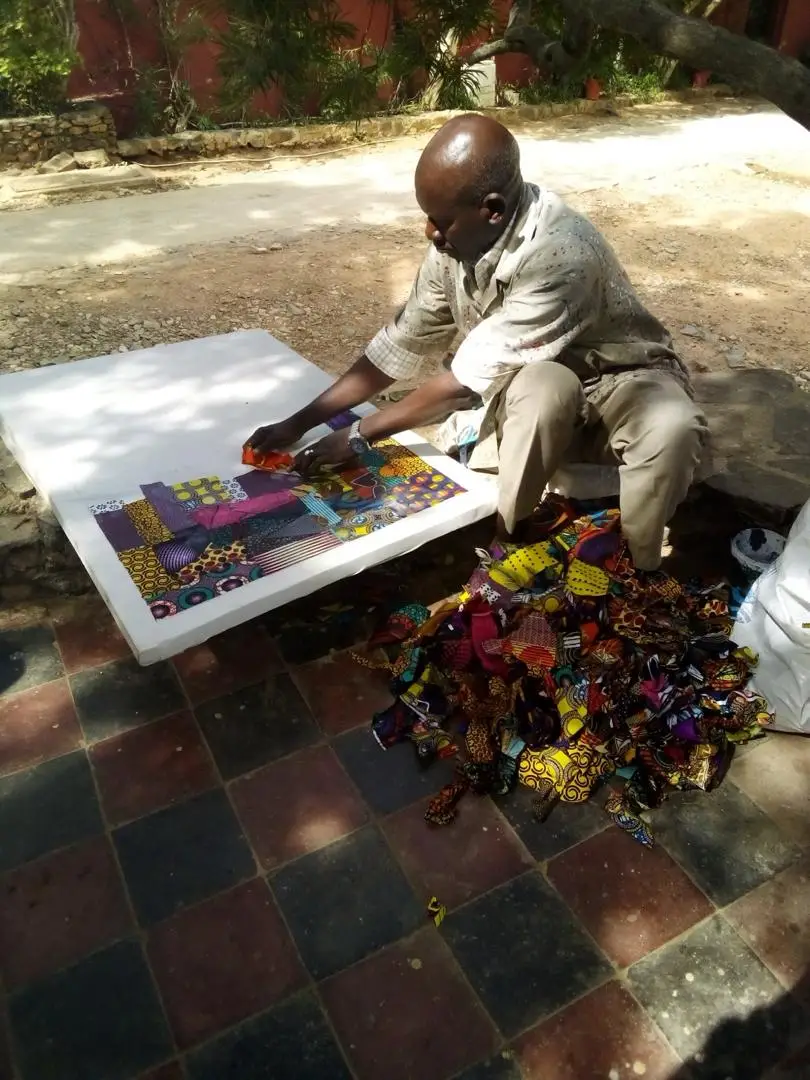
Concentration is required not far from Aly Thiam’s location. Dressed in a khaki blouse stained with paint, his eyes glued to his canvas, Massire Camara seems to cut through everything. On a table as a support, wax fabrics in flashy colors are scattered all over his work space. In this bric-a-bac, “Grand Mass” intends to give shape to its canvas.
He grabs a piece of wax fabric then using glue and his brush, he fixes the fabric so as to obtain a symmetrical result. “The choice of pieces of fabric is not trivial. I try to play on these warm colors in order to catch the eye of the customer. They sell like hot cakes, tourists like this touch of originality,” he explains.
A singularity which according to the sixty-year-old differentiates each painter. “Painting is one of the main commercial activities on the island. But we all have our artistic touch. For example, you won’t see this painting in any other painter,” he adds proudly.
A painter for seventeen years, the man with salt-and-pepper hair has participated in two biennials and calls himself “versatile”. He explains: “I do figurative art, abstract art and try new things while making the art painting speak.”
An art which is not without difficulties. “We are really struggling to get customers to come to us. The guides didn’t make it easy for us because they had to bring the buyers to us. But they are becoming more and more rare,” laments the thirty-year-old. Grand Mass hopes for more recognition and support from the authorities.
Sandblasted paintings
Libass Cissé and his son Mouhamed are one of the rare painters who own a gallery. Located a stone’s throw from the slave house, the front of the DecoAfrique gallery attracts attention. A huge fresco representing a slave is depicted in black and orange tones. But on closer inspection, this wall work fascinates due to the material used to create this creation. Sand painting is the particularity of this art shop managed by Père et Fils.
Inside the workshop, Mouhamed gives a little demonstration to a few tourists who have come to take a closer look at the paintings. Concentration is at its maximum. Moha draws a box using glue on a wooden support. After drawing, he sprinkles white colored sand on the board. He dusts off a little and the work immediately takes shape. Other works in this style hang on the walls, frames with color gradients such as orange black, yellow gray or even gray black.
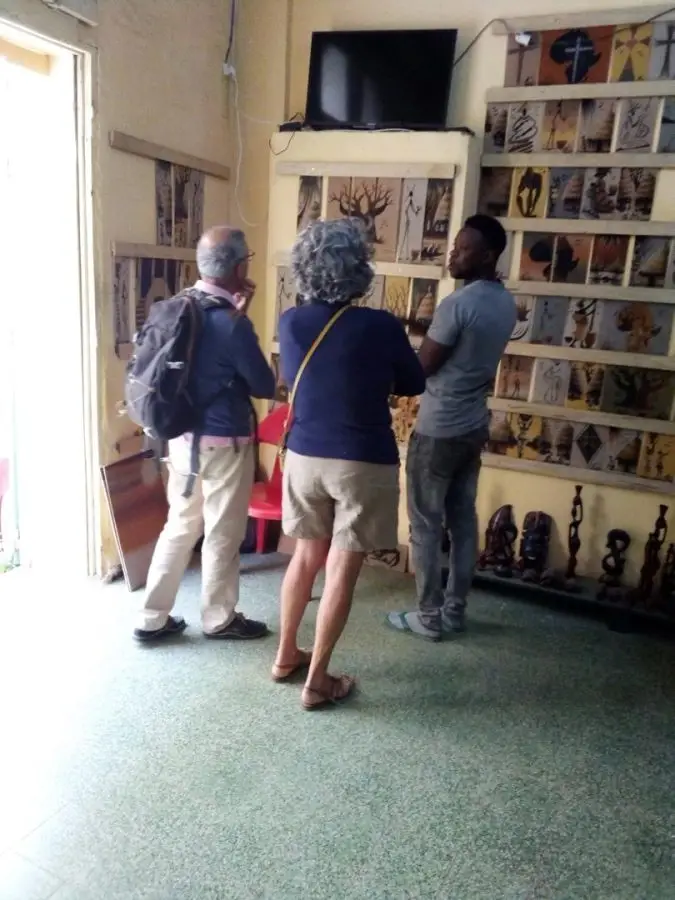
Libasse chats with customers a little further away. “Each type of sand comes from a specific place. For example, yellow sand comes from Niayes, orange sand comes from Mauritania, brown sand from Dakar and black sand from Mamelles. It is thanks to this diversity that we create our sandblasted paintings,” explains the painter.
Libasse has learned this know-how over the years: “I didn’t do long studies. I was trained on the job and now I have been doing this job for around thirty years,” he confides.
A profession which is not without obstacles according to the fifty-year-old. “Our main difficulty is unfair competition. Hoteliers buy our paintings to resell them. This is not normal because art is our only source of income,” he admits with a touch of bitterness.
Despite the hazards of the profession, these artists continue to cling to painting in the hope of a more colorful life.
Hard gold
“Nothing is lost, nothing is created, everything is transformed”, the artists have attributed this famous formula of Lavoisier. Art on the island is also made with recycled objects. Vieux Mbodj makes figurines from recycling. “Everything that is waste, I use to give it new life,” said the forty-year-old. He says it’s an art where you shouldn’t hesitate to “get your hands dirty.” Born into a family of artists, the young man quickly found his calling by contributing to the good of the environment.
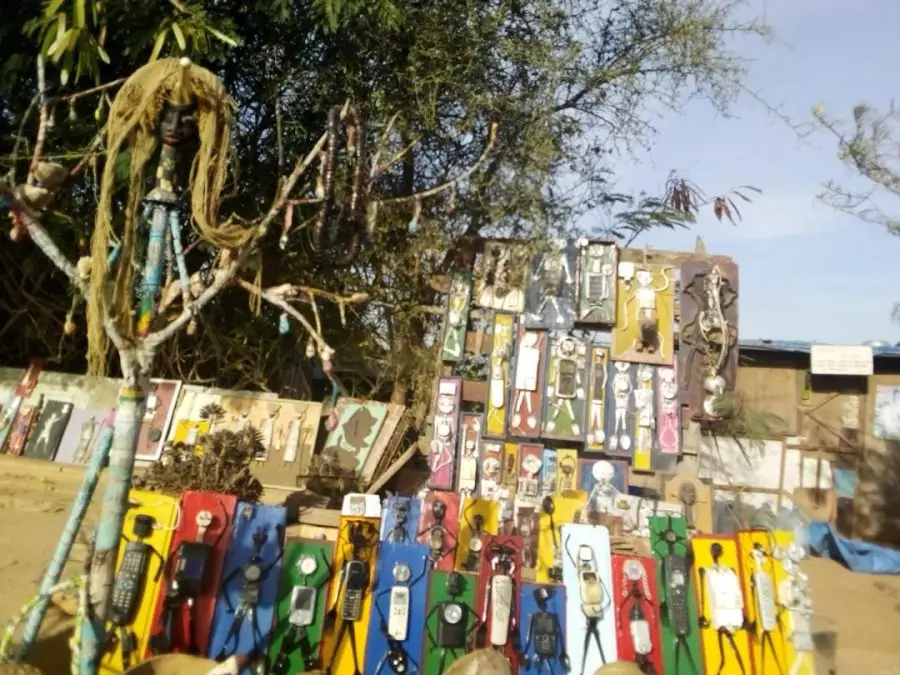
Antoine Gomis is also active in recovery. The young man transforms old chargers and old remote controls in order to give these objects a second life. “Wires, circuit breakers, batteries are inspired by human beings.” An inspiration which according to the artist contributes to reducing pollution on the island.
Babacar Dramé also contributes in its own way to reducing waste. The recycling of glass or plastic bottles into art objects is the vocation of “Baye Fall Samuraï”. He uses a very particular process for his works. “I use sand and add coloring to it. I fill the bottles with this mixture and I make designs to make them more attractive. The gentleman claims that he is one of the rare artists to make sandblasted art bottles.
Art is of inestimable value to these artists who turn trash into hard gold.
Arame NDIAYE
