
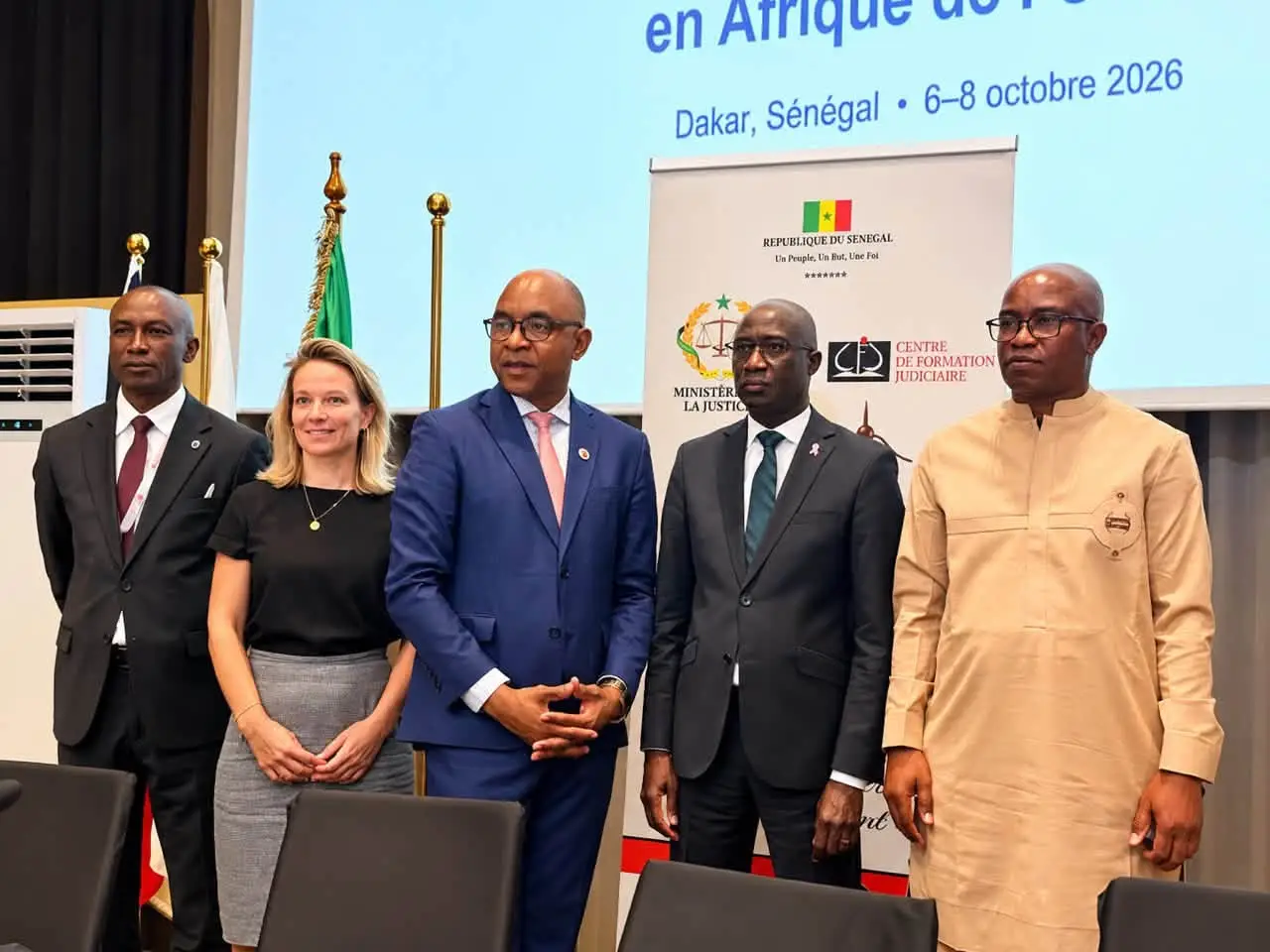
Evidence collected on the battlefields: Senegal pleads for a reliable judicial chain
At the opening, this October 6, 2026 in Dakar, of the regional workshop on evidence collected on the battlefields in West Africa, the Minister of Justice, Keeper of the Seals, Maître Moussa Sarr, called for better organization of the passage of evidence from the military field to the courtroom. The meeting brought together magistrates, investigators, experts and officers from fourteen West African and neighboring countries for three days.
Making military evidence an element that can be used by justice
For the minister, one of the main challenges lies in the ability to transform the elements collected during military operations into admissible evidence in court. Telephones, computers, documents, weapons or biometric data can be decisive in legal proceedings, but their use requires sufficiently rigorous methods of collection, preservation and transmission.
“The whole point is there. How can something seized during a military operation be made admissible evidence in court? How can we achieve this without giving up any guarantees of a fair trial? », summarized Master Moussa Sarr.
He identified three major requirements: fighting impunity, guaranteeing the admissibility of evidence and respecting human rights. Proof must in particular make it possible to establish its origin, its author, its conditions of conservation and the methods of its transmission.
The chain of proof at the heart of concerns
The minister insisted on the need for better coordination between the military, investigators and magistrates. The seizure, the drawing up of the report, the sealing, the handing over to investigators, the extraction of digital data and their authentication constitute, according to him, a real chain in which each link must be secure.
“A case is worth what its evidence is worth,” he recalled, emphasizing that the link between the forces present on the ground and the judicial authority must be organized before the trial.
The minister also highlighted the particular difficulties linked to classified information, which must be reconciled with the rights of the defense and the requirements of a fair trial.
Regional cooperation and respect for rights
Faced with a terrorist threat that crosses borders, Maître Moussa Sarr pleaded for reinforced judicial cooperation. Mutual assistance procedures must be made faster in order to facilitate the sharing of evidence between States.
Respect for human rights, however, remains a red line. “Evidence obtained with disregard for human dignity has no place in a courtroom, regardless of the seriousness of the facts,” declared the minister. He also recalled that cooperation between defense and security forces and judicial authorities cannot call into question the independence of the judge, who freely assesses the elements submitted to him.
At the end of the three days of work, the minister expects practical solutions from the participants, adapted to the different legal systems and applicable quickly, as well as the establishment of lasting working relationships between magistrates, investigators, experts and the military.
CGD
