
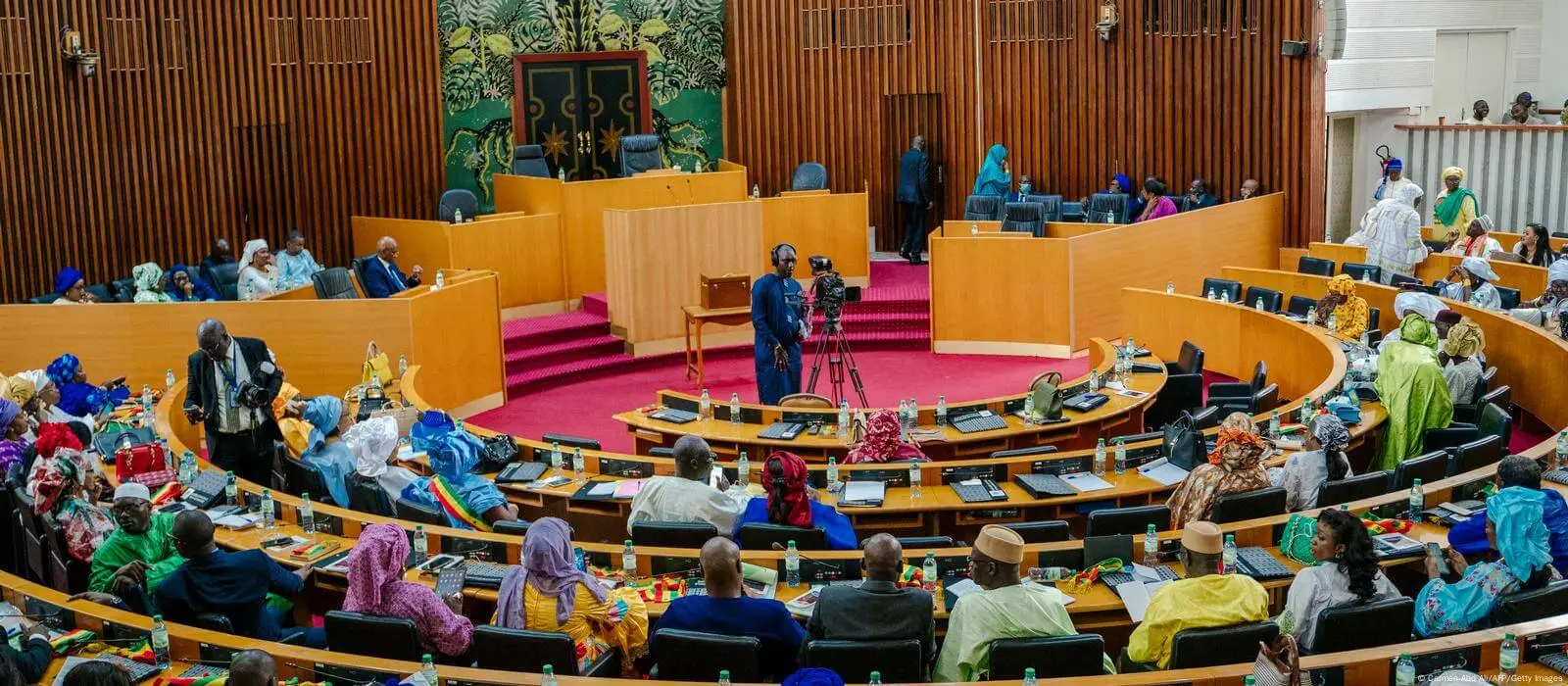
Budget 2027: the Ministry of Finance contests the request to withdraw the bill
The Ministry of the Economy, Finance and Planning contests the request for withdrawal of the initial finance bill (LFI) 2027 made by the president of the Finance and Budgetary Control Committee of the National Assembly. In a press release published on November 4, he believes that the rejection of the 2026 amended finance bill (LFR) does not justify the withdrawal of the following year’s budget.
The debate around the 2027 budget is taking a new turn. By letter No. 41/ANS/CFCB of November 3, 2026, the chairman of the Finance and Budgetary Control Committee asked the Minister of the Economy, Finance and Planning to withdraw the draft LFI 2027, already transmitted to the National Assembly by presidential decree. He considers that the rejection of the LFR 2026 calls into question the reference hypotheses used to develop the 2027 budget and recommends, as such, the presentation of a new version based on the LFI 2026.
A position that the ministry contests, noting a contradiction in the parliamentary approach. According to the press release, the same committee chairman, on November 4, summoned the members of this body for a meeting scheduled for November 5 at 9 a.m., with a view to initiating the examination of the 2027 budget.
The ministry also raises the question of respect for parliamentary procedures. He recalls that Article 46 of Organic Law No. 2025-11 of August 18, 2025 on the Internal Regulations of the National Assembly provides that the committees must be convened at least 48 hours before their meetings, except for exceptions linked in particular to urgency or certain amendments.
In substance, the ministerial department maintains that the rejection of an amending finance bill does not automatically result in the withdrawal of the initial finance bill for the following year. He cites the precedent of 2025 as an example: the LFI 2026 was adopted on December 13, 2025, before the adoption of the second LFR 2025, which took place on December 30 of the same year.
Faced with this succession of initiatives, the ministry considers that these are “obstructive maneuvers” likely to compromise several of the government’s economic and social priorities. He mentions in particular the consolidation of public finances, economic recovery, the clearance of payment arrears, support for the most vulnerable populations as well as respect for the commitments made with the unions within the framework of the Social Stability Pact for inclusive and sustainable growth.
CTN
