
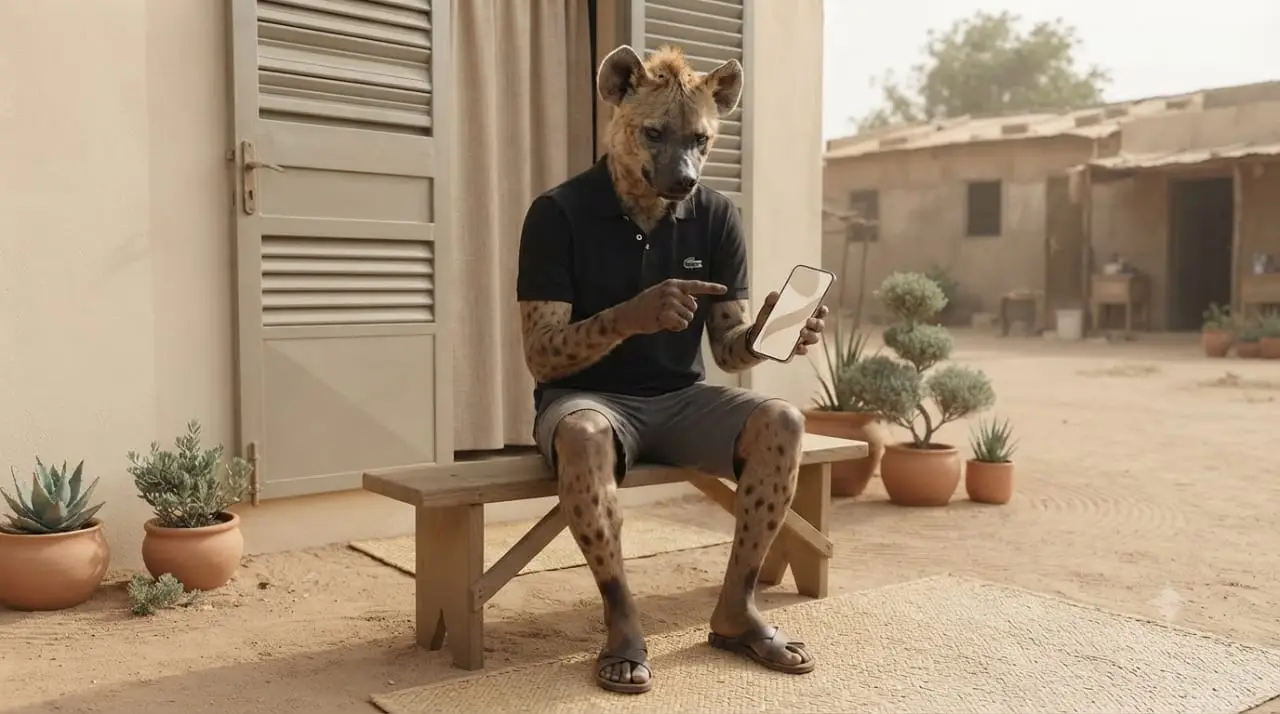
Artificial intelligence: when “Bouki” eclipses the real digital challenges
Lately, videos generated by artificial intelligence, featuring animated animals, are invading social networks. In Senegal, the phenomenon is relaunching the debate on the use of these new digital tools and on Africa’s capacity to truly benefit from them.
A few days ago, however, an event was held dedicated to reducing Africa’s delay in the digital race: the Gaïndé Digital Back to School 2000, organized on September 8 and 9. An initiative which recalls the urgency for the continent not to be left behind in a technological revolution which is already profoundly transforming economies and societies.
But beyond mastering the tools, an essential question arises: how to use artificial intelligence to promote Africa, strengthen its competitiveness and contribute to its development?
The continent can certainly aim to make up part of its delay. We still need to know how to take full advantage of these technologies, which have become essential in the digital transformation of States, businesses and societies.
Between innovation and the race for buzz
In Senegal, certain compatriots are already distinguishing themselves with promising initiatives. This is particularly the case of Ndiaye Dia with SALTIS or even Papa Demba Thiam, with PETIS 2.0 in gestation. Approaches which illustrate the possibilities offered by digital technology when it is used for structuring projects.
Alongside these initiatives, other uses of artificial intelligence seem more guided by the search for visibility. To garner “views”, gain subscribers and be the first to occupy the buzz field, certain creators are increasing the number of videos featuring “Bouki”, the hyena, and his friends.
The problem is obviously not the use of these characters from our popular imagination. Quite the contrary. Their narrative and cultural potential is considerable. But we still need to go beyond the simple register of entertainment to produce content capable of informing, educating or promoting our heritage.
“Leuk” rather than just buzz
The creators of this content would perhaps benefit from drawing more inspiration from the ruse of “Leuk”, the hare, which they nevertheless like to stage and caricature. These animal figures, deeply anchored in our culture and our oral tradition, could serve as a support for innovative educational, historical or cultural content.
Artificial intelligence could thus make it possible to revisit the tales of our childhood, to transmit knowledge to new generations, to tell the history of Senegal or even to promote our languages and our heritage to a wider audience.
Instead, the race for buzz sometimes seems to take over. Even more surprising, the creators of these videos come to compete for the first of the idea, each claiming to have been the first to exploit the vein. A quarrel which above all illustrates the speed with which a technological innovation can transform into a fashion phenomenon.
However, these young creators are not without merit. Manipulating these tools, generating animated images, producing coherent sequences and broadcasting them already requires a certain technical mastery. So the question is less about whether they know how to use AI than about what purposes they choose to use it for.
Making AI a development tool
The issue goes far beyond the videos that make people laugh on social networks. Artificial intelligence should above all be mobilized to prepare Africa’s digital future: improve education, strengthen health, develop agriculture, facilitate access to public services, support businesses and promote African cultures and languages.
In Senegal, reducing AI to content intended to “drunk” the public, sometimes by introducing children to new insults or expressions devoid of real interest, amounts to missing out on part of its potential.
Africa is fully engaged in digital transformation. But the gap with the major technological powers risks continuing to widen if the continent does not manage to go beyond the simple consumption of innovations to itself become a space for creation, experimentation and technological production.
“Bouki” can certainly make you laugh. But the challenge now is to make artificial intelligence a real lever for thinking, telling and building the Africa of tomorrow.
Fatou NGOM
