
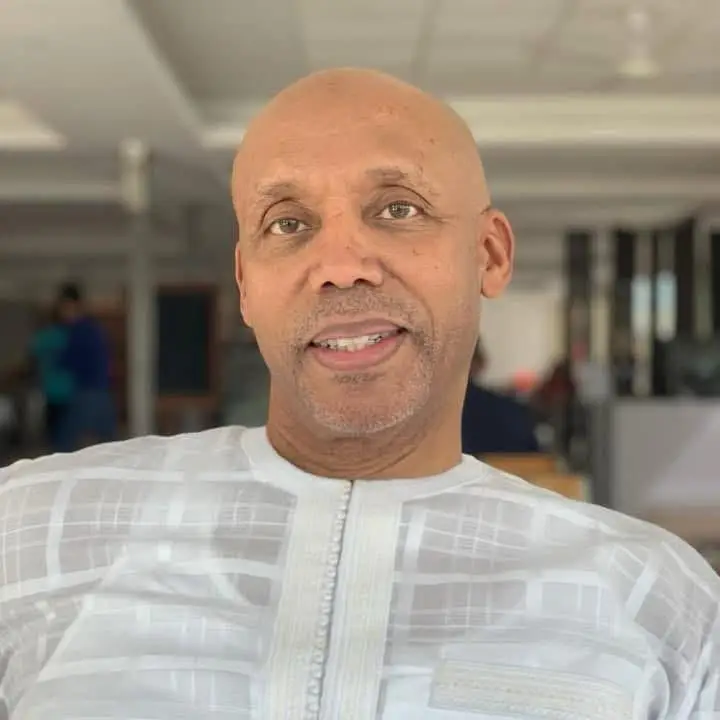
Senegalese basketball deserves better than silence and fear (By Joe Lopez) September 15, 2026
Senegalese basketball has always been more than a sport. It has been a school of discipline, a source of national pride, a showcase on the continent and beyond. Generations of players, coaches and managers have built, often in anonymity and sacrifice, the glorious history that we still talk about today: the epics of the Lionesses, the pioneers who opened the way on the continental and international scene, the builders of clubs and vocations. It is this legacy that makes what our discipline is going through today all the more alarming.
1. Guadalajara: the symptom of a deeper evil
The recent episode experienced by our Lionesses at the Olympic pre-qualifying tournament in Guadalajara, Mexico, is a perfect illustration of a drift which risks further tarnishing the image of the FSBB. After the elimination of the team, several international players found themselves stranded on site, in conditions that they themselves described as unacceptable: poor support, difficulties returning to the country, paltry sums sent to meet basic needs. One player publicly recounted having to pay out of her own pocket to feed her teammates. Others denounced the absence of the bare essentials for athletes in international competition. The real question is this: What has the FSBB done to put the players in good performance conditions? Many months before the competition, the FSBB knew that Mexico City would host the tournament. What arrangements have been made to facilitate obtaining visas and acclimatization to the altitude of more than 1560 m? When did the team arrive in Mexico? The FSBB’s communication knowingly obscured these points to point the finger at so-called breaches of federal discipline!!! In the distant past, of course, the Senegal women’s national basketball team participated in the World Championship in Cali, Colombia, more than 1000 m above sea level. The far-sighted leaders of the time had sent the entire team and management weeks before the competition to facilitate adaptation to the special conditions of the tournament.
2. An opacity that has lasted too long
For several years, the management of the Senegalese Basketball Federation (FSBB) has raised questions that too few voices dare to ask publicly. On what basis are sporting and financial decisions made? What are the real objectives of the Federation, beyond the occasional press releases? Senegalese basketball suffers from a glaring lack of clear and shared vision, on the training of young people, on infrastructure, on the place of Senegalese basketball in continental and world competition. Without a defined course, without accountability, a sports federation no longer manages: it improvises, to the detriment of those who wear the jersey.
3. Fear does not build a federation
This is perhaps the most worrying point of this crisis: the gradual transformation of legitimate criticism into punishable misconduct. A recognized technician, trained in the United States and engaged for years in training young people in Senegal, recently testified to the lack of consideration he received despite his experience. Former managers, coaches, players who gave years of their lives to Senegalese basketball express today, with different words, the same feeling: that of no longer being listened to, and that of risking reprisals if they raise their voice. A sports federation is not the property of its current leaders. It is a common good, built by decades of collective efforts. Those who wrote the history of Senegalese and African basketball, players, coaches, referees, leaders of another generation, deserve to be involved in thinking about the future of this discipline, not relegated to silence or treated as adversaries simply because they speak out.
4. What Senegalese basketball deserves
Senegal has given African basketball some of its greatest names and some of its finest pages. This heritage imposes responsibilities: transparency in the management of resources and decisions, sporting and institutional objectives clearly stated and publicly evaluated, real protection of athletes, on the field and on the move, and a space where constructive criticism is received as a contribution, not as a betrayal. None of this is a questioning of the sport itself or of the work of all those who, within the Federation, work honestly on a daily basis.
It is a call for responsibility, addressed to those who lead Senegalese basketball today: silence imposed by fear has never made an institution grow. Only transparency, assumed and demanded, will allow Senegalese basketball to reconnect with the ambition that has always been its own.
Joe LOPEZ
Retired diplomat, African Champion, Gold medalist at the African Games
Company CEO, President of International Players Services – West Africa, Member of the Board of Directors.
