
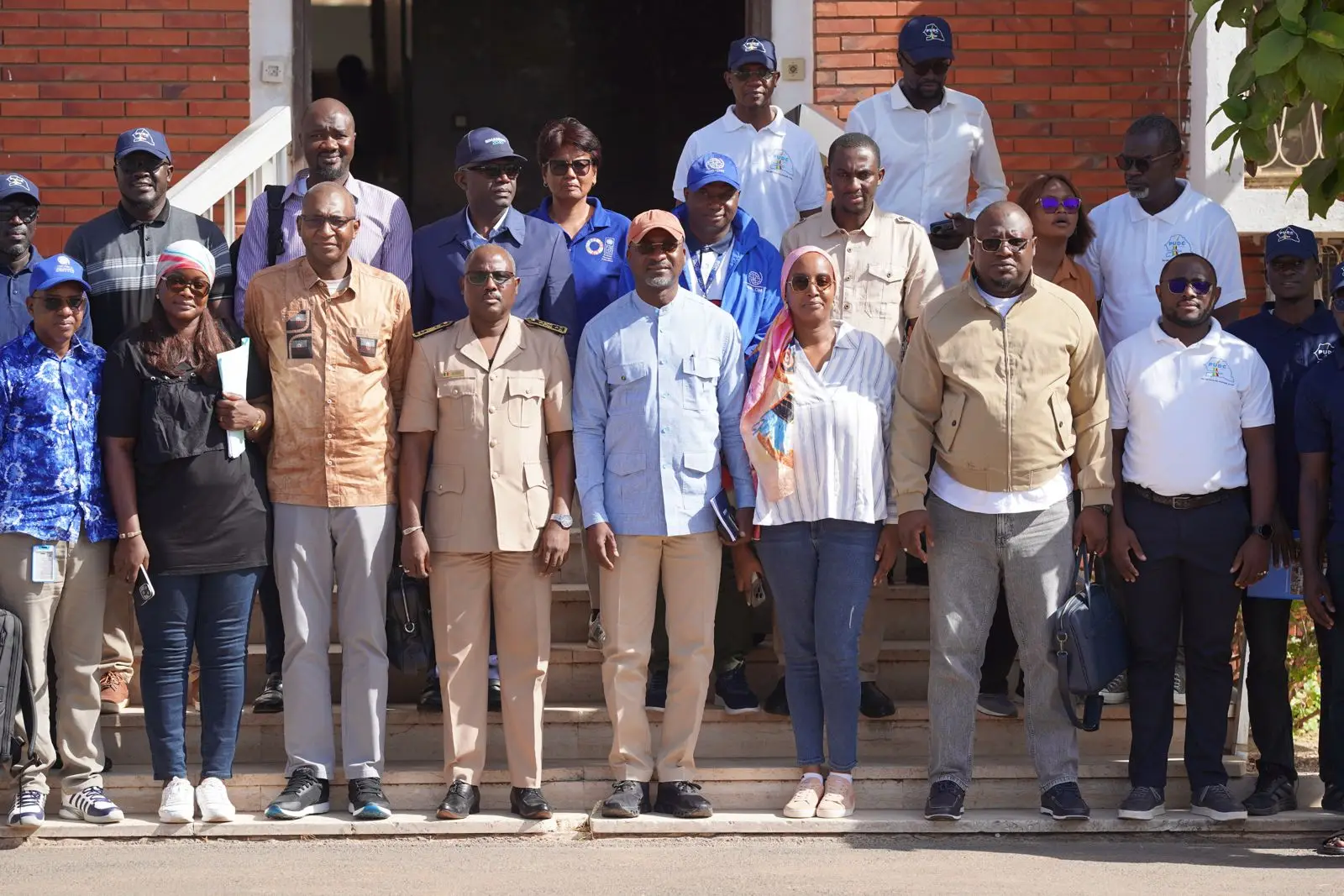
Guinea draws inspiration from the experience of the Senegalese PUDC November 23, 2026
A Guinean government delegation stayed in Senegal, from November 16 to 21, 2026, to soak up the experience of the Emergency Community Development Program (PUDC), particularly in terms of financing, infrastructure construction and monitoring-evaluation.
The Senegalese model of community development is attracting the interest of several African countries. Latest illustration: a Guinean government delegation, led by Ambassador Kabélé Soumah, Secretary General of the Ministry of Planning and International Cooperation, carried out an exchange mission to Senegal with the support of the United Nations Development Program (UNDP).
Received on November 17 at the PUDC headquarters by its National Coordinator, Gade Kounta, the delegation was informed about the institutional framework, the financing mechanisms and the results of the Program. This aims to “ensure that no Senegalese is left out of development because of their place of residence”, recalled its coordinator.
In just over ten years, the PUDC has notably built more than 1,090 kilometers of tracks, electrified more than 1,170 villages, improved access to drinking water in more than 2,050 villages and deployed more than 5,800 post-harvest equipment. Achievements that inspire several African countries, including Togo, the DRC, Chad, Cameroon and the Gambia.
On November 18 and 19, the delegation made field visits to the departments of Foundiougne and Fatick. In Kébé Ansou and Keur Bakari Cissé, she discovered electrification infrastructure benefiting around 1,765 residents. In Sokone, an agri-food processing platform processes up to 600 tonnes of cashew nuts for the benefit of 39 GIEs. The mission also made it possible to observe the impact of the Passy-Thioyène track, which opens up 36 villages and serves more than 22,000 inhabitants.
In Ouyal Sandé, visitors met the 98 women of the Dialki Diék group, who have been managing their post-harvest equipment since 2019. Thanks to their organization, they built up savings of 738,960 FCFA and acquired a peanut crusher with their own funds. The tour ended at the Ndiob health post, which serves 12,082 people in 23 localities.
The mission continued on November 20, to the Ministry of Finance and Budget, focusing on financing mechanisms and setting up projects, then at the National Agency for Regional Planning (ANAT).
At the end of the discussions, several lessons were learned: participatory targeting of beneficiaries, the involvement of communities in the management of works, the complementarity of infrastructures and the central role of the State in mobilizing financing.
The PUDC National Coordinator, however, insisted on the need to adapt the model to the realities of each country, specifying that the program “is not intended to be reproduced in a uniform manner”. Senegal has thus reaffirmed its availability to support Guinea in the design and implementation of its local development program, particularly in view of its ambitions within the framework of Simandou 2040.
