
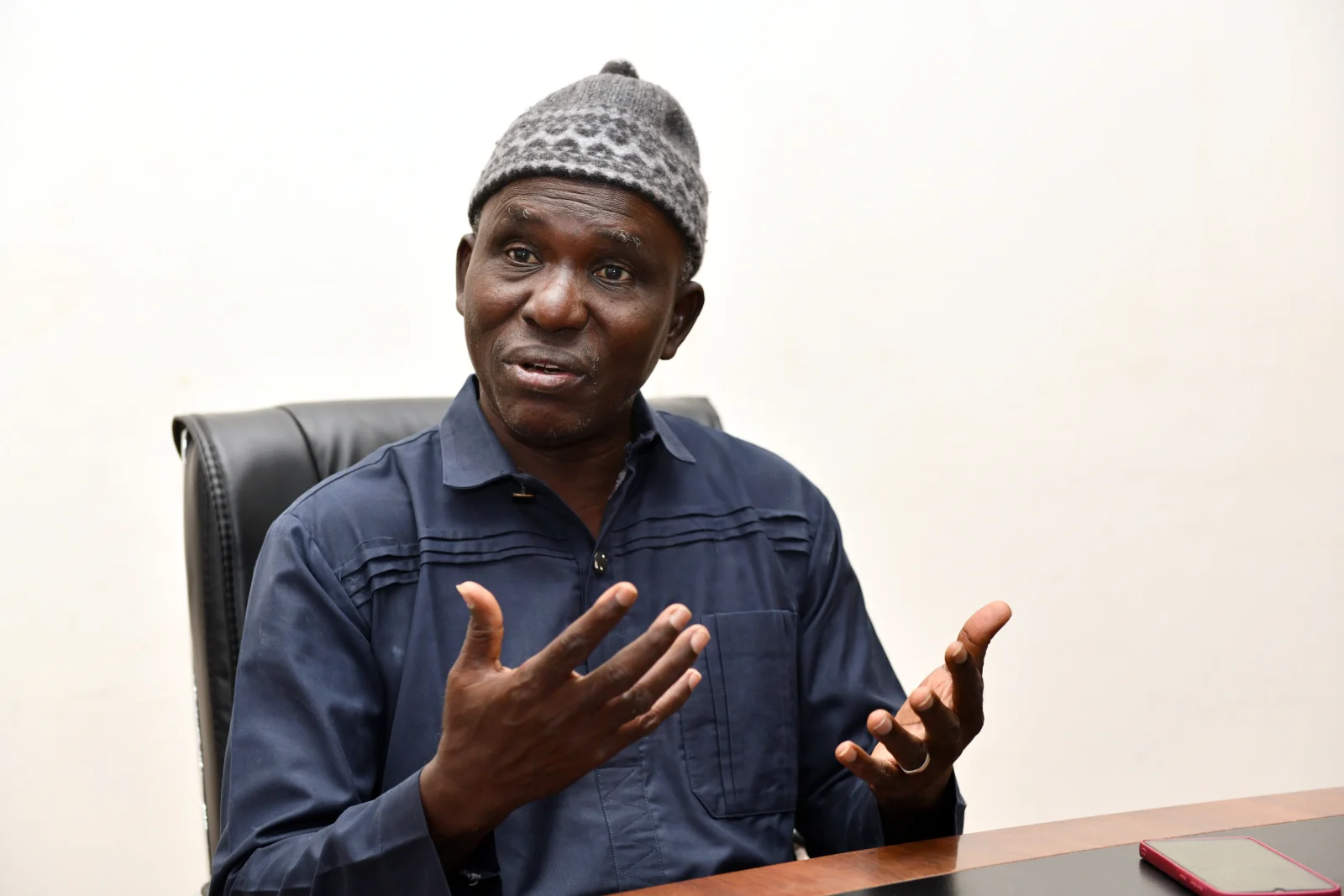
Sanoussi Diakité: “We must extend the cultivation of fonio to all regions of Senegal” (5/5) November 21, 2026
Long confined to its traditional production areas, fonio could conquer new terroirs in Senegal. Resistant to difficult climatic conditions and capable of growing on poor soils, it constitutes, according to Sanoussi Diakité, inventor of the fonio hulling machine, president of the Senegalese Association for the Promotion of Fonio and president of the National Organizing Committee of International Fonio Day, a lever for strengthening food sovereignty. But its growth remains dependent on a more assertive commitment from the State and concrete measures in favor of producers.
The theme chosen for the 17th edition of Fonio Day, celebrated on November 15, invites us to think about the extension of this crop beyond its traditional production areas. Why has this question become a priority in the current context of food sovereignty and climate change?
The question is relevant. First, we face a challenge of food sovereignty. In other words, we must close the gap between what we produce and what we consume. This deficit must be compensated by additional production. However, fonio offers a lot of possibilities in this regard. Furthermore, its cultivation remains concentrated in certain areas of Senegal, particularly in the South and South-East. This is also a situation that we find in other producing countries: the cultivation of fonio is generally limited to specific geographical and cultural areas. However, there is no reason why other regions should not be interested in it. It’s not a question of climatic conditions. Fonio is particularly suited to difficult conditions. It is also not a question of rainfall, since it can grow in areas with little watering. It is not more demanding in terms of soil fertility, because it can be cultivated on poor and rocky soils. All these elements show that we have an interest in extending its culture beyond its traditional areas, particularly in regions like Diourbel, Louga, Matam, Podor or Saint-Louis. Its cultivation can also be considered in Saloum and Sine, where the soils are sometimes considered very depleted. Fonio could indeed find its place there, since it is recognized for its capacity to adapt to the effects of climate change.
You mentioned earlier the challenge of food sovereignty and the production deficit to be filled. Is fonio itself sufficiently consumed in Senegal for us to be able to speak of a deficit between production and consumption? In other words, what quantities are produced and what quantities are consumed?
When I spoke of a deficit, I was referring to all the food crops that we need. Millet, corn and rice are not enough to achieve food sovereignty. We import up to a million tonnes of rice and almost 400,000 tonnes of corn. This is therefore a cereal deficit that must be filled. Regarding fonio, national production is estimated at around 6,000 tonnes. This quantity is not enough to cover our consumption, especially since we also import fonio. A study revealed that 70% of the fonio consumed in Senegal comes from Guinea. This means that, even for this cereal, we have a deficit to absorb. We must therefore reduce this dependence on imports.
Beyond natural conditions, what are the main obstacles to the expansion of fonio cultivation? Is it the availability of seeds, mastery of cultivation techniques, mechanization, financing or even market access?
The most determining factor will be the desire to put in place a real policy of extending fonio cultivation. It is about encouraging populations, encouraging actors and promoting this culture in other regions. We must inform producers, allow them to measure its potential and encourage them to take ownership of it. This is essentially what our country is lacking today.
After all these years of involvement in this sector, and while you yourself are the inventor of a machine intended to facilitate the processing of fonio, do you have the feeling that the public authorities are giving this crop the place it deserves, given its nutritional qualities?
This is the whole contradiction, and even the paradox. There is not yet sufficient institutional support. Some sporadic actions are carried out, but they remain largely below the challenges linked to fonio. If this culture is maintained today, it is not thanks to sufficiently asserted political will or substantial support from the State. The quantities of subsidized seeds distributed by public authorities are derisory. Let’s take the example of the Kolda department: less than five tonnes of seeds were distributed there. Five tonnes, what does that represent for a population of several hundred thousand inhabitants? It’s ridiculous. State services may be demand-driven. As there are few requests for fonio seeds, they conclude that people do not want to cultivate them. However, the State should rather start from the principle that this cereal is useful for the country, for health and for the economy, then define a strategy to get populations to adopt it. Each time a culture has become widespread, it has required a proactive policy. Peanuts, for example, were introduced into Senegal as part of a promotion policy. Corn also benefited from proactive policies, notably with Sodefitex. Certain varieties of rice have also ended up being adopted by the populations. I particularly remember a variety called the “Chinese variety”. Initially, it was different from traditionally cultivated rice varieties, but people eventually adopted it thanks to sustained introduction and popularization work. For fonio, we do not yet have support of this magnitude.
But can we ask a producer to start growing fonio when he does not have the certainty of being able to sell his production and earn an income from it?
This is precisely why support measures are essential. When we want to encourage a producer to commit to a crop, we must put in place a complete system to support them. In particular, it is necessary to propose a suitable technological package. If the transformation constitutes a difficulty, a solution must be provided. If shelling is labor intensive, appropriate equipment must also be provided.
Above all, these technical solutions must be accessible to producers when they need them. This requires, among other things, subsidies for equipment, as was done for seeders, plows and other agricultural equipment. All this must be part of a real policy for the development of fonio cultivation. Ultimately, the benefits that the State could reap would be considerable.
Among the regions which are not traditionally renowned for the cultivation of fonio, which seems to you today to be best placed to initiate this expansion?
The Saloum. Because fonio had been cultivated there for a long time. He achieved this in particular with the movements of populations, in particular those coming from Mali, at the time of the development of the railway. Their descendants are still present in this area and know this cereal well. In the Foundiougne area, for example, some producers continue to cultivate them, even if this practice has today become very marginal. We could almost speak of simple traces of this culture. A researcher from the Senegalese Institute of Agricultural Research (Isra), Baye Maguette Diop, had also supported groups in the development of fonio cultivation in this part of Saloum.
We also find this tradition in Ndoucoumane and around Kaffrine, areas which already present certain cultural predispositions to this culture. There is also an obvious agroecological interest in reviving fonio in this region, where certain lands are highly degraded. They must be regenerated. Fonio can contribute to this regeneration, in particular thanks to the herbaceous cover that it promotes and which helps to protect the soil.
Interview conducted by: Elhadji Ibrahima THIAM
