
Artificial intelligence at the heart of the electronic banking debate
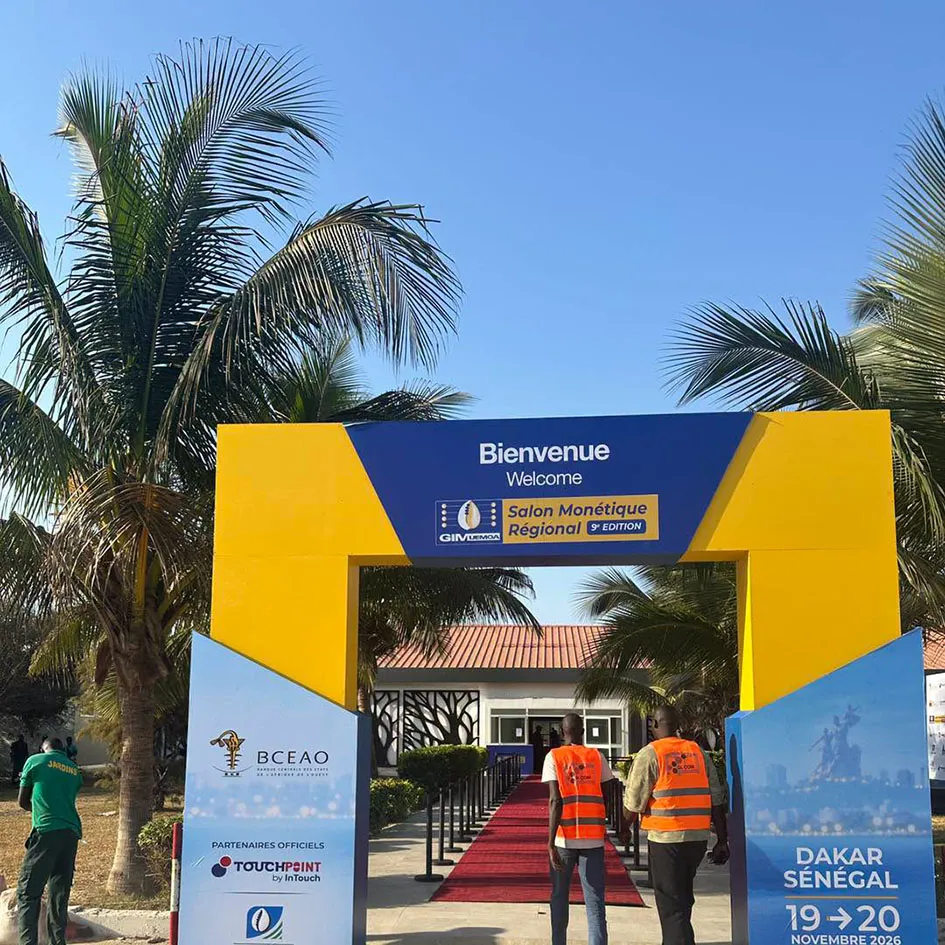
The 9th edition of the regional electronic banking exhibition of the Uemoa interbank electronic banking group (Gim-Uemoa) was launched on Thursday, November 19, in Dakar. Hundreds of participants from the eight countries of the Union will reflect on innovations and the security of electronic payment systems, facing the risks of cyberattacks in a world increasingly open to artificial intelligence.
“Payments in UEMOA: Innovation and security, the contribution of actors and the system”. This is the theme of the 9th edition of the regional electronic banking exhibition of the Uemoa interbank electronic banking group (Gim-Uemoa), opened yesterday in Dakar. Coming from the eight countries of the Union, the players discussed innovation, interoperability and security of payments in the face of the growth of mobile money and the Bceao’s Pi-Spi instant payment platform. Their objective is to provide responses adapted to our financial ecosystems in the face of the challenges of transformation, resilience and modernization of our regional payment system. Thus, experts, decision-makers, regulators and players in the financial services industry focused on the interconnection and security of the payments ecosystem, new uses, in particular integrated payments and artificial intelligence in the service of innovation and security. In the opinion of the interim director general of Gim-Uemoa, Ahmed Alpha Cissé, innovation only bears lasting fruit if it is accompanied by risk management. He believes that continuously raising the level of cybersecurity and strengthening financial education of users against social engineering must be the guiding principles that govern the action of financial institutions to stem the tide of cyberattacks. “Artificial intelligence perfectly illustrates the duality of technological advances: a powerful lever for detecting fraud, it can also become a sophisticated threat when it is misused for malicious purposes. These issues require close cooperation between regulators, credit institutions, fintechs, infrastructure operators and technological solution providers,” declared Mr. Cissé. Beyond technical architectures and financial circuits, strategic priorities must integrate the human dimension into payment systems. This mainly involves guaranteeing the integrity, availability and security of infrastructures, continuing the modernization of the regional electronic payment system and supporting the change in uses to serve customers. Redefining customer-oriented priorities Indeed, the response to this social requirement must promote the advent of ever safer, more fluid and widely accessible payments. “To ensure the success of electronic payments, interoperability is an essential lever. On September 30, 2025, the Bceao launched its instant payments interoperability platform. As of October 31, it had 165 connected participants and provided more than 50 million people with access to instant payments. Recent innovations have favored the dematerialization of payment methods: mobile money, contactless, QR code, electronic commerce and better accessibility to financial services,” welcomed the Secretary General of the Bceao, Habib Thiam.
Transactions in UEMOA increase to 219.620 billion FCfa
In his opening speech, the Secretary General of the Bceao, Habib Thiam, welcomed the recent advances recorded in payment systems at the regional level. According to the figures shared, the Union’s financial inclusion rate reached 76.1%. And the cumulative volume of transactions reached a total value of 219.620 billion FCfa, or nearly 17 billion operations. To date, the space has 284 million e-money accounts.
Diegane DIOUF
