
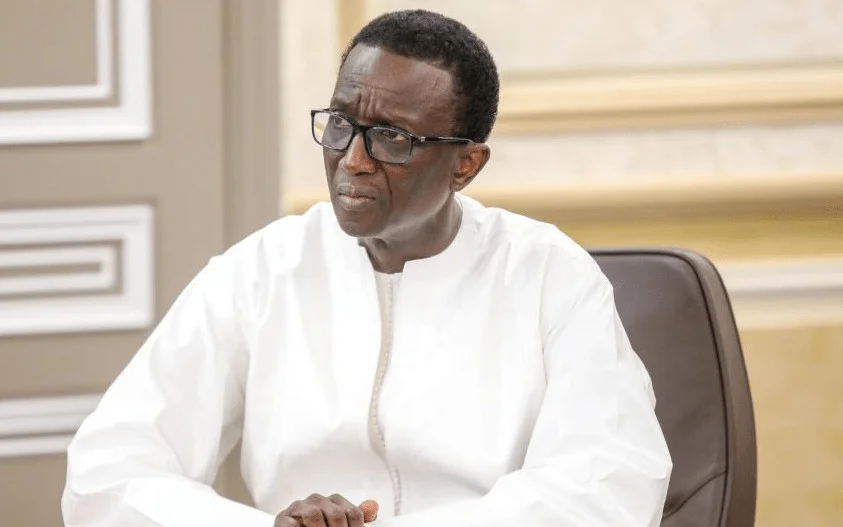
Amending finance law: Amadou Ba calls for a compromise to avoid impasse
In a text entitled “Call for national responsibility”, MP and former Prime Minister Amadou Ba warns of a risk of budgetary impasse.
The differences around the adoption of the 2026 amending finance law (LFR), and their possible extensions into the next financial year, could, according to him, weaken the institutional and economic stability of the country. He asks the Head of State, the government and the National Assembly to initiate consultation without delay.
A risk of impasse which must not turn into paralysis
For the elected official, Senegal is approaching “a particularly delicate sequence” of its economic and institutional history. He reminds us that disagreement is consubstantial with democracy, but that it must never turn into paralysis of the State. The moment is all the more sensitive, he underlines, as the country is holding decisive discussions with the International Monetary Fund (IMF) and its creditors. We must therefore preserve the consistency of budgetary choices, the confidence of partners and the stability of the economy.
Amadou Ba insists on the immediate issue. Without adoption of the LFR, nearly 540 billion FCFA in energy subsidies would risk remaining without sufficient budgetary appropriations. He sees this not as a saving for the State, but as a risk of non-payments, accumulation of arrears and, ultimately, an increase in the cost of the debt. He believes that a compromise must be found before the end of the budget year.
Concerns related to purchasing power, social spending, investment and energy subsidies are legitimate, he recognizes. But budgetary discipline and social justice cannot be opposed. The responsibility of governing, he writes, consists precisely in reconciling them.
He “solemnly” calls on the President of the Republic, the government and the national representation to initiate institutional consultation, in order to reach a compromise on the essential budgetary guidelines. This approach should be done while respecting the prerogatives of each institution, the rule of law and the authority of court decisions.
Economic Conference, an idea put back on the table
Amadou Ba recalls having recommended, during the national dialogue, the holding of a conference on the economy, convinced that the country’s structural challenges called for a shared diagnosis. Current circumstances, he believes, support this proposition.
Drawing on his experience as Prime Minister and Minister of Finance, he asserts that in economic matters, uncertainty has a cost, inaction has another, and that it is always the populations who pay the price. No political divergence, he concludes, justifies exposing the stability of institutions, the financial credibility of the State and the living conditions of citizens to avoidable risks. “The time is not for a test of strength, but for a test of responsibility,” he wrote, adding that the superior interest of the Nation “requires dialogue, demands compromise and obliges everyone.”
