
The wound of Ndar September 21, 2026
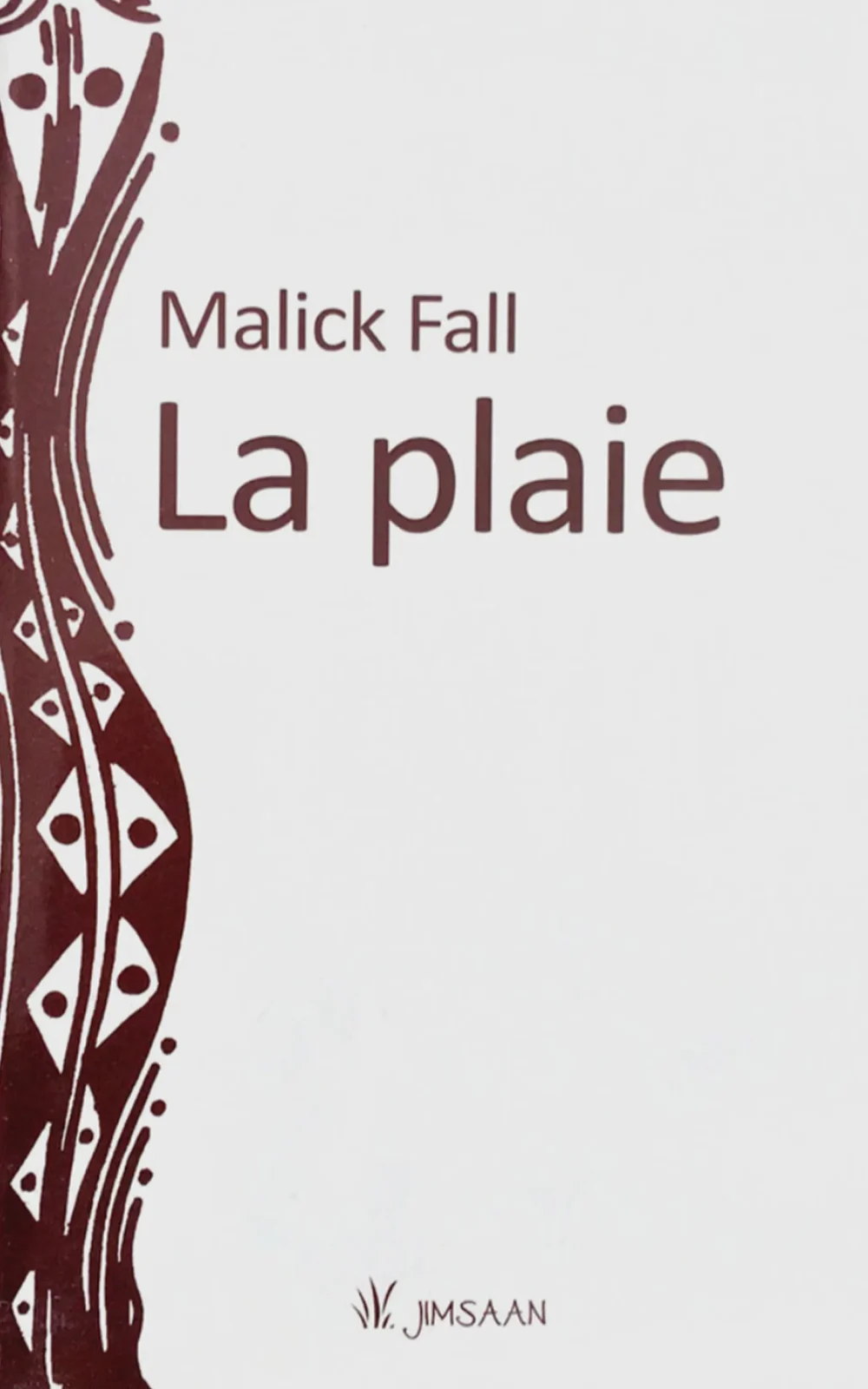
“In Saint-Louis, Magamou does not need to introduce himself. His bad ankle precedes him, his smell too. In the streets and around the market, the man with the wound has become a familiar silhouette, cumbersome, feared, sometimes mocked, but above all watched. In “The Wound”, published in 1967, Malick Fall makes this wanderer from Walo much more than a beggar marked by an accident. Through his wandering, his provocations and his stubborn quest for a place among the others, the writer examines a Saint-Louisian society crossed by the contradictions of his time, between ancient legacies, colonial order and the desire to belong. Magamou’s wound then ends up going beyond his flesh to become that of a man who is looking, in a city that does not know what to do with him, for a way to exist.
Saint-Louis is a city that can be described by its facades, its quays, its old houses and its streets caught between the river and the ocean, but Malick Fall chooses another entry point, less flattering and much more physical, that of a city crossed by odors, waste, tired bodies, stray animals, goods exposed to the heat and conversations that arise from the market in permanent confusion.
In “La Plaie”, Ndar is not the postcard that we contemplate from the bank, nor this old city whose colonial history and houses with balconies could be enough to nourish the story. It is a living matter, filled with dust, sweat, fish, rubbish, cries, lusts and looks.
It is into this town that Malick Fall brings Magamou. The man comes from Walo, from Gaya, with the idea that the city can offer what the village no longer gives or does not give enough, with this very ancient hope which pushes rural people towards urban centers and which transforms migration into a promise of ascension.
But his arrival in Ndar is quickly thwarted by an accident which affects his ankle. The injury could have remained an episode in the journey of this man who came to seek another life, but on the contrary it becomes the organizing principle of his existence, because the accident produces a wound which worsens, alters his body, modifies his approach and ends up determining the way in which others perceive him.
From there, the novel makes a decisive shift, because what initially belongs to the medical domain shifts into the social domain.
The body as identity
The wound distinguishes Magamou in the crowd, precedes his arrival, accompanies his movements and provokes reactions around him that range from curiosity to disgust, from mockery to hostility.
His body is in reality a reading space for others, a body on which society inscribes an identity. Malick Fall pushes this logic very far, with a precision which gives the illness a narrative and symbolic function.
Magamou is no longer defined by what he does or what he thinks. He gradually becomes the man that others recognize by his ankle, his limp, his pestilential odor and his presence on the margins of the market.
The character is thus constructed by a process of reduction which is not only psychological but social. The famous “Thiokh, thiokhete” is part of this construction.
Magamou discovers that his difference gives him visibility and that this visibility can be converted into power, however paltry it may be. Installed in the vicinity of the market, among rubbish, dogs and cats, he occupies a space that others consider repugnant, but which he gradually transforms into territory.
He lives there, provokes the merchants there, maintains quarrels there, builds his reputation there and ends up imposing his presence in the daily lives of those who would have preferred not to have to deal with him.
Opposite effect
The wound that pushes others away paradoxically brings Magamou closer to the center of conversations. It is in this contradiction that Malick Fall installs part of his irony.
The character belongs to the margins, but he is not erased; he is poor, but he has a form of power over those who look at him; he is physically diminished, but he refuses to behave like someone who would have accepted being permanently silenced.
His behavior thus blurs the usual categories of the miserable character. The market is also a real dramaturgical device. Everything contributes to producing meetings and bickering.
His wound modifies the collective scene. It makes some recoil, others laugh, exasperates the merchants and attracts the curious. This theatrical dimension also allows Malick Fall to make the grotesque and the tragic work together.
Magamou can provoke laughter by his behavior, by his provocations and by certain situations in which he is involved, but this laughter is based on a deeply painful reality which is that of a man whose poverty and infirmity have gradually determined his social place.
The city plays a determining role in this process. Ndar has a structuring function in the economy of the story. The places frequented by Magamou, the market spaces, the passage areas and the places where he establishes his presence gradually define his social territory.
The wound that destroyed his body had ended up giving him an identity. When she disappears, Magamou discovers that physical repair is not enough to repair the social trajectory.
His body regains a different appearance, but the relationships that were built around his infirmity do not disappear with it. He loses the sign by which others recognized him and finds himself faced with a form of invisibility that has become foreign to him.
Malick Fall thus overturns an old narrative convention. The return to health, instead of being presented as a definitive deliverance, becomes a test of identity.
Healing changes everything
Magamou had been shaped by the wound to the point where he could no longer imagine his existence outside of it. He then tries to find the wound.
Magamou suffers from the disappearance of the character he had become in the eyes of others. His desire to rediscover the wound reflects a dependence on the collective gaze, but also a deeper question about the creation of identity.
Language participates fully in this architecture. Malick Fall’s French is worked and precious, but it remains crossed by Senegalese orality and by the resources of Wolof, which gives the story a particular texture.
The expressions, rhythms and sounds contribute to making the characters heard as much as to making them seen. This linguistic hybridization contributes to the construction of a fictional universe in which the social realities of Ndar can enter the French language without losing their relief.
The result is a novel that is part social story, part satire, part character study, part fable about identity.
We must then return to Magamou, to his irregular step, to this oncogenic ankle which attracts attention, to the rubbish of the market, to the dogs which prowl, to the cats which rummage, to the merchants who protest, to the passers-by who move aside and to this heavy atmosphere in which the character constructs his fragile sovereignty.
Everything is there, in this concrete material of the novel. More than six decades after its publication, “The Wound” retains this capacity to produce unease because Malick Fall does not leave the wound in its place as a simple medical object.
He brings it into the psychology of the character, into the economy of the story, into the representation of Ndar and into the criticism of social relations.
Amadou KEBE
