
DPG: the government rejects any “lack of knowledge of parliamentary procedures”
As September 1 approaches, the National Assembly and the government are delivering two readings of the procedure to govern the Prime Minister’s General Policy Declaration (DPG).
If the Bureau of the Assembly considers that this date will be devoted solely to the opening of the extraordinary session, the Executive defends the regularity of the presidential decree and the letter from the Prime Minister proposing the holding of the DPG on this same date.
The Prime Minister’s General Policy Declaration is at the center of a procedural debate between the National Assembly and the government. At issue: the scope of the presidential decree summoning the deputies to an extraordinary session, the eight-day information period and the competent authority to set the date of the DPG.
The Assembly: September 1 to open the session
By decree no. 2026-1530 of August 25, 2026, the President of the Republic convened the National Assembly in extraordinary session starting Tuesday, September 1 at 10 a.m., with the Prime Minister’s DPG as the sole agenda.
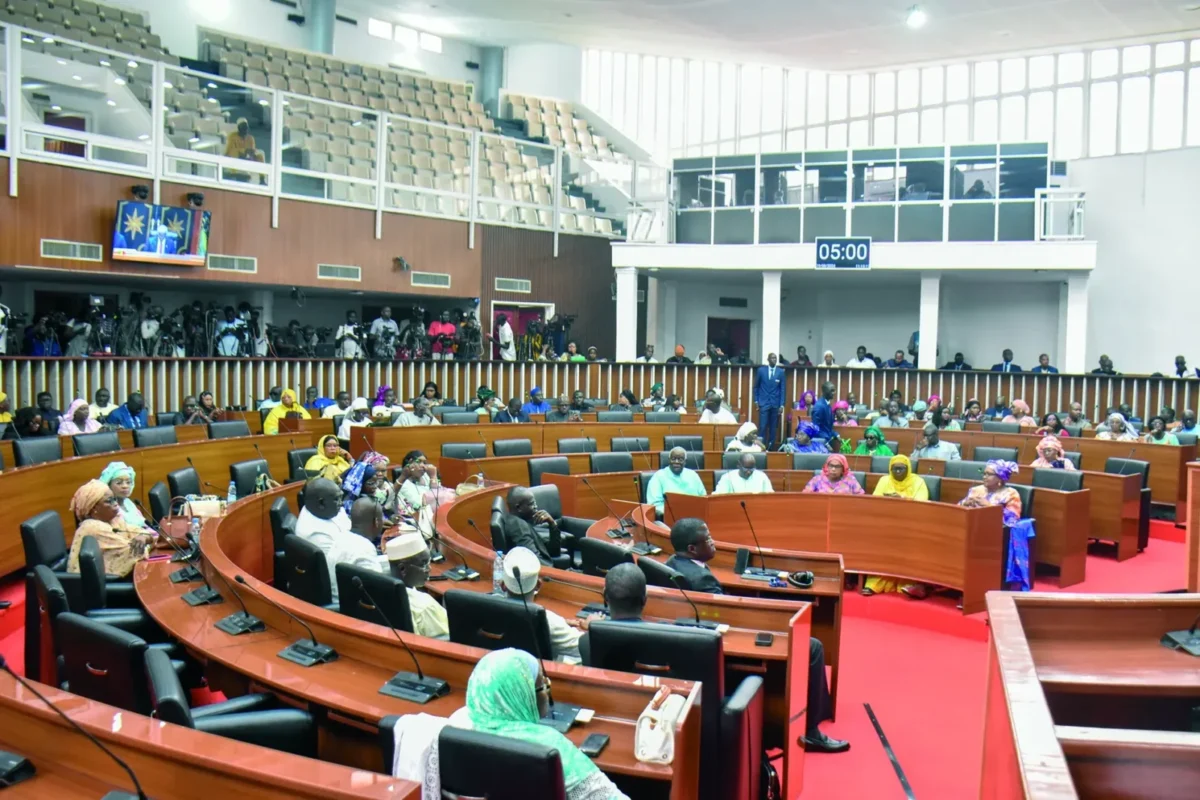
But the Office of the National Assembly specifies that September 1 will be devoted to the opening of the session and not to the holding of the DPG. The deputies must meet in plenary session, the President of the Assembly will check the required quorum, before the session is adjourned.
The rest of the procedure will be up to the Conference of Presidents. Convened by the President of the National Assembly, it will have to set the date of the plenary session devoted to the DPG and decide on the terms of the debates.
To justify this position, the Office invokes in particular Article 109, in fine, of Organic Law No. 2025-11 of August 18, 2025 establishing the Internal Regulations of the National Assembly. This provides that the Assembly must be informed “at least eight days before the date chosen”.
According to the Office, this formality is the responsibility of the President of the Republic. However, the presidential decree would not have set a precise date for the DPG. The parliamentary institution thus denounces “confusions” in the approach of the Executive and evokes a “lack of knowledge of parliamentary procedures”.
The government: a “fully regular” decree
In a note dated August 28, the government contests this reading and defends the conformity of the presidential decree as well as the Prime Minister’s approach.
For the Executive, Decree No. 2026-1530 is “a fully regular act”. The 2025-2026 ordinary session having closed since June 30, the Assembly could only be convened within the framework of article 63 of the Constitution and article 7 of its Rules of Procedure. The President of the Republic, according to the government, made use of this prerogative by summoning the deputies to an extraordinary session with the DPG as the agenda.
The Executive also considers that no text required the President of the Republic to set in the decree the exact time of the session devoted to the DPG. He distinguishes the convening of the session from the organization of the plenary session, which, according to him, falls within the internal prerogatives of the Assembly.
The government also defends the letter sent on August 24 by the Prime Minister to the President of the National Assembly, in which he proposed September 1 for his DPG.
Based on articles 55 and 84 of the Constitution, the Executive considers that this initiative falls within the prerogatives of the head of government. The note further considers that this letter, sent eight days before the proposed date, met the spirit of article 109 of the Internal Regulations. The government therefore contests the accusation of “lack of knowledge of parliamentary procedures”.
A divergence on setting the date
The Executive finally notes a contradiction in the position of the Bureau of the Assembly. This states that information on the date of the DPG is the responsibility of the President of the Republic, while indicating that the Conference of Presidents will have to meet to set the date of the session.
For the government, this last competence falls precisely within the internal organization of the Assembly, in application of articles 21, 22 and 77 of the Internal Regulations. According to him, nothing would prevent the Conference of Presidents from setting September 1 for the DPG.
Beyond this legal controversy, a first step has been achieved: September 1 will be dedicated to the opening of the second extraordinary session of the year. After checking the quorum, the Conference of Presidents must meet to decide on the timetable and modalities of the DPG. It is at this moment that the uncertainty over the effective date of the Prime Minister’s declaration should be resolved.
CG DIOP
