
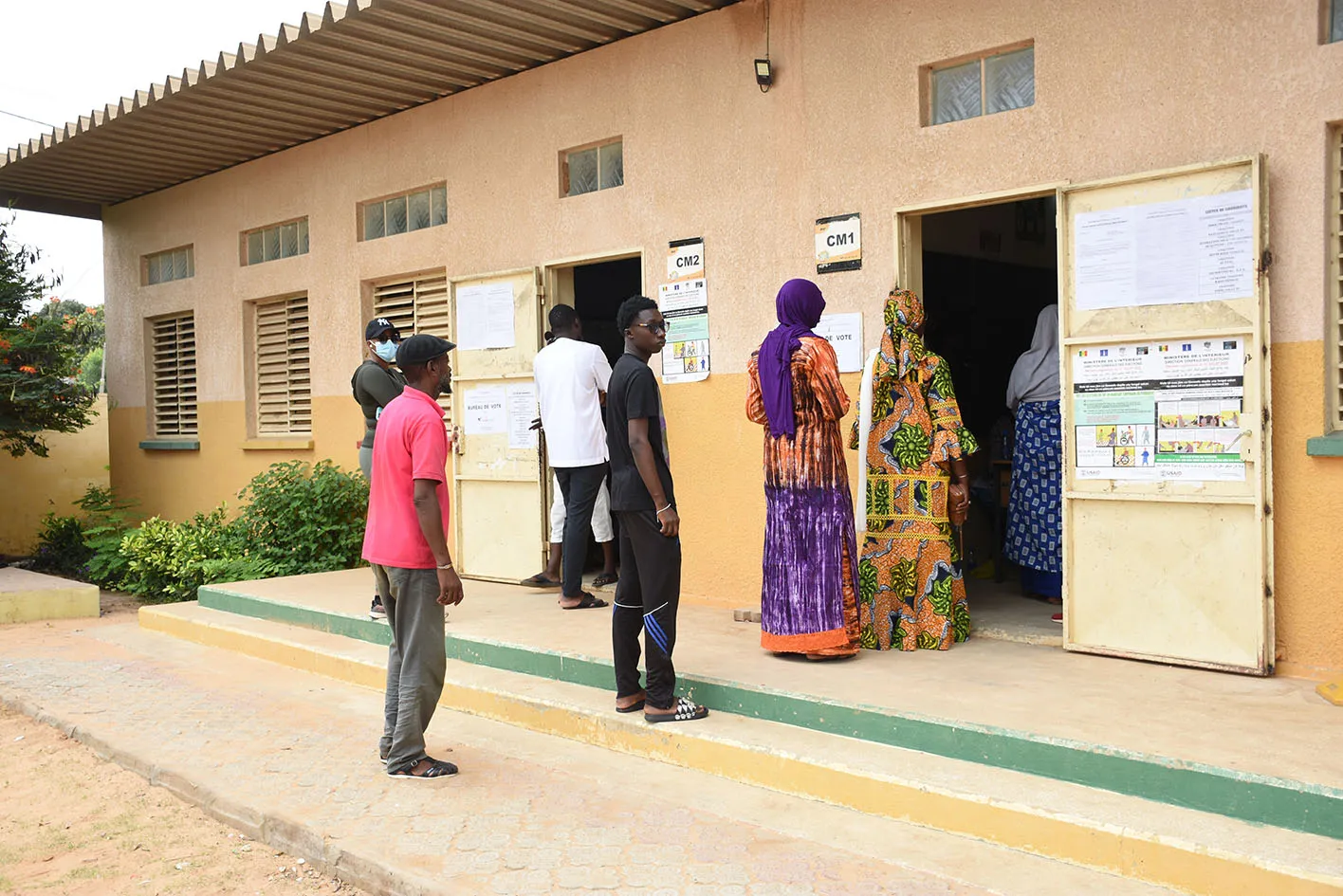
Territorial elections in Senegal: five postponements since 1984
Territorial elections were rarely organized on due date. Five reports from 1984 to the present have been counted. And each time, there is no shortage of arguments to justify the upheaval.
Territorial elections in Senegal have often been postponed. The renewal of local executives (mayors, presidents of departmental councils, municipal and departmental councilors) each time gives rise to debates. For several years, the debate on the postponement of territorial elections seems to be a political chestnut.
It has been increasingly agitated in recent weeks, with the mandate of mayors and presidents of departmental councils elected in January 2022 due to expire in a few months, particularly at the start of 2027. This same debate was also raised in 2019, the end date of the mandate of the territorial executives elected in 2014.
Initially scheduled for July 2019, the territorial elections were postponed to December 2019 before being postponed once again until March 2021 at the latest. Finally, they were organized in January 2022. The history of these local elections indicates that for more than 40 years, the Senegalese electoral calendar has continued to be readjusted.
Reflection on this systematic postponement of local elections has been carried out by several civil society organizations since 2019. In their document entitled, “Memorandum from Senegalese Civil Society on the postponement of elections and the extension of the mandate of departmental and municipal councilors”, the observation that emerged is that since 1984 local elections have been subject to “exceptional legality”. There have been at least 5 postponements of the local vote.
The document of which we have a copy recalled that in 1984, local elections were not organized on the date initially planned, they were held only after the generalization of full-fledged municipalities. Also planned for 1995, these elections were postponed for a year because of the regionalization policy initiated. The same logic was continued after 1996.
These elections were to be held in 2001, but were postponed by a year following the accession of President Abdoulaye Wade to the head of the supreme judiciary, as well as his desire to experiment with provincialization, as a new form of decentralization. Which justified the holding of elections in 2002.
According to the same civil society document, this recurring practice of postponing elections will continue until 2007. The elections initially scheduled for the same year were postponed twice, in 2008 then in 2009 because of post-electoral protests in the 2007 presidential election and the boycott of the legislative elections by the opposition.
After 2009, the territorial elections were held on June 29, 2014, even if a postponement was decided for a period of 3 months. In 2019, in an almost similar context, there was a first postponement in December 2019, then a second unprecedented postponement, since it was not regulated. Finally, the territorial elections are organized in January 2022.
Contrary to these postponements of the elections, civil society had stressed that the situation was a little special for 2019, because the bill nᵒ 15/2019 postponing the elections scheduled for December 1, 2019 and extending the mandate of departmental and municipal councilors which was submitted to the National Assembly had not provided for a fixed date for the organization of the said territorial elections.
Thus, Moundiaye Cissé of the NGO 3D and company had underlined that “it should be noted that the postponement of elections, an exceptional procedure, finds its origins under the different regimes, with the texts, mixing law and politics”. The jurisprudence of the Constitutional Council has never been able to prevent these postponements, which are increasing, mainly in the context of local and legislative elections, according to the civil society memorandum.
Given the situation, these specialists wonder if “in a democratic State, should derogatory legality take precedence over normal legality?
For the next territorial elections initially expected in 2027, the opposition and civil society organizations are demanding compliance with the electoral calendar. On the side of the presidential camp, Aminata Touré affirmed a few weeks ago that the head of state still has time to set the date of future territorial elections.
Oumar KANDE
