
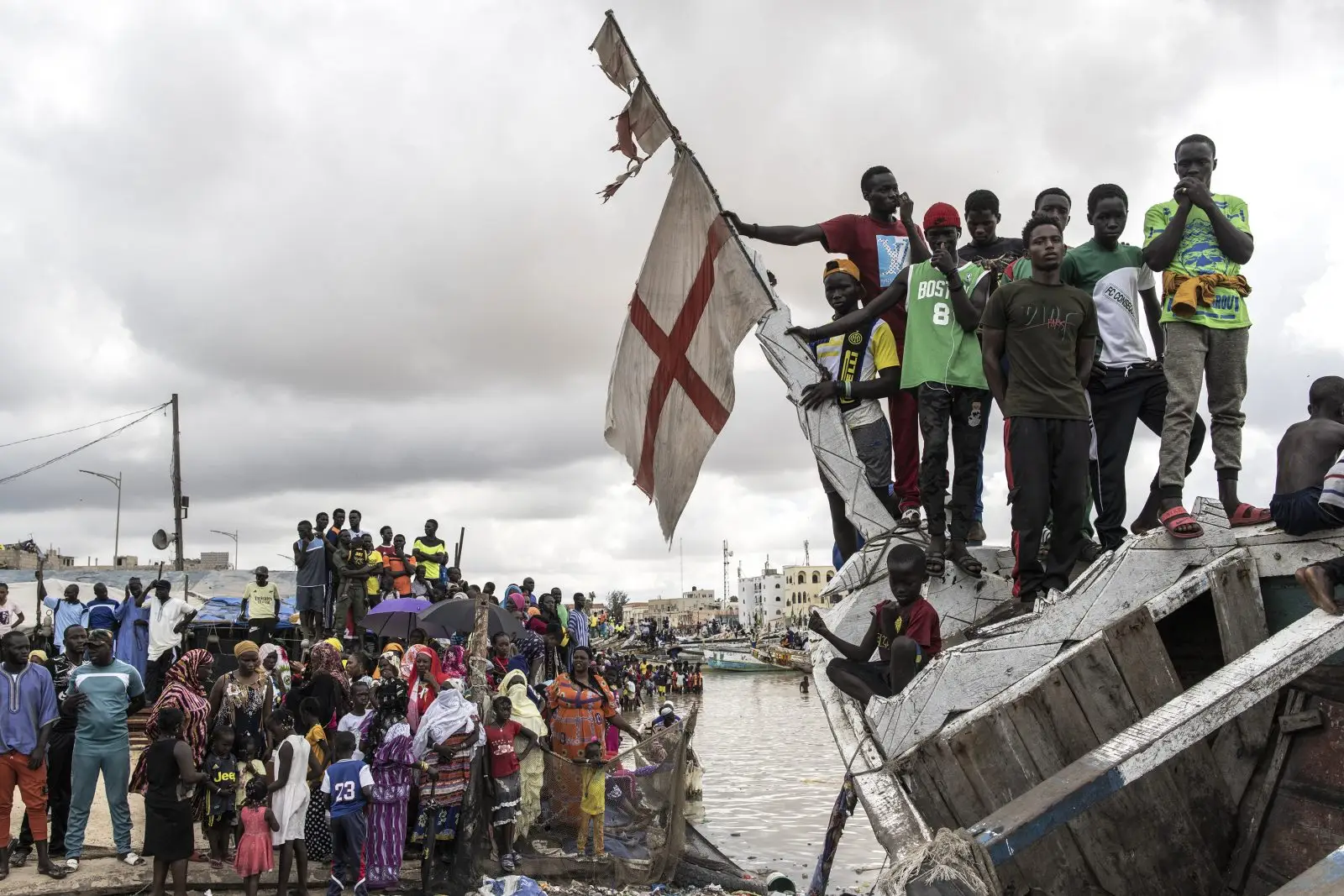
Ecological peril: Saint-Louis, a crumbling relationship August 26, 2026
Erosion, pollution, urbanization, scarcity of resources and changing lifestyles are weakening this link that Saint-Louisians have long taken for granted.
The relationship that Saint-Louisians have with the river is increasingly changing. Professor Abdoul Sow notes this with concern: once considered a nourishing source, the river has become a space that we use without really respecting it anymore. Waste is dumped there. We occupy its banks. We build without always taking into account the natural circulation of water. “There have been a lot of changes linked to the fact that the river no longer plays the economic role it had,” he analyzes. The problem is also environmental. Bourry Kâ, head of the Saint-Louis water resources brigade, recalls that the river remains essential to the city’s water supply, but also to economic and agricultural activities. “The Senegal River occupies a very important place in the water supply of Saint-Louis. It constitutes an essential resource for the water needs of populations, but also for economic and agricultural activities. Beyond water supply, the river also plays an important role in ecological balance and in the daily life of populations,” she recalled. According to her, its preservation therefore constitutes a major issue.
Pollution, salinization, erosion and climate change weigh on the resource. Certain areas are particularly vulnerable, notably Guet-Ndar and Langue de Barbarie. The situation is paradoxical: a city that owes everything to water sometimes seems to have forgotten how to live with it. For Abdoul Sow, we need to change our outlook. “We must integrate water as a factor in the development of the city of Saint-Louis,” he argues. The formula perhaps sums up the city’s main challenge. No longer consider water only as a danger when it overflows, but as a resource capable of supporting the economy, tourism, agriculture, fishing, navigation and leisure. Saint-Louis could better exploit its canals, develop river walks, organize fishing landings and rethink certain urban developments based on its aquatic environment. The city already has the essentials: its river, its sea, its islands, its architectural heritage and its culture. We still have to think about them together. “Thanks to water, we can practice agriculture, fishing, navigation, leisure and walks. There is a lot of activity around us. So it’s a chance. And unfortunately, we have not yet exploited it sufficiently,” regrets Professor Abdoul Sow. Bourry Kâ also reminds us that the protection of the river cannot be solely the business of state services. People, fishermen and local organizations must take part. Protecting the river therefore also means protecting what makes the city live.
The risk of a generation without a river
Finally, there is another, less visible threat: that of transmission failure. Mamadou Sarr, young fisherman from Guet-Ndar and president of the environment commission of the Association of Anglers of Saint-Louis, observes that the fishing profession is less attractive to young people. The resource is becoming scarce. Competition from industrial fishing is increasing. There are many dangers at sea. There are also concerns about oil and gas development. “Young people today are no longer attracted to the profession. It’s no longer like before,” he notes. Zoumbava further. “It is no longer just a risk, because this rupture already exists,” he says. For him, illegal emigration and the search for other horizons show that the river and the sea no longer constitute the basis for certain young people that they once represented. This rupture would also be cultural. Because what will remain of the rites if those who carried them disappear? What will become of fishermen’s knowledge if young people no longer take up the paddles? What will become of regattas if the memory that accompanies them fades? “By abandoning them, we lose our soul,” warns Zoumba about this knowledge linked to water.
For Pape Samba Sow, if the river could speak, it would be both witness and accuser. “The river would say that it is witness to everything,” he confides. Witness to the genesis of Saint-Louis, the installation of governors, political, economic and social transformations. But after having seen everything, he adds, “this river would cry accusing us”. Because Saint-Louis owes a lot to the Senegal River. It owes it its site, part of its history, its economy, its culture, its fishermen, its rites, its festivals and an essential part of its identity. It even owes it this unique silhouette which makes its reputation today. And yet, the city sometimes seems to have forgotten this debt.
As Professor Abdoul Sow reminds us, we must go beyond the logic of the fight against nature and learn to “live intelligently with this nature”. Because the river has already shaped Saint-Louis. It now remains to be seen whether Saint-Louis will, in turn, be able to take care of the river that made it.
