
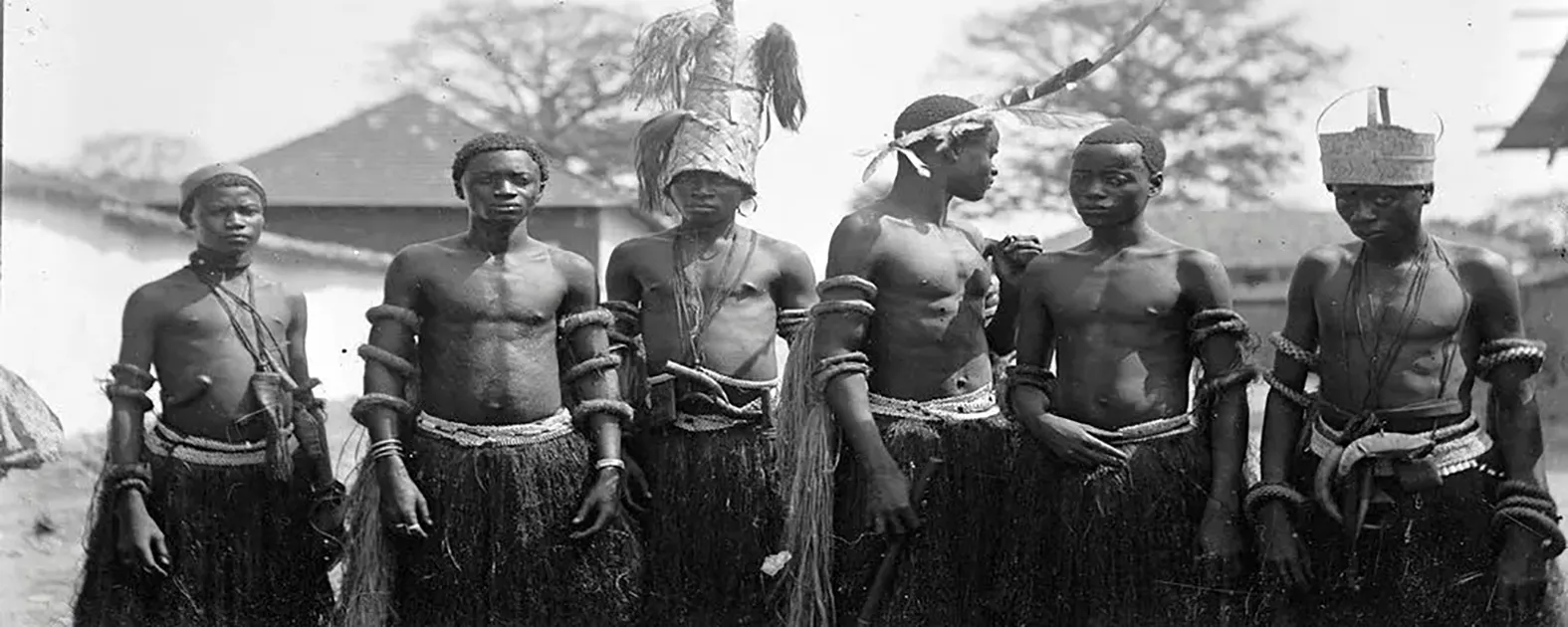
Les Mancagnes, from Bula to Senegal August 26, 2026
In this special issue, “Le Soleil du Sud” shines the spotlight on the Mancagnes community. Originally from the village of Bula (Guinea-Bissau), they migrated to Senegal, mainly to Casamance, while keeping their traditions (marriage rites, interrogation of the dead, surnames, etc.). “Le Soleil du Sud” shows you what is hidden behind the red curtains of the daily life of this minority in Senegal.
BULA – Mpack, the last village in the Ziguinchor department before the border with Guinea-Bissau, is home to a small Mancagne community. The influence of Creole is enough to show that we are not far from the former Portuguese colony. The families who live in this locality in the commune of Boutoupa Camaracounda operate cashew orchards. From this town crossed by the ECOWAS road, it takes about two hours to reach Bula, the cradle and stronghold of the Mancagne people. About a hundred kilometers separate Sao Domingos, the first province of Guinea-Bissau after the border, from Bula. The route is populated by several “tanbancas” (villages), before setting foot on the soil of the Mancagne province, located in the Cacheu region. On site, a mix between the vestiges of a colonial past, traditional habitats and modern buildings adorns the decor. Another symbol marking the importance of Bula among the Mancagnes is the royal palace. The throne is, today, occupied by Joao (Jean) Mancabou. “He is the recognized king of all the Mancagnes,” explains Professor Albinou Ndecky, ethnolinguist and teacher-researcher at Gaston Berger University in Saint-Louis. “The king is of Senegalese nationality. He lived for a long time in Senegal, before returning to his origins,” informs Mr. Ndecky. The academic recognizes that there are other Mancagne provinces such as Ko and Jol. But, he specifies, Bula is mother earth. “This is where the Mancagnes left to migrate to Senegal, Gambia and other regions of Guinea-Bissau,” he mentions.
To find their distant origins, adds Dominique Campal of the Association for the revalorization of Mancagne culture called Pkumel, we have to go back to Egypt. “The Mancagnes then passed through Duka and Popadala, in the Republic of Guinea, before settling in Bula,” relates the president of Pkumel. According to historians, the first migrations of this people attached to agriculture, towards Casamance, took place around the 1800s. “Sédhiou and Ziguinchor were the first reception regions,” informs Professor Albinou Ndecky. “They settled based on the space they could find to develop their agricultural activities. This is how dozens of peripheral villages in these two regions were created by the Mancagnes,” explains Dominique Campal. In Ziguinchor, he continues, neighborhoods like Tilène, Kénia and Kansahoudy were occupied, first by the Mancagnes.
They are called “Ba Houla”
“Di wo Na Houla (I am Na Houla)”. This is the term used by the Mancagne to identify themselves with their ethnic group. They are so called by the Manjack and the Pepel who come from the same geographical area in Guinea-Bissau. But the best-known appellation is Mancagne. According to consistent sources, it appeared during the reign of King Mancanha Mboss. “It was between 1915 and 1918, a period which coincides with his magisterium,” explains Yves Badiette. It was, he continues, in the middle of the colonial era. “To avoid the abuses and deportations that raged during Portuguese domination in Guinea-Bissau, King Mancanha Mboss chose to collaborate with the settler, in order to preserve his community,” explains Mr. Badiette. To identify itself, he says, the container was called by the content. “So they were called “I mancanha” which means the people of Mancanha. Moreover, in the Portuguese archives, it is this name designating our community that we find there,” explains Yves Badiette.
A hundred surnames
The Mancagnes are the ethnic group with the most surnames in Senegal, although representing less than 1% of the country’s population. “Every year, I discover a new last name that I didn’t know before,” recognizes Jean-Paul Ndécky, belonging to the ethnic group. According to estimates by associations promoting Mancagne culture, there are more than 100, between Senegal and Guinea-Bissau. “This multitude of surnames is due to the fact that some often take the first name or nickname of the ancestor to make a family name. For example, in my family, there are some who chose Mansis because my grandfather, whose name is Niaga Campal, had the nickname Mansis,” informs Dominique Campal, president of the Association for the Promotion of Mancagne Culture. It is the same in other families like “Bafoki” where we find Kayounga, Basse, Mindiar, Kanfoudy, Kabou (…), as surnames, while all come from the same ancestor. In reality, confides Mr. Campal, all these names are grouped into around ten large families. “Among others, we can cite Ba Dighal, Ba Fey, Ba Pughan, Ba Ouh, Ba Co, Ba Nino,” he mentions.
By Kathafa BHM KANFOUDY
