
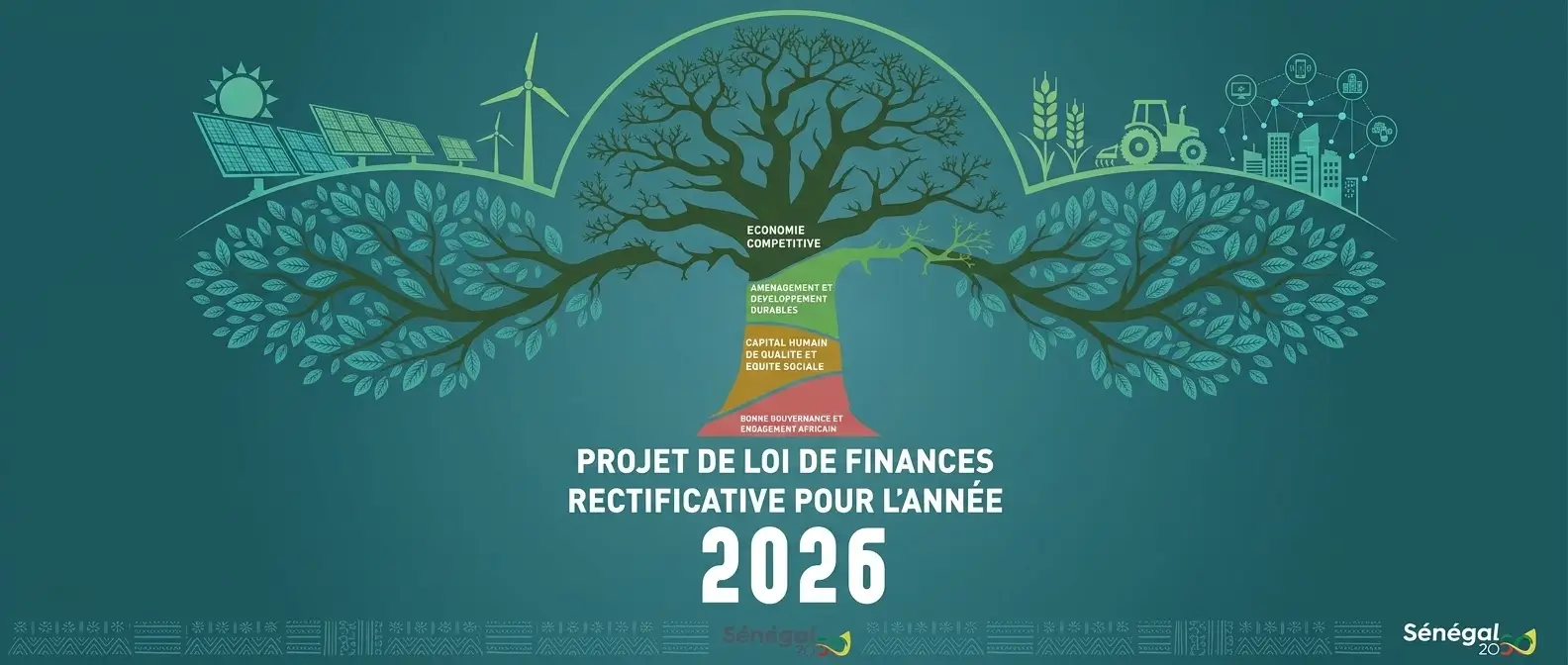
Dialogue on the LFR 2026: financial markets between observation and optimism
Despite the lack of consensus on the amended finance bill, the financial markets have a positive view of the situation in Senegal. Bonds are trading around 52/53, up from 50 at the start of the week.
In Senegal, the government and deputies have not yet found a compromise for the adoption of the draft Amending Finance Law (Lfr) 2026. However, the financial markets are showing optimism. For the day of Tuesday October 27, 2026, credit rebounded from 1 to 1.25 points, supported by the intervention of the Prime Minister, Ahmadou Al Aminou Mouhamadou Lô, during an interview given to Rfi, in which he anticipated a future budget agreement. According to the analysis of a specialist from an investment bank in London, the market is clearly buying on limited volumes.
“The five bonds trade around 51-52 cents, on an almost flat curve, apart from the 2028 bond which is slightly more expensive. The market consensus is therefore moving towards a long-term resolution of the impasse. It integrates the direct discussions and the explicit timetable of the IMF, perceived as encouraging signals,” explains the expert. For yesterday, Wednesday October 28, 2026, reactions remained positive, with a slight increase in prices. “The reading is simply that there is no desire for major escalation and that the dialogue continues. We are more at 52/53, compared to 50 at the start of the week,” analyzes the specialist. These encouraging signals come as the finance bill was sent back to committee on Tuesday for further discussions with a view to reaching a consensus.
The current political situation has its origins in a disagreement between the legislative branch and the executive. The leader of Pastef, during a press conference held last week, demanded the rejection of Lfr 2026, a position followed by the parliamentary commission a few days later. Faced with this situation, the government reacted last Sunday during a press conference. Prime Minister Ahmadou Al Aminou Mouhamadou Lô explained the executive’s choices. Returning to the merits of the amending finance law, he stressed that it only adjusts the elements particularly shaken by the international situation, whether these are reductions in revenue or increases in expenses. “Let no one tell the Senegalese anything else. We must rectify our situation in the face of events that were not foreseen. No one imagined that the United States and Israel would attack Iran, and this situation has serious consequences. We are not spared,” underlined the head of government.
According to him, the orientation of the State is to preserve the continuity of public services, to protect fellow citizens and to maintain the course of transformations when the available resources no longer make it possible to finance all of the ambitions. “Our priorities are to preserve the interests and purchasing power of the Senegalese. Our approach is clear; we are far from political considerations,” said Mr. Lô. According to him, Lfr 2026 integrates several major factors. The first lies in the downward revision of revenues, estimated at 340 billion FCFA. Added to this is an increase in fixed costs of 540 billion FCFA, representing additional needs linked mainly to energy subsidies and the need to strengthen the defense and security forces. “We also have an obligation to contain an already high deficit in a context of strong constraints on public finances. Faced with such a situation, a responsible government cannot give in to political politics. We must preserve essential spending unchanged, without compromising salaries, the sovereign missions of the State, security and priority social protection spending,” concluded the Prime Minister.
Demba DIENG
