
Agribusiness, food security: In Niamone, the land wants to hold on to its children
In Tobor, the land produces, trains and prepares a new generation of agricultural entrepreneurs. In this commune in the Bignona department, everyone is banking on available land, Affiniam water and agroecological training to make agriculture a bulwark against exodus to Europe.
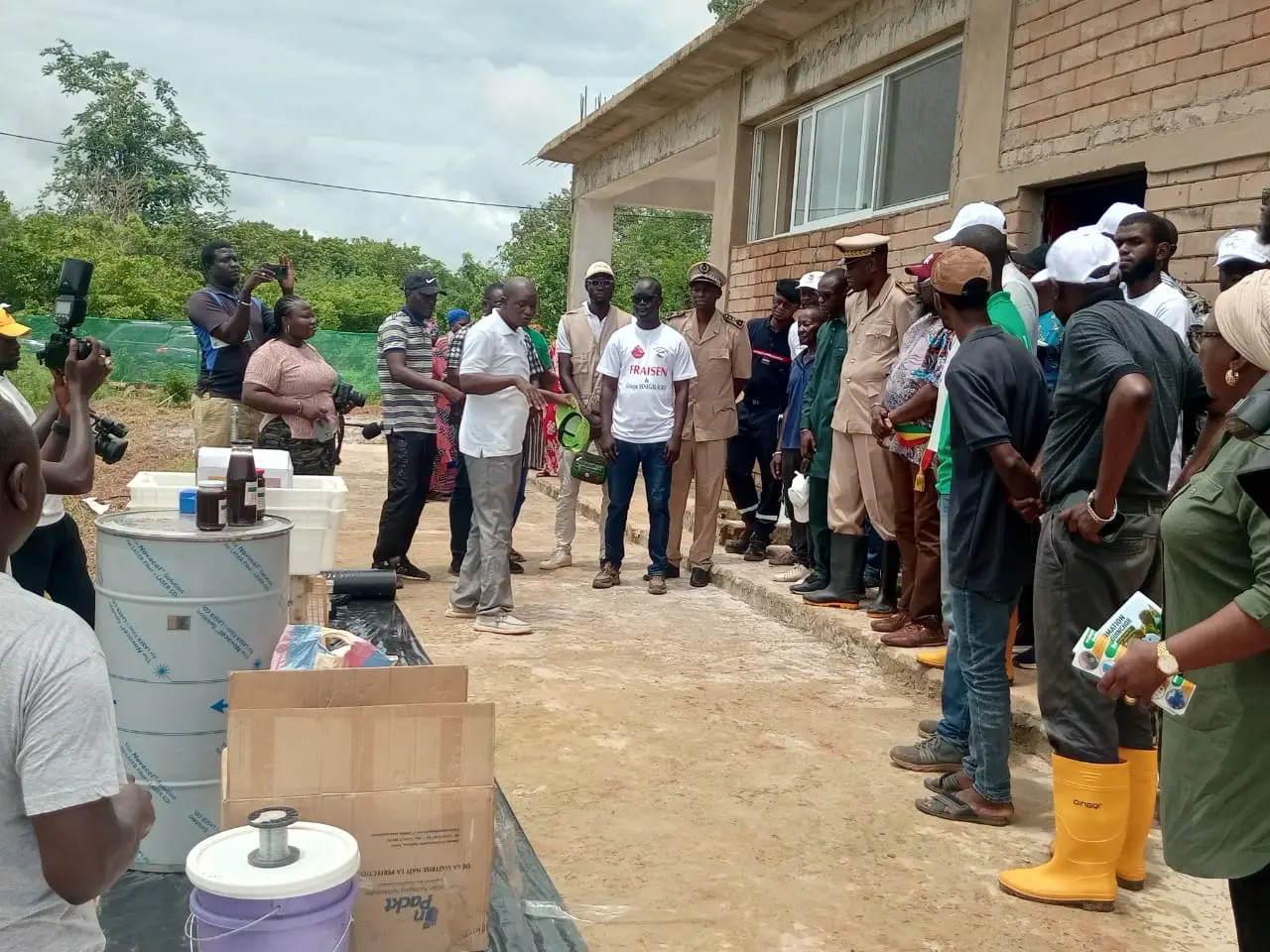
ZIGUINCHOR- Barely through the gate of the Tobor agroecological center, the eye is caught by an unusual scene. Here, the earth seems to become a place of learning, experimentation and hope. Green plots extend within the center. Plants are well maintained. Further away, young people dressed in green t-shirts are busy around new shoots which they are diligently planting. A few meters away, others discover professions linked to renewable energies, including solar, while aquaculture opens up new perspectives. The agroecological center has thus become a point of convergence for young people from Niamone, but also from several regions of the country. Some learners even made the trip from Goudiry. They all share the same ambition: to learn, produce and, above all, to be able to make a living from their know-how. In this setting, hands plunge into the earth while spirits are formed. For Atab Badji, mayor of Niamone, his commune has the land reserve necessary to reach this milestone. “Niamone has significant land potential, unlike Bignona and Ziguinchor. We are also located in a strategic position, close to the Gambian and Guinea-Bissau markets. And we are also fortunate to have an agroecological training center,” boasts the local elected official during the visit of the Minister of Agriculture, Dr Cheikhou Oumar Bâ. But the strongest argument, according to him, is found in the rooms and plots of the center. The young people who are trained there. “We have young people here who can become real farmers. They have no reason to seek their future in Europe. They have a modern agroecological center, with good training and accommodation conditions. It is now up to us to support them and give them the means to succeed,” insists Atab Badji.
Affiniam, the reservoir that can change the game
In Niamone, the land question is not the only reason for hope. Water could also play a determining role in the agricultural transformation of the municipality. For this, the mayor points to the potential of the Affiniam dam, recently rehabilitated. A resource that he considers to be a lever that is still under-exploited. “Our commune has eleven villages and has many potentials. We are not facing a major problem of access to water, thanks to the Affiniam dam. There are still around 25 million cubic meters of unexploited water which could contribute significantly to our objective of food self-sufficiency,” rejoices Atab Badji. For the city councilor, the most difficult part has already been achieved with the rehabilitation of the structure. We must now take the next step: bringing water to agricultural land. “The dam was rehabilitated with billions of dollars. We must now make the necessary investments to connect the fields to the water network. Such an approach would make production more secure and give farmers the means to work in better conditions,” believes Atab Badji. Available land, a significant water reserve, an advantageous geographical location and young people in training, etc. The equation is therefore solved. According to the mayor, only one essential ingredient is missing: investment. “Investors looking for an agricultural destination should look to Niamone. Investing here means exploiting considerable economic potential, but it also offers an alternative to the exodus of young people to Europe and other destinations,” he argues. This desire to make youth an actor in local development is not new, however. As soon as he arrived at the head of the commune, Atab Badji launched the project “A village, a valley, an ASC, a field”. The ambition is to make Sports and Cultural Associations (ASC) a real tool for agricultural mobilization. In the plots of the agroecological center, young people continue to plant. Gesture after gesture, they plant much more than just plants. They materialize their ambition to build their future here, rather than looking for it elsewhere. In Niamone, the battle against the exodus of young people could begin with something as simple as a wave of the hand: planting, cultivating and harvesting on one’s own land.
