
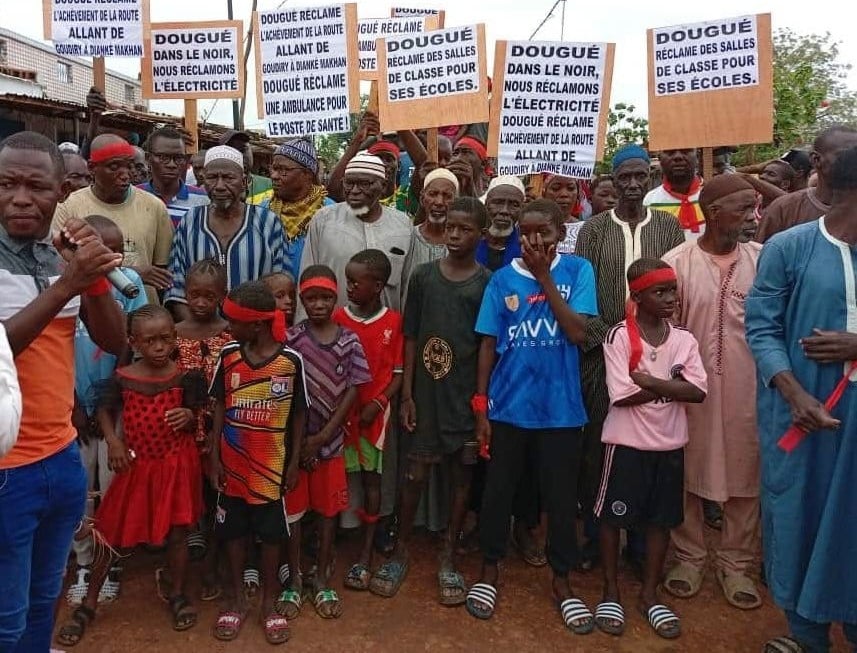
Goudiry: the populations of Dougué demand the resumption of electrification work
In Dougué, in the department of Goudiry (Tambacounda region), the question of access to electricity is back at the heart of people’s concerns. Through a press release published by the Dougué Debout Association, residents denounce the cessation of electrification work on the Goudiry, Dianké Makhan axis and challenge the authorities on the need to finalize this project launched in 2019.
According to the document signed by the president of the association, Ousmane Thiam, the project was to connect several localities in this eastern part of the country to the national electricity network. 72 kilometers long, the site has a level of physical execution estimated at more than 70%, with around 52 kilometers already equipped with line supports.
However, the work has been stopped for several months, with less than 20 kilometers remaining to be completed to enable the effective connection of the town of Dougué, with nearly 10,000 inhabitants.
For the populations, this suspension considerably slows down local development. In schools, the absence of electricity continues to limit learning conditions and the use of digital tools. At the health post level, the difficulties linked to the conservation of medicines and pharmaceutical products remain.
The Dougué Debout Association also believes that this delay penalizes the economic activities of the area, particularly those of young people and women, in a town where access to energy is considered an essential lever for job creation and the processing of local products.
Faced with this situation, the citizen organization calls on the competent authorities to communicate the reasons for stopping the construction site and to take the necessary measures for a rapid resumption of work.
The populations of Dougué recall that universal access to electricity constitutes a major issue of territorial equity and development, consistent with the ambitions displayed within the framework of the National Transformation Agenda “Senegal 2050”.
Cheikh Tidiane NDIAYE
