
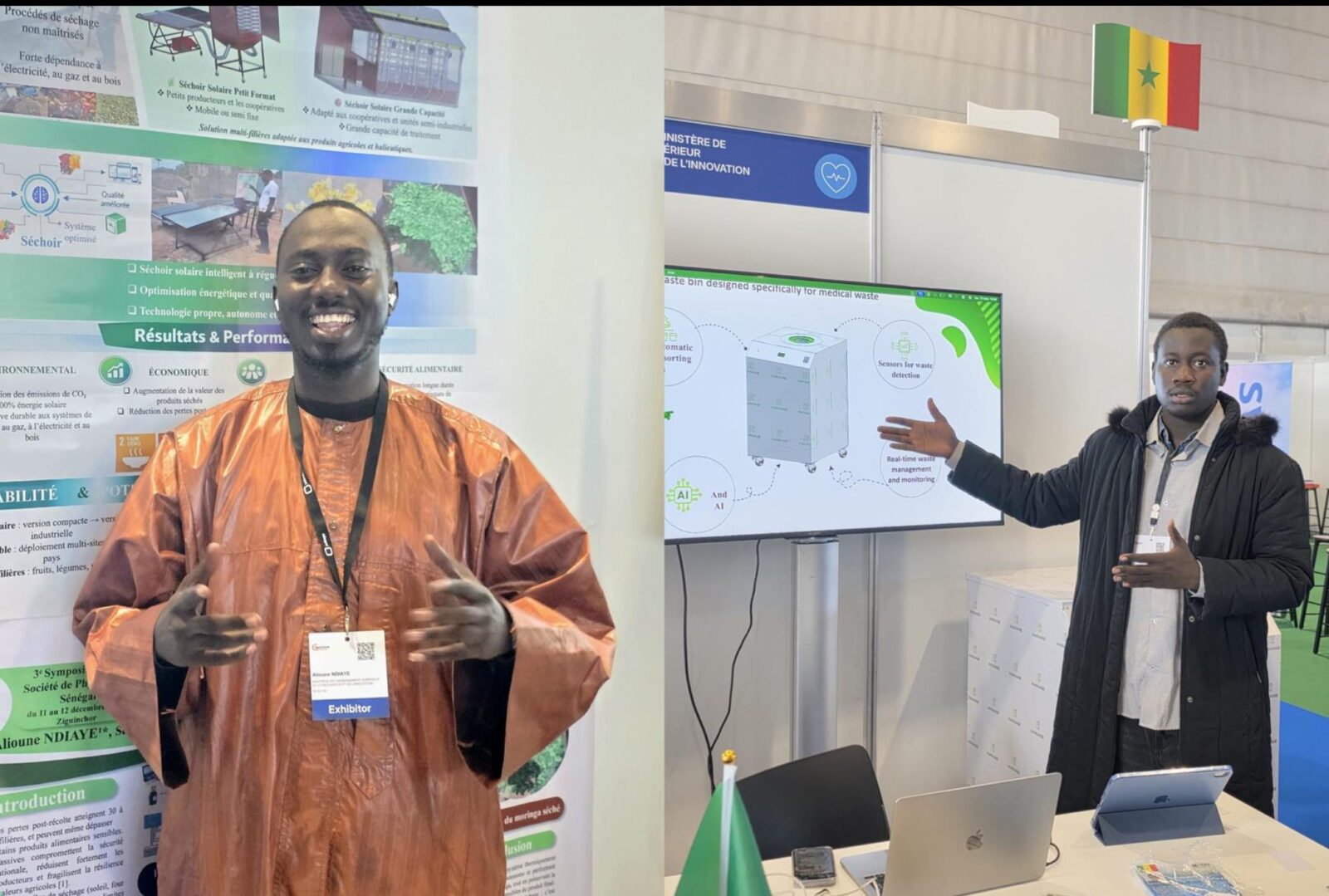
51st Geneva International Motor Show and the importance of their discoveries: Mor Talla Ndiaye and Alioune Ndiaye present their solutions
From March 11 to 15, the 51st Geneva International Exhibition of Inventions, Geneva’s major conference and exhibition center, Palexpo, is the meeting place for 1,430 ingenious inventors from 35 countries, with 1,050 inventions which will be evaluated by a jury of international professionals including validation from organizations such as the World Intellectual Property Organization (WIPO) etc. Senegal, which returned last year, for its first historic participation, with a fine harvest of medals, is represented this year by seven inventors including Mor Talla Ndiaye and Alioune Ndiaye.
Entrepreneur, community health promoter and nutritionist, Mor Talla Ndiaye is active in the fields of health and nutrition. It is actively engaged in community development through the implementation of innovative projects, notably the Kaarangue project, dedicated to improving the management of medical waste. In this dynamic, it develops technological solutions adapted to local realities, aimed at strengthening prevention, collection and monitoring of health data at the community level.
Kaarangue is a smart trash can dedicated to the secure management of biomedical waste in healthcare structures. The project addresses the critical problem of poor management of medical waste, which exposes health personnel, hygiene workers and communities to high risks of infections such as HIV, hepatitis B and C, as well as nosocomial infections.
Also read: From chemical engineering to the blue economy: Aminata Paye and Adama Kane at the 51st Salon des Inventions
Thanks to the integration of advanced digital technologies, the Kaarange trash can enables the automatic sorting of biomedical waste, significantly reduces direct human contact with hazardous waste and improves the safety of healthcare workers. It is equipped with an integrated electronic card which ensures data collection, waste traceability and precise monitoring of collected volumes, thus facilitating decision-making and compliance with health and environmental standards.
The project mainly targets hospitals, health centers and posts, private clinics, laboratories, as well as local authorities. This invention contributes to the modernization of the health system, the protection of the environment and is part of the Sustainable Development Goals (SDG 3, 4 and 11). Led by a young, multidisciplinary and committed team, the project aims to become a sustainable, innovative solution adapted to African realities, capable of transforming the management of biomedical waste on the continent.
Alioune Ndiaye presents an ecological solution
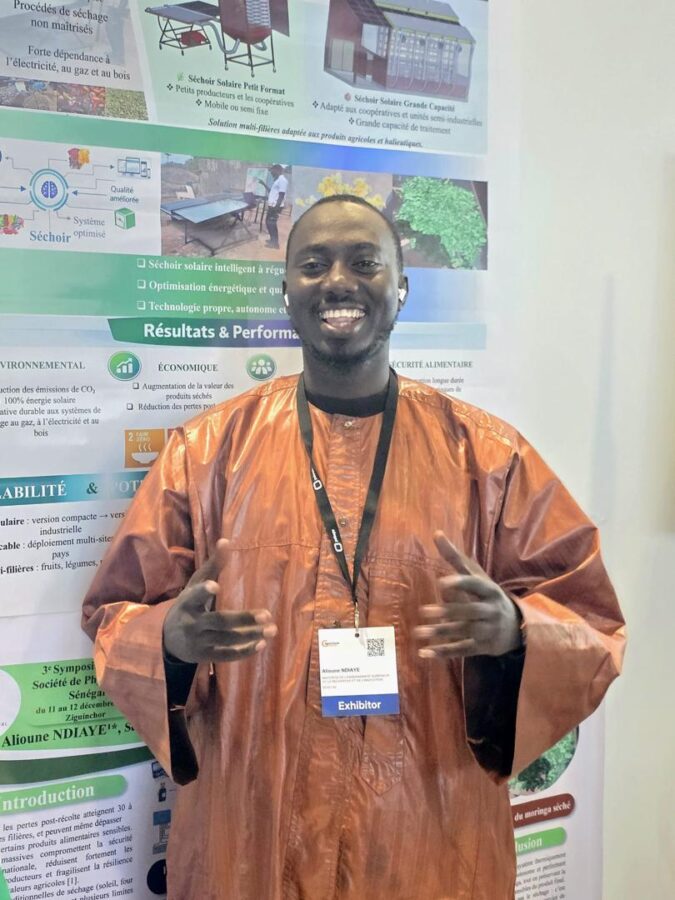
Alioune Ndiaye is an entrepreneur, researcher and coach-trainer in entrepreneurship. Holder of a double Master’s degree, engineer in renewable energies and specialist in energy policies and governance, he is founder and CEO of SEN Compagnie Énergie. He is leading the development of innovative solar solutions integrating digitalization and energy efficiency in order to strengthen energy security, agri-food transformation and climate resilience in Africa.
Its commitment is part of a systemic approach based on strategic partnerships, inclusive innovation and the creation of sustainable value, aligned with international development priorities and global energy transition objectives.
Also read: Innovation: Senegal present at the Geneva International Exhibition of Inventions
Mr. Ndiaye’s invention is a multifunctional intelligent solar food dryer combining solar thermal and photovoltaic technologies for the autonomous and optimized drying of agri-food products. It incorporates an automatic regulation system allowing the temperature and humidity to be adjusted in real time depending on the product.
A connected mobile interface allows remote monitoring and control of drying parameters. The adaptive ventilation and heating system ensures even distribution of hot air and faster drying while preserving nutritional quality.
The data collection and analysis module improves cycle optimization and guarantees process traceability. Its modular and scalable design allows use adapted to small producers, cooperatives and agri-food and fish processing units.
