
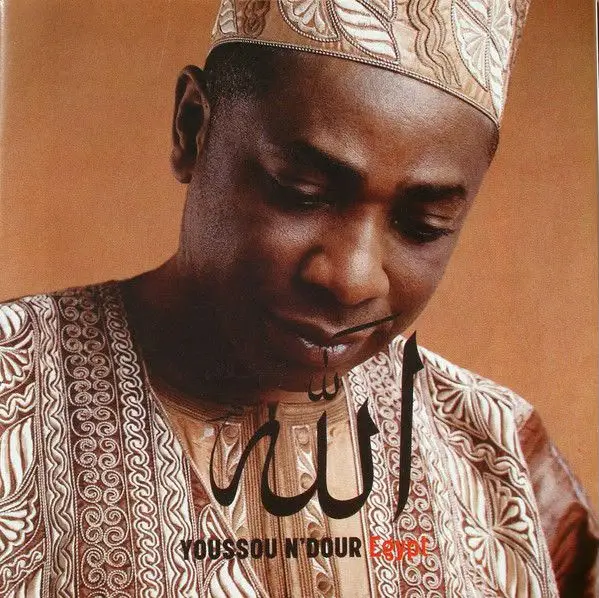
Youssou Ndour, 67 years old: “Egypt”, the spiritual bet that gave him the Grammy
At 67, Youssou Ndour looks back on a career where popular successes rub shoulders with more daring artistic bets. Among them, Egypt occupies a unique place. Born from a long musical and spiritual quest, the album, recorded between Dakar and Cairo, combines Senegalese sounds with Arab musical traditions. In 2005, this work dedicated to the great figures of Sufism received the Grammy Award, offering its author one of the most prestigious recognitions of his career.
Egypt is not born from a simple desire to change register. The project matured for more than five years before appearing in Senegal in 2003 under the title Sant Yàlla, “Praise to God”. It was then released internationally in 2004 under the name Egypt. Youssou Ndour takes a path little explored until then in his career. Far from the energy of mbalax which built his popularity, he delivers eight pieces devoted to God and several great figures of Senegalese Sufism. Cheikh Ahmadou Bamba, Seydina Limamou Laye, Baye Niass and Cheikh Ibra Fall are notably celebrated there. The tour opens with “Allah”, a long piece of more than six minutes dedicated to God, the Prophet and Mauritanian sheikhs. Then come “Shukran Bamba”, “Mahdiyu Laye”, “Tijaniyya”, “Baay Niasse”, “Bamba the Poet”, “Cheikh Ibra Fall” and “Touba Daru Salaam”. A musical journey through several figures and sensibilities of Senegalese Sufism, before ending in Touba.
When Dakar meets Cairo
To give this work its particular color, Youssou Ndour joins forces with the Egyptian composer Fathy Salama. Together, they co-produced the album, recorded between the Xippi studio in Dakar and studios in Cairo. Fathy Salama brings with him an Egyptian orchestra and arrangements drawn from the Arab musical tradition.
In front of him, Senegalese musicians bring their own sounds. The strings of the Nile thus dialogue with the kora of Babou Laye and the Senegalese percussions. At the center of this meeting, the voice of Youssou Ndour also changes register. It becomes more composed, more collected, carried by melodies which give the whole thing an almost ceremonial atmosphere. More than a breakup, this experience reveals another side of the artist. It preserves its identity while opening it to a new musical universe. The record thus brings together two traditions, two imaginations and two shores of the African continent.
A profoundly Senegalese work
Behind its title and its Egyptian sounds, Egypt remains deeply anchored in the religious and cultural universe of Senegal. Youssou Ndour chooses to sing in Wolof the great spiritual figures who occupy a central place in the religious history of the country. The researcher Fiona McLaughlin particularly analyzed the project as an expression of “Sufi modernity”, that is to say a way of inscribing a Senegalese spiritual tradition in a now globalized musical world.
Upon its release, the record did not immediately enjoy the same reception as Youssou Ndour’s major popular productions. Its religious character particularly gives rise to reservations in Senegal. But on the international scene, he ended up finding recognition that matched his ambition. In 2005, Egypt won the Grammy Award for Best Contemporary World Music Album. The distinction crowns several years of work and places this creation by Youssou Ndour at the top of the international music scene.
The crowning Grammy
The same year, the record also received the Album of the Year award at the BBC Radio 3 Awards for World Music, while Youssou Ndour won a MOBO Award for Best African Artist. But the Grammy remains the major recognition. For Youssou Ndour, it above all validates an artistic choice which consisted of temporarily moving away from the public’s usual expectations to defend a more intimate work. Twenty-two years after its international release, Egypt retains a special place in his discography.
At 67 years old, the artist can measure the scope of this bet. This adventure allowed him to bring together Dakar and Cairo, Senegalese tradition and Arab sounds, popular music and spiritual singing. Above all, she gave him, in 2005, this statuette which has become one of the strongest symbols of his career: the Grammy Award!
Yaya SOW
