
The bitter story of Tyson’s first victim October 2, 2026
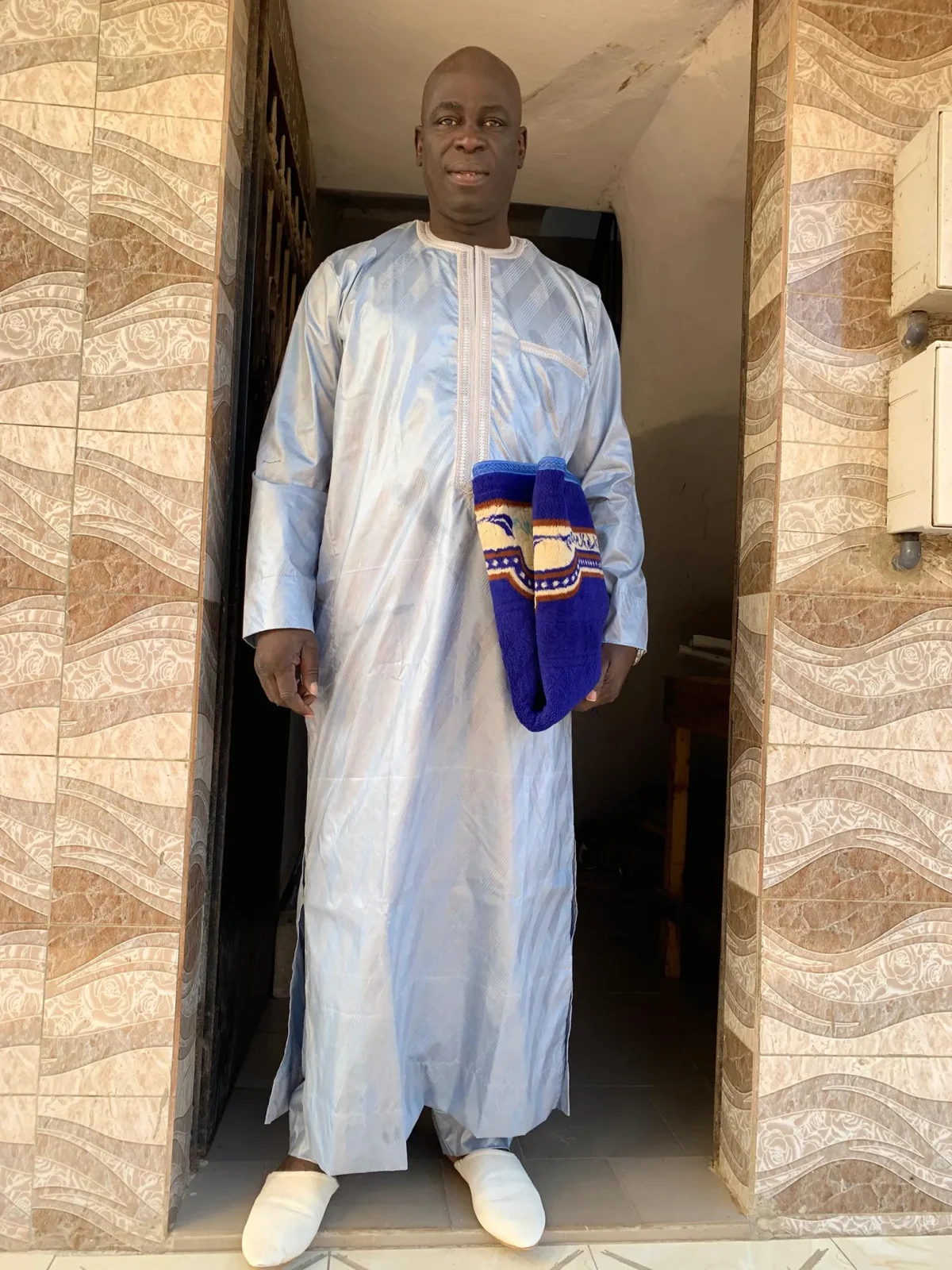
Some athletes have left their mark on the arena with their exploits before reinventing themselves or retraining after their sporting career. The section “What happened to them?” » tells of their life after their sporting career. Today, spotlight on Nguèye Loum, former member of the Mermoz stable, first victim of Tyson, who became coach of the Mor Fadam wrestling school since its creation.
Nguèye Loum was born in Nguiguiss, a town in the Thiès region. It was in this region that he discovered wrestling very early. At 17, he left his native village for Dakar. The young man moved to Hlm Las Palmas, in Guédiawaye. He works in several small jobs to support himself, but never gives up his passion: wrestling.
“I started in Dakar with the “mbapatt”. I am from the generation of Balla Bèye 1 of Pikine,” he says. His journey then took him to the Plateau stable in Dakar, alongside the late Boy Kaïré 1. It was there that he took his first steps in striking wrestling, in Dakar.
“It was in Plateau that I fought my first battles in Dakar,” he explains. Nguèye Loum then had a promising start to his career. He wins in front of Djamil de Walo. He also conceded a draw against Aldiouma Diouf de Kaolack, but signed several successes against Dix Heures de Fass and Ousmane Mbengue, whom he knocked out. He also mentioned a fight fought in Kaba, in Baol, where he had knocked out a wrestler named Manga 2.
Tyson, the challenge that changed his career
His rise, however, came to a halt against Djib Diouf de Fass. Long before settling in the capital, Nguèye Loum had already built a solid reputation in the regions. He keeps the memory of his exploits in Thiès and in several localities.
“I had nine victories in nine fights in Thiès. I also recorded victories at Réfane, Keur Samba Kane, Taïba Ndiaye, Fass Boye and Ngaaye,” he recalls. It was precisely in Ngaaye that he faced De Gaulle, the father of Boy Niang 2 de Pikine.
“I fought an epic fight with De Gaulle at Ngaaye. He ultimately lost the duel by arbitration decision,” he says with a smile.
After his time in Plateau, Nguèye Loum joined Kamal Salamé’s Mermoz stable. This structure then benefited from rigorous supervision. Kamal Salamé, a sportsman at heart and a man of means, put his residents in excellent performance conditions.
In 1995, a new phenomenon appeared in the arena: Mouhamed Ndao known as Tyson. He arrives with the concept “Boul Faalé”, a philosophy which goes far beyond the framework of wrestling. The native of Kaolack quickly became a social phenomenon and one of the symbols of the self-made man in the arena.
But it is above all his charisma that attracts attention. Through hard work and victories, Tyson quickly climbed the ranks and found himself facing the established wrestlers of the time. Nguèye Loum will be one of those who accept the challenge.
“Initially, it was the fight between Tyson and Kadd-Gui which had been arranged by my elder Mor Fadam and the traditional communicator Khadim Samb. But Kadd-Gui finally withdrew,” he recalls.
The name of Nguèye Loum is then put forward. But his mentor, Kamal Salamé, is categorically opposed to it.
“My mentor said no. He didn’t want me to face a wrestler who came from nowhere, with no track record. But I got around him to take Tyson’s lead. I really had no doubt of my victory. Unfortunately, he ended up defeating me,” he admits.
The duel took place on July 31, 1995. Tyson won and inflicted a defeat on Nguèye Loum that would leave its mark.
“I regretted having challenged Kamal Salamé to fight with Tyson. It was a mistake that I later recognized,” he admits.
The fight, however, did not bring him a fortune. Indeed, Nguèye Loum estimates “to have received around 350,000 FCfa”. He also reveals that he showed up on the day of the fight with a rib injury, protected by a clearly visible bandage.
Despite this defeat, he quickly understood that Tyson was called upon to shake up the hierarchy of the arena.
“I told myself that this Mouhamed Ndao was going to send all the old wrestlers of the time into retirement,” he says.
History will prove him partly right. Tyson won successively against several big names of the time: Mouhamed Aly, Toubabou Dior, Mor Fadam… Nguèye Loum, however, thought that the Pikine phenomenon would encounter more difficulties against colossi like Bombardier and Yékini. They will actually end up beating him.
Eumeu Sène, the defeat that broke the momentum
But that will not prevent Tyson from becoming King of the arena and enjoying some of the highest fees in the history of Senegalese wrestling. The numbers give the measure of the phenomenon.
Between 1995 and 2007, the leader of Boul Faalé accumulated considerable income. In 2007, he was at the top of a ranking of fees paid by the Action 2000 structure in Petit Mbaye. Of the seven fights organized by this structure since 1999, Tyson has contested five.
Excluding sponsorship, his fees already reach impressive amounts. He would have received 240 million FCFA for his fights affected by this classification, compared to 185 million for Bombardier, 80 million for Gris Bordeaux and 30 million for Tapha Guèye.
By adding certain fees, notably those of his fights against Tapha Guèye and Manga 2, the total reached nearly 285 million FCfa before his suspension. To these amounts are added income from sponsorship, generally higher than the fees officially declared to the Cng.
Tyson also revealed, in 2017, on the Rti show “C’Midi”, that his biggest fee had reached 150 million FCfa. It was during his fight against Yékini, on April 4, 2010, organized by Gaston Mbengue after his suspension was lifted.
After Tyson, another big poster will mark the career of Nguèye Loum. In 1999, he faced Eumeu Sène.
“My fight against Eumeu Sène was a big poster organized by Gaston Productions. We were both very promising young champions. Each of us was very fit, very technically gifted and had very good staff,” he explains.
At this time, Nguèye Loum no longer benefited from the support of Kamal Salamé. He believes he is no longer in the right conditions to pursue his career.
“I was sure of myself before the fight. But this defeat affected me deeply,” he confides.
For his part, Eumeu Sène had already caused a sensation in the “mbapatt”. His performances impress observers. Still, his move to striking wrestling got off to a rocky start. He successively lost to Mbodji Diagne on March 15, 1998, then to Ma Fall Sèye on February 7, 1999.
Gaston Mbengue then offers him a new opportunity to relaunch his career. The Pikinois pulled out all the stops and won against Kamal Salamé’s colt on August 7, 1999.
For Nguèye Loum, this defeat constitutes a real blow.
“I was discouraged. I no longer had Kamal Salamé, so no more support. I tried to stay, but I couldn’t anymore. I finally gave up the fight,” he regrets.
Even before ending his career, Nguèye Loum was already working in the security field, notably in a restaurant. He continues this activity today, but in another environment.
A second life
He is a security officer in the Medical Service of the Center for University Works of Dakar (Coud), at the Cheikh Anta Diop University of Dakar. But his relationship with wrestling never ended.
Since the creation of the Mor Fadam wrestling school, Nguèye Loum has played an important role in the training and supervision of young people. He thus becomes one of the coaches of this structure.
“I trained Gouye Gui, Ablaye Wade, who is in Spain, Pape Mbaye 2, Mbaye Tine 2, Sa Cadior 2, Fadam 2, among others,” he lists with pride.
Even today, he continues to pass on his experience to younger generations. His journey ultimately tells another side of the history of wrestling. After being a fighter, he became a trainer.
By Abdoulaye DEMBÉLÉ
