
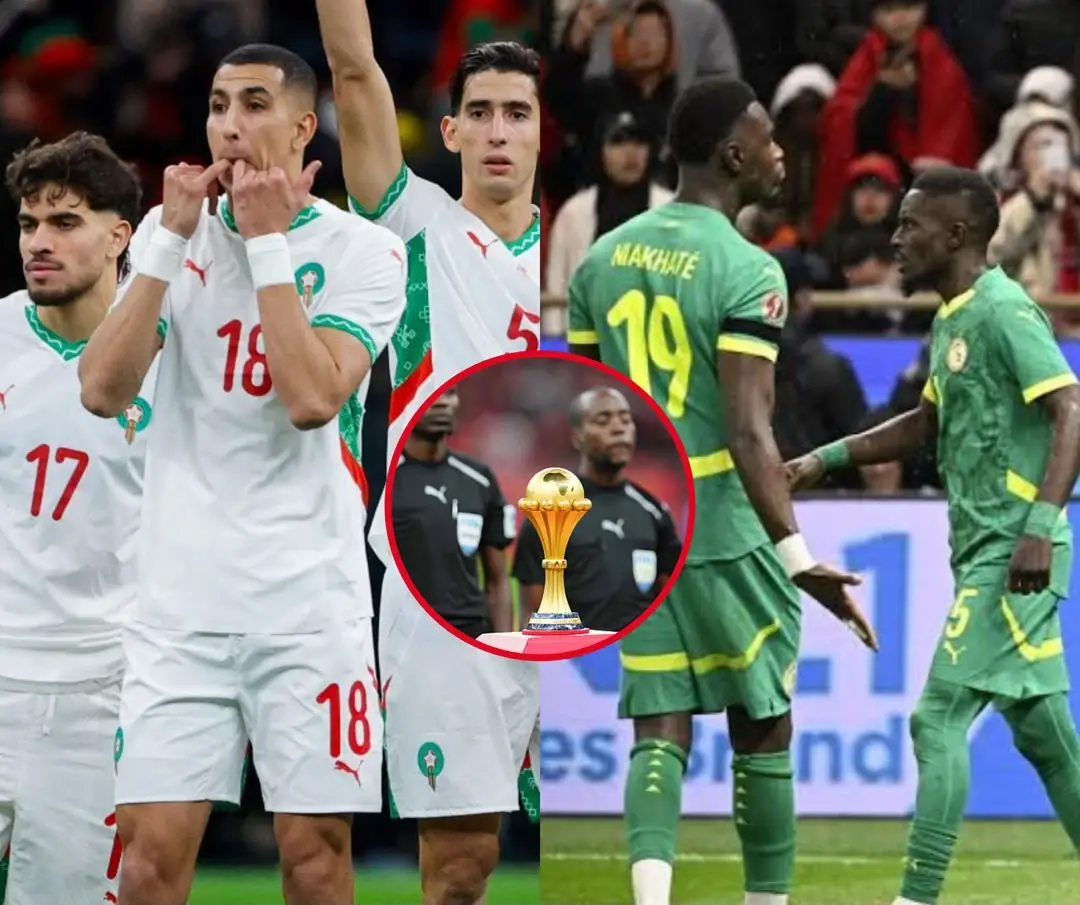
Why the CAS decision is not necessarily final This Tuesday, November 24, 2026, all eyes are on Lausanne, Switzerland, where the Court of Arbitration for Sport (CAS) must render its award in the dispute between Senegal and Morocco around the CAN 2025 final. On January 18,…
This Tuesday, November 24, 2026, all eyes are on Lausanne, Switzerland, where the Court of Arbitration for Sport (CAS) must deliver its ruling in the dispute between Senegal and Morocco around the CAN 2025 final.
On January 18, on the pitch in Rabat, the Lions won the final against the Atlas Lions (1-0), after extra time. But, two months later, on March 17, the appeal jury of the Confederation of African Football (CAF) reversed the result by declaring Senegal forfeit and awarding the victory to Morocco on the green carpet (3-0).
On March 25, the Senegalese Football Federation (FSF) in turn contacted the CAS to contest this decision and request the cancellation of the sanction, as well as the recognition of Senegal as winner of the competition. This Tuesday, the CAS sentence is therefore eagerly awaited. It could put an end to this legal-sporting soap opera which has kept supporters of both countries in suspense for several months.
But will this decision really constitute the last act of this battle? Not necessarily. Because, if the CAS represents the last instance of appeal in the ordinary sporting jurisdiction, its awards can, under very strict conditions, be the subject of an appeal before the Swiss Federal Court. However, it will not re-judge the case on the merits: its review mainly concerns compliance with certain legal guarantees and fundamental rules of procedure.
Explanations.
What is SAD?
The CAS is an international arbitration court specializing in the resolution of disputes related to sport. Based in Lausanne, Switzerland, it constitutes, in most cases, the last instance of appeal in sporting matters, including football.
Its operation is based on an arbitration system. For each case, the arbitrators are appointed in accordance with the CAS procedural rules, from a list of sports law specialists. In appeal proceedings, the panel is generally made up of three members, responsible for considering the parties’ arguments and rendering an award. In the dispute between Senegal and Morocco following the CAN 2025 final, the CAS is thus called upon to examine the appeal of the Senegalese Football Federation against the decision of the CAF appeal jury.
Before the creation of the CAS, in 1984, sports disputes were handled in a dispersed manner, without a real harmonized jurisdictional framework. The tribunal was established under the leadership of Juan Antonio Samaranch, then president of the International Olympic Committee (IOC). In its early days, its financing, largely provided by the IOC, raised questions about its independence. Following a reform following a decision by the Swiss Federal Court, the CAS was restructured and its institutional independence strengthened in 1994.
Also read: Understanding how the TAS works
The heart of the legal debate
The dispute between Senegal and CAF raises a particularly sensitive legal question. The situation presents unusual characteristics in the history of football. An often-mentioned precedent dates back to 2019, when Esperance sportif de Tunis was declared winner of the African Champions League against Wydad Athletic Club, after the Moroccan team withdrew during the match.
In the case of the final between Senegal and Morocco, the entire legal question rests on the interpretation of the notion of “forfeit”. The facts are at the heart of the controversy: the Senegalese players left the pitch; the match then resumed with the agreement of the referee; the penalty at the origin of the dispute, taken by Brahim Diaz, was missed; the match continued into overtime; finally, Senegal scored and won the match, validated by the final whistle and followed by the presentation of the trophy.
Two interpretations of the CAF regulations conflict. The first, based in particular on articles 82 and 84, favors a strict reading according to which leaving the land without authorization can result in a forfeiture. The second defends a contextual reading, taking into account the resumption of the match with the agreement of the referee and the absence of a clear warning addressed to the Senegalese players regarding possible disqualification.
The CAS will therefore have to rule on these interpretations and determine the legal consequences of the facts that occurred during the meeting.
The Swiss Federal Court, a very supervised appeal
Often presented as the highest court in sport, the CAS in reality constitutes the last instance of appeal in the ordinary sporting jurisdiction. However, this does not mean that his sentences escape all judicial control.
Indeed, these can be the subject of an action for annulment before the Swiss Federal Court, the highest judicial authority of the Swiss Confederation. But be careful: this jurisdiction does not constitute a new body responsible for retrying the dispute. It is not intended to reexamine the facts, to freely reinterpret the sporting regulations or to substitute its assessment for that of the CAS arbitrators. Its control is strictly limited to certain grounds provided for by Swiss law on private international law. It may in particular relate to the irregularity of the composition of the arbitral tribunal, the lack of jurisdiction thereof, a decision rendered beyond the requests of the parties, the violation of equal treatment or the right to be heard, or even the contravention of the award to public order.
In other words, a party who is not satisfied with the CAS decision cannot simply refer the matter to the Swiss Federal Court for a new examination of the case. It must demonstrate the existence of a precise legal reason justifying the annulment of the award. That’s the nuance: the CAS remains the last ordinary sporting instance, while the Swiss Federal Court exercises exceptional and very limited judicial control.
Thus, unless the award is annulled in the context of this particularly structured appeal, the CAS decision should put a definitive end to the sporting dispute between Senegal and Morocco.
Moussa DIOP
