
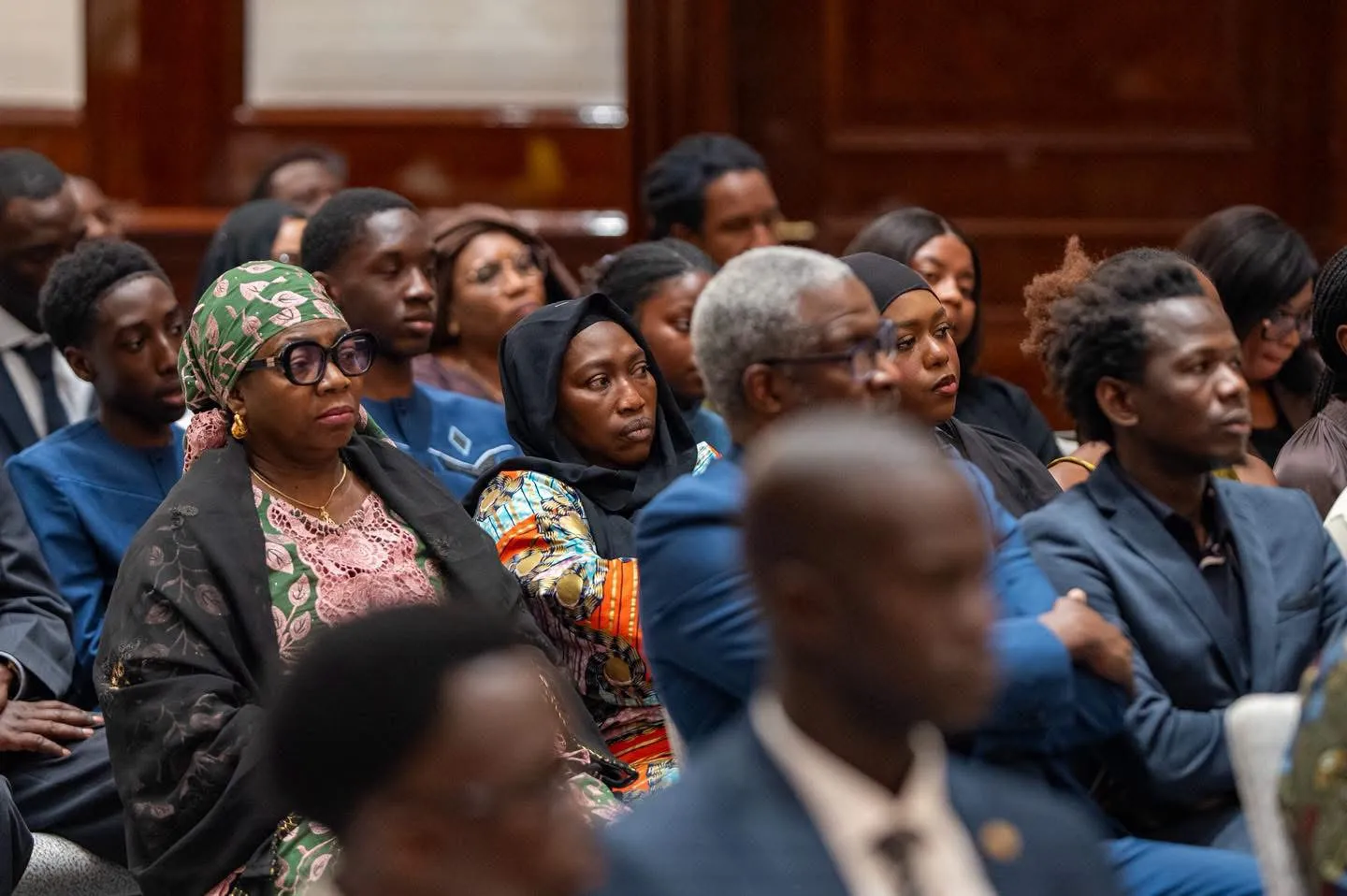
The Diaspora: A cultural bridge between Germany and Senegal
Estimated at around 6,500 people, the Senegalese diaspora in Germany stands out for its exemplary integration into German society. It now intends to play a more active role in strengthening investments.
According to official data from the immigration service, around 6,500 Senegalese nationals are registered in Germany, a figure which does not however reflect all dual nationals or the entire resident community. “The majority of our community is established in large urban centers and economic areas such as Berlin, the Rhine-Ruhr region, Frankfurt, Munich or Hamburg,” explains Ms. Raky Touré Winkelhog, president and founder of “Sénégalais d’Allemand” and member of “Sénégal Sama Rew”. According to her, the Senegalese community in Germany is distinguished by its discretion and its exemplary integration within German society, supported by sustained associative commitment, mastery of the language and an active contribution to civic and economic life. “Our members today operate in very diverse sectors, ranging from education and health to engineering and entrepreneurship,” says Ms. Winkelhog. The politician Karamba Diaby is one of the prominent representatives of the Senegalese diaspora in Germany. Born in Senegal, he moved to Germany for his studies: he notably holds a doctorate in geoecology defended in 1996 at the Martin-Luther University of Halle-Wittenberg. In 2013, he became the first black person born in Africa to be elected to the German Bundestag for the Halle/Saale constituency. “My story shows that relations between Germany and Senegal can produce something particularly valuable: life paths that connect the two countries and create human, scientific, economic and cultural bridges,” he explains.
He has visibly been emulated since another Senegalese national, Mr. Saliou Gueye, was elected mayor of Stuttgart-Zuffenhausen, a district of around 40,000 inhabitants. “My journey has allowed me to understand that relations between Germany and Senegal should not be considered solely as relations between two governments. They also live in cities, neighborhoods, universities, associations, businesses and, above all, through the women and men who create bridges between the two societies,” says Mr. Gueye. Just like Karamba Diaby, Saliou Gueye deeply believes that the diaspora can be a real civic, professional, economic and political force. “She has skills, experiences, networks and a capacity for commitment that can fully contribute to the development of both her host country and her country of origin.”
Raky Touré Winkelhog evokes the image of a tree to describe the role of the diaspora: the roots are anchored in Senegal, the trunk in Germany and the leaves embody the crossbreeding of the two societies. “This dual culture allows us to approach the future of German-Senegalese relations with renewed ambition,” underlines Raky Touré Winkelhog. For Saliou Gueye, local authorities can also play a much more important role. He cites the example of cooperation between Ludwigsburg and Kongoussi (Burkina Faso) which shows that partnerships between cities can produce very concrete results. As part of German-Senegalese cooperation, he would therefore like to see more direct partnerships between cities, universities, businesses, associations and diaspora actors. In her eyes, this constitutes “a strategic bridge between the two countries”, since she knows the two societies, speaks the two languages, understands the two cultures and has valuable experience. Overall, Karamba Diaby says he is fundamentally optimistic about the future of relations between Germany and Senegal. However, he calls for a paradigm shift. “Tomorrow’s cooperation must be based more on partnership, reciprocity and co-construction,” explains the former member of the German Federal Parliament, citing four essential drivers: youth, knowledge, the economy and civil society. From this perspective, the diaspora intends to be a vector for securing and guiding investments, concludes Raky Touré Winkelhog.
By Seydou KA
