
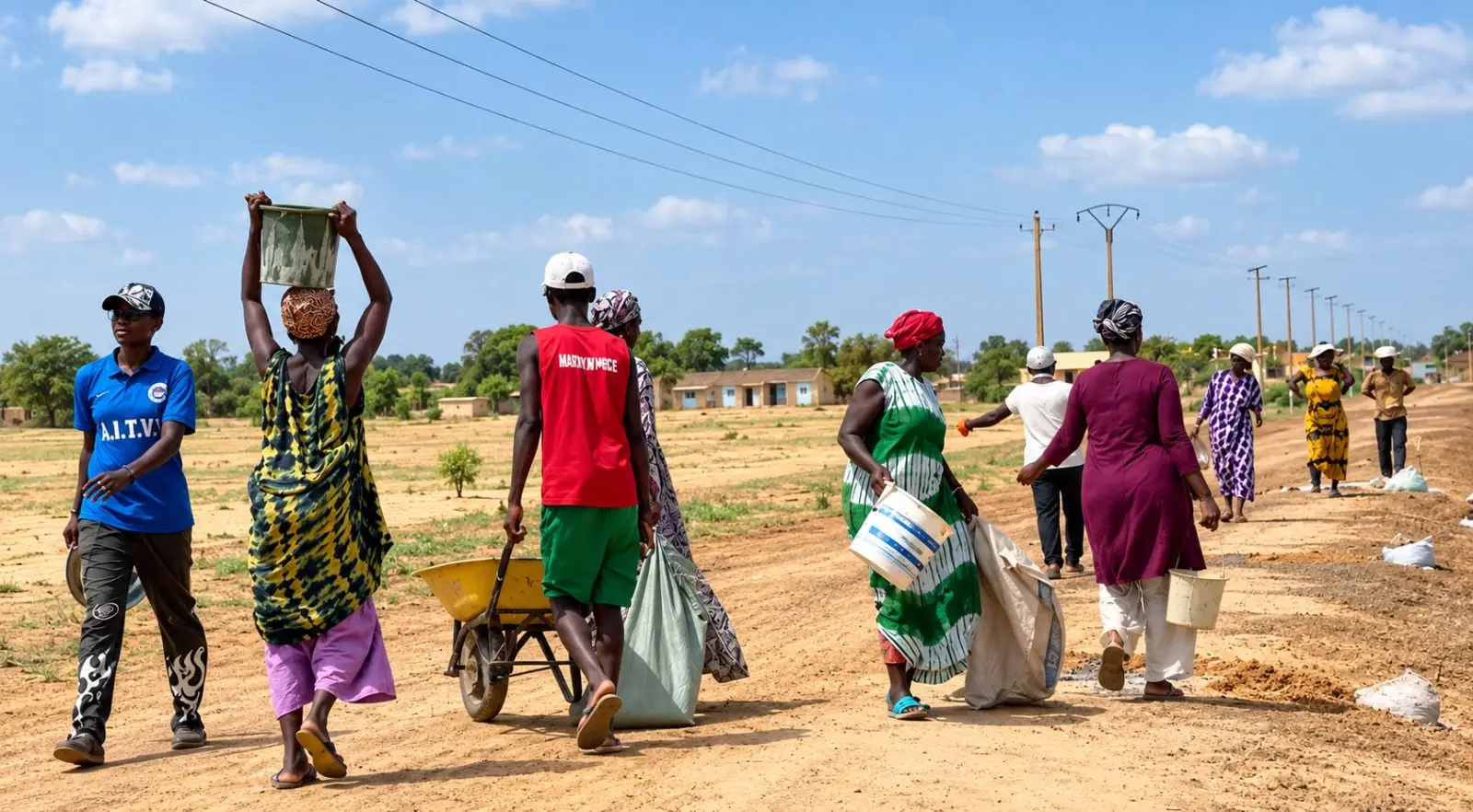
Niandane: women mobilized for the asphalting of a 22 km road
For more than 40 years, the populations of Niandane, in the Podor department, have been waiting for the road linking Boubé to Guia to be paved. Faced with the advanced deterioration of this route, women traders have committed their own means to improve its condition, while calling on the State to intervene sustainably.
In Niandane, in the district of Thillé Boubacar, the deterioration of the road linking Boubé to Guia continues to weigh on travel and economic activities. 22 kilometers long, this lateritic track, rutted and difficult to pass through, constitutes a major obstacle to the flow of agricultural production and the supply of markets, particularly during the winter.
However, the locality occupies an important place in the economy of the department of Podor, in particular thanks to its agricultural, market gardening and commercial activities. But the absence of a paved road increases transport costs, complicates travel and weakens the income of producers and traders.
Faced with this situation, women, mainly traders, decided to take the initiative. United within the women’s collective for the asphalting of the Niandane road, they mobilize their own resources to carry out summary work intended to make certain passages more accessible.
“We stood up to help ourselves. The road is in very poor condition and is also a working tool for us. We consulted among women and decided to take matters into our own hands,” explains Sokhna Ba, member of the collective.
This mobilization is based on financial and material contributions, with the support of certain men. However, purchasing the sand needed for the work represents an additional burden for these women, whose income essentially depends on trade.
Risky travel
The condition of the track regularly exposes users to dangerous situations. Vehicles have difficulty traveling on certain sections, particularly when rain worsens the deformation of the roadway.
“We encounter a lot of difficulties, especially on market days. I remember one day when our car almost overturned. We even had to jump out of the vehicle. Another day, a timetable bus overturned on this road,” testifies Aïssatou Ly, member of the collective.
Beyond the risk of accidents, isolation directly affects economic activities. Producers face difficulties transporting their crops to markets, while traders suffer delays and financial losses.
“We are women. Sometimes we take goods on credit, but as soon as the rain falls, we no longer have any passable routes to pass through. Some farmers were unable to sell their onions because the road was not passable. We produce different crops, but it is difficult to sell them,” laments Awa Mall.
This situation penalizes the entire production and marketing chain, in an area where agriculture and market gardening constitute important sources of income.
Forty years of waiting
According to residents’ testimonies, the asphalting of this axis has been awaited for more than four decades. Despite the commitments made over the years, the road remains a laterite track, to the great dismay of the populations who are demanding its inclusion among the priorities of the public authorities.
Residents are now placing their hopes in the Strategic Opening Up Plan (PSD). They call on the authorities to take into account the needs of Niandane in order to put an end to traffic difficulties and to support the economic development of the locality.
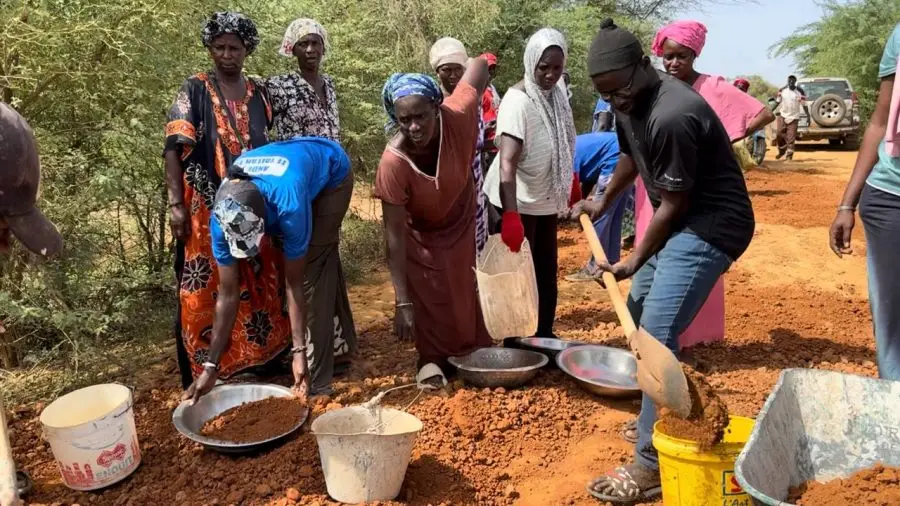
“We are calling on the State to come to our aid. This road is our priority. We are launching an appeal to the President of the Republic, Bassirou Diomaye Faye, as well as to the Minister of Infrastructure, Déthié Fall, so that Niandane is also included among the priorities of the opening-up plan. We really need it,” pleads Cheikh Diop, a resident.
He mentions in particular the recent visit of the Head of State to the agricultural areas of the area, considering that the poor state of the road has complicated access to the fields of Niandane. While waiting for a response from the authorities, the women are continuing their efforts to keep the track in a minimal state of passability. But their mobilization, despite its scope, cannot replace sustainable development.
For the populations of Niandane, the asphalting of this 22 kilometer road constitutes both an economic and social issue. It would facilitate the flow of agricultural production, secure travel and strengthen trade. After more than 40 years of waiting, residents hope that their appeal will finally lead to concrete work.
CTN
