
Ndingler: 80 hectares to be developed for the benefit of 39 families
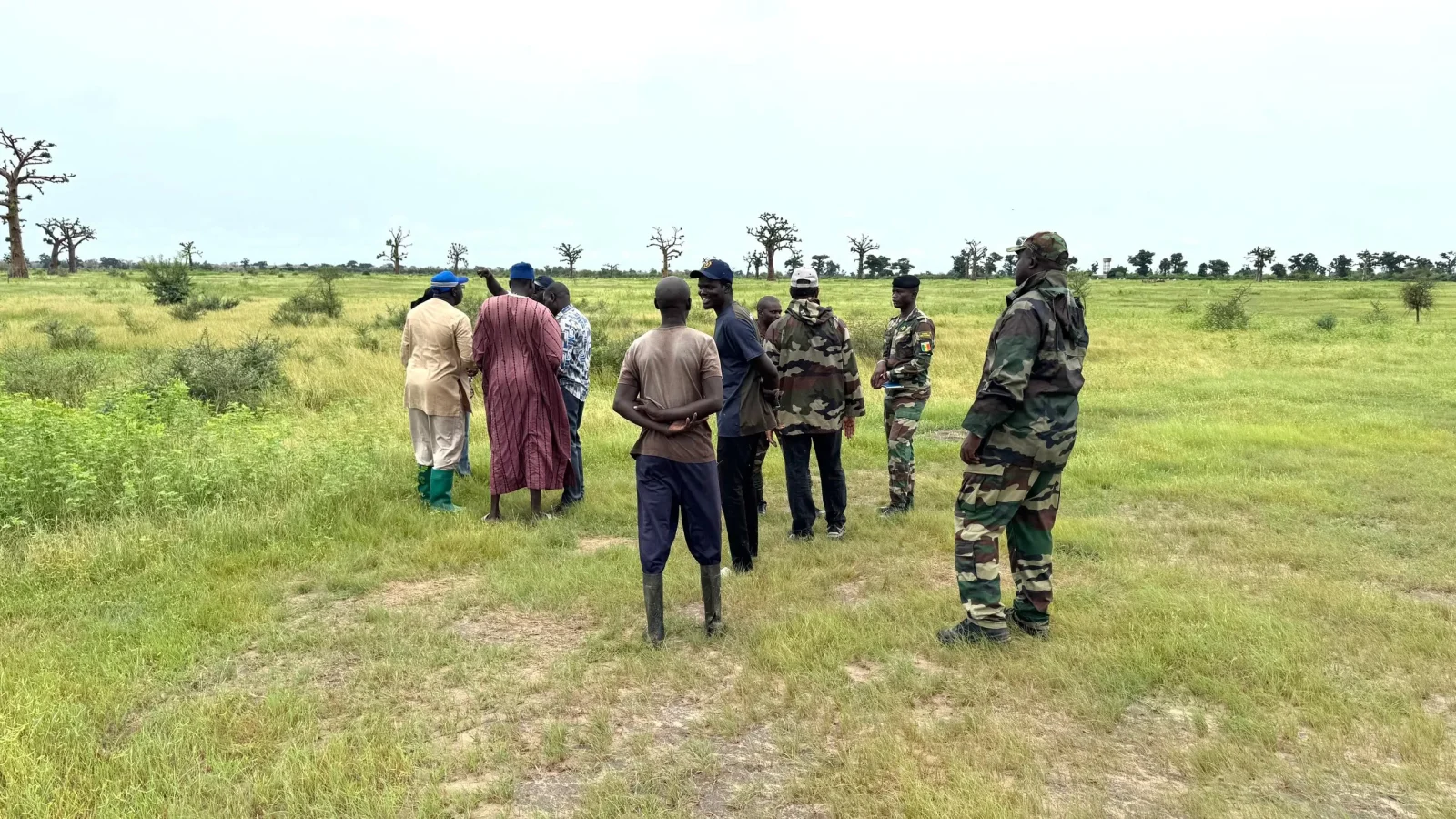
In Ndingler, in the commune of Ndiaganiao (Thies region), it is now time for production. After several years of tensions over land, a joint technical mission from the Ministry of Agriculture, Food Sovereignty and Livestock (Masae) and Military Engineering visited the site yesterday to prepare the reclamation of 80 hectares for the benefit of 39 families. The objective is to transform land relief into agricultural activity, income and economic opportunities for the populations concerned.
The case underwent a major development in January 2026 with the voluntary renunciation of Babacar Ngom of the land title concerned, for the benefit of the State of Senegal and without compensation. This decision opened the way to a new phase, focused on effective land development. The mission undertaken by the Ministry of Agriculture, Food Sovereignty and Livestock (Masae) aims precisely to take this step, recalls a press release received yesterday, Friday September 25.
The technical teams carried out a reconnaissance of the 80 hectares in order to identify the constraints and determine the work necessary for their rehabilitation. The delegation notably brought together the coordinator of the Community Agricultural Cooperatives Program, Youssoupha Guèye, the technical advisor of Masae and focal point of the Ministry of the Armed Forces, Colonel Wardini, as well as representatives of the National Institute of Pedology (Inp), Ancar, projects and programs of Masae and Military Engineering, led by Colonel Biaye.
The presence of military engineering must in particular make it possible to evaluate the mechanized means necessary for heavy work. Clearing brush, grubbing, leveling, decompacting and loosening the soil are among the operations to consider. Before any intervention, physical and administrative security of the perimeter is a priority. The precise delimitation of the 80 hectares, the materialization of the limits and the availability of a reliable cadastral plan should make it possible to avoid further misunderstandings and secure the allocation of plots to beneficiary families. This stage must be followed by the actual development work.
The sizing of operations will make it possible to determine the machines, teams, deadlines and logistical resources required. But recultivation cannot be sustainable without additional investments. Protection of the perimeter by a fence and above all access to water constitute two essential conditions for the economic viability of the project. The construction of boreholes and a suitable water distribution network is planned.
The objective is to reduce the exclusive dependence on wintering and, subject to hydrogeological studies, to allow diversification of production and more regular agricultural activity. The choice of crops must take into account soil characteristics, water availability and producers’ capacities. Traditional rainfed crops, notably millet, peanuts, corn and cowpeas, could constitute a first base.
Market gardening and certain livestock activities could complete the system when the technical and economic conditions are met. Babacar Dionne, spokesperson for the village chief, welcomed this grassroots approach, which should allow state services to directly observe the needs and work with the populations to resolve them.
Oumar FEDIOR
