
National Assembly: the Finance Commission rejects the draft budgets
The Finance and Budgetary Control Committee of the National Assembly rejected, on Saturday November 7, 2026, all of the draft budgets submitted for its examination.
The revenue and public debt forecasts, as well as the budgets of several institutions, including the Presidency of the Republic, the Prime Minister’s Office and the higher courts, did not obtain the approval of the commissioners. Reservations were expressed in particular regarding the consistency of certain figures and the sincerity of the budgetary forecasts.
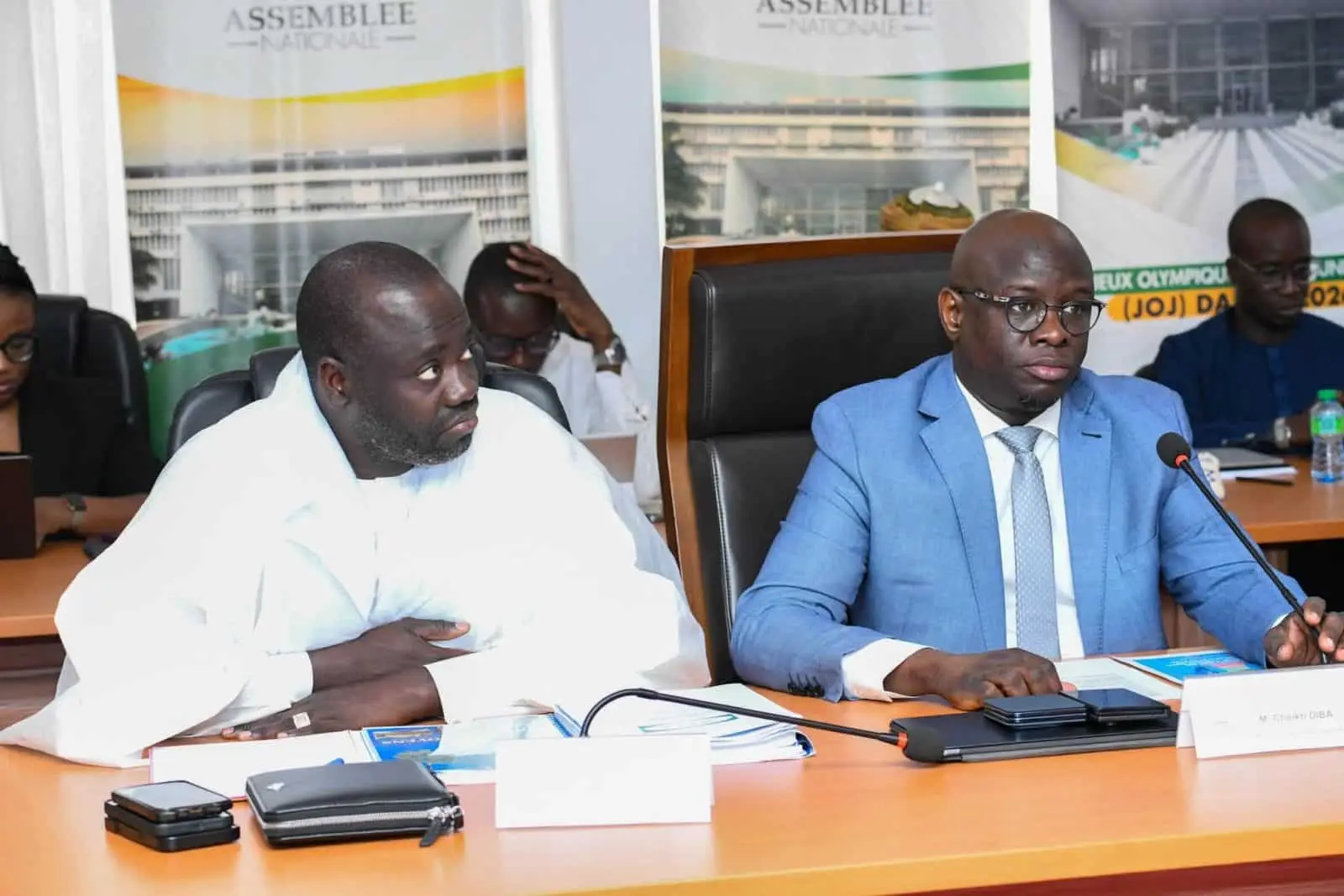
The session took place under the chairmanship of Alphonse Sambou, President of the Commission, in the presence of the Minister of Economy, Finance, Budget and Planning, Cheikh Diba. The latter was accompanied by Bassirou Sarr, in charge of the Budget, and Allé Nar Diop, in charge of Economy, Planning and Cooperation.
The projects presented concern budgetary envelopes of varying importance depending on the institutions. The Presidency of the Republic is thus allocated an allocation of 223.86 billion FCFA, compared to 204.54 billion in 2026, an increase of 19.32 billion. Conversely, the budget of the National Assembly is proposed at 21.11 billion FCFA, compared to 22.30 billion the previous year.
For other institutions, the project provides 1.50 billion FCFA for the Constitutional Council, 4.69 billion for the Supreme Court and 13.07 billion for the Court of Auditors.
Reservations about the sincerity of the forecasts
Beyond the amounts announced, the debates mainly focused on the reliability of the budgetary documents submitted to deputies. Several commissioners noted inconsistencies in certain figures and expressed questions about the sincerity of the forecasts presented by the Government.
The absence of certain supporting documents also attracted criticism. Members of the Commission notably requested the transmission of the 2025 settlement law, considered a necessary document to assess the execution of previous budgets and better examine the new proposals.
These various observations fueled discussions with Government representatives. But they did not make it possible to lift the reservations expressed by the commissioners.
At the end of the discussions, the members of the Finance and Budgetary Control Committee voted against all the projects submitted for their examination, including the revenue and public debt forecasts as well as the budgets of the institutions concerned.
CG DIOP
