
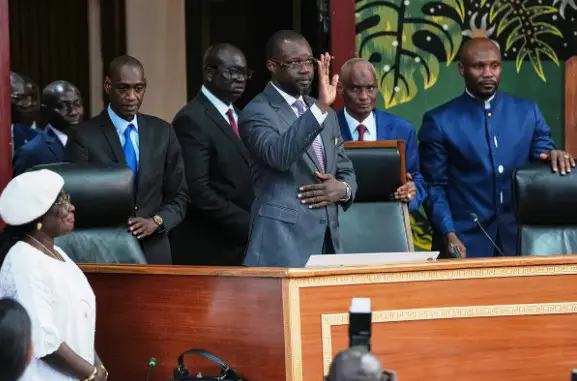
National Assembly: an extraordinary session under the sign of transparency
The Senegalese National Assembly begins its first extraordinary session of the year this Monday, August 10, 2026.
On the agenda are several files with high institutional and financial stakes, against the backdrop of the stated desire to strengthen transparency in public management and the mechanisms for controlling State action.
Among the main texts submitted to deputies is a proposal to modify article 37 of the Constitution. This provision concerns in particular the declaration of assets of the President of the Republic. Its examination should give rise to intense discussions within the hemicycle, taking into account the institutional scope of the text and its link with the accountability requirements of the highest authorities of the State.
Parliamentarians will also have to look at a text devoted to the supervision of special credits and secret funds. The question takes on particular importance in the current context, marked by growing calls for better traceability of public resources.
The extraordinary session will also be marked by the establishment of parliamentary commissions of inquiry into several sensitive issues.
Land is notably among the subjects which will be examined by the deputies. Transfers of buildings belonging to the State should also be the subject of investigations, in a context where the management of public land and real estate assets raises numerous questions.
Another file on the agenda: the “One student, one computer” program. Parliamentarians will have to look into the conditions of implementation of this initiative, its operation as well as the use of the resources devoted to it.
Beyond the possible adoption of the various texts, the work of the National Assembly will be particularly monitored for the conclusions which could emerge from the commissions of inquiry. These could help to provide clarification on several issues which occupy the public debate.
This first extraordinary session of 2026 thus takes place in a context where the strengthening of parliamentary control and accountability constitute major challenges in Senegalese public life.
CG DIOP
