
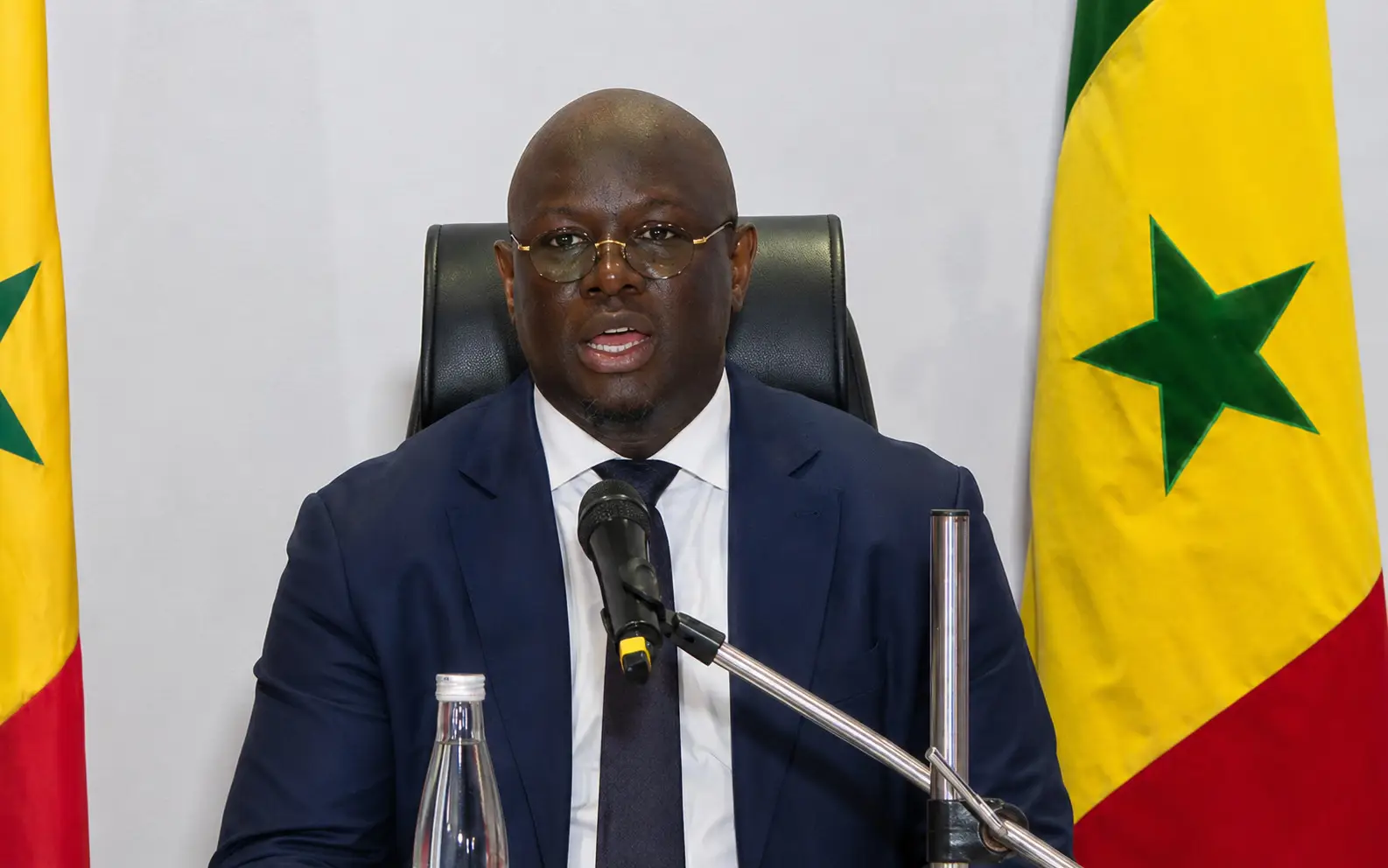
LFR 2026: Sheikh Diba explains the State’s financial constraints
The Minister of Economy, Finance and Planning, Cheikh Diba, justified the adjustments proposed in the 2026 amending finance bill (LFR) by the drop in public revenue, the increase in expenditure linked to the energy crisis and the financing needs of the State. He also defended the measures planned to continue clearing payment arrears owed to the private sector.
Facing the deputies, Cheikh Diba explained that the amending finance bill responds to an unfavorable development in budgetary balances. According to him, state revenues should decrease by 340.3 billion CFA francs, mainly due to poor performance recorded in the implementation of the Economic and Social Recovery Plan (PRES).
The minister, however, wanted to highlight the results obtained by the tax administrations. At the end of September 2026, the General Directorate of Customs and the General Directorate of Taxes and Lands had mobilized, according to its explanations, an additional 81.2 billion CFA francs compared to their respective objectives.
These performances helped partially mitigate the overall drop in revenue. Sheikh Diba praised the work of financial authorities, in particular Customs, Taxes and the Treasury, while recognizing that their efforts are not enough to compensate for all of the budgetary difficulties.
The energy bill weighs on expenses
Added to the drop in revenue is the increase in expenses, linked in particular to the rise in oil prices. The minister recalled that the initial finance law for 2026 was based on an assumption of 64 dollars per barrel. However, in the context of the crisis mentioned before the deputies, prices have exceeded 110 dollars, even reaching, according to him, around 120 dollars on the eve of his speech.
This development puts additional pressure on subsidies granted to the energy sector. For the minister, allowing expenditure to increase without adjustment would risk compromising the efforts undertaken in recent years to improve the consistency of budget execution and restore the confidence of financial partners.
He notably warned of a budget deficit which could reach 10%, with financing needs estimated at more than 6,700 billion CFA francs. Such a situation would, according to him, make it particularly difficult to cover the State’s needs and would risk encouraging the reconstitution of payment arrears.
300 billion to continue clearing arrears
The settlement of amounts owed to businesses constitutes another important aspect of the LFR 2026. Cheikh Diba indicated that the stock of arrears remaining to be cleared amounted to 1,956 billion CFA francs, according to the data he presented.
The government plans to include 300 billion CFA francs in the amending finance law to continue this clearance. The objective is to enable the companies concerned to replenish their cash flow, relaunch their activities, resume recruitment and complete ongoing projects.
The minister also recalled that resources had already been mobilized during previous years to settle part of the State’s commitments. He assured that the clearance process should continue gradually, depending on available resources.
This approach aims, according to him, to prevent payment delays from further weakening the private sector and weighing on economic activity.
The regional market at the heart of the financing strategy
For the minister, the adoption of the amending finance bill is essential to the credibility of Senegal’s budgetary policy and financing strategy, both with national companies and international partners.
He therefore called on the deputies to take into account the constraints which justify the proposed adjustments, believing that the text must allow the State to pursue its commitments while preserving the balance of its public finances.
CTN
