
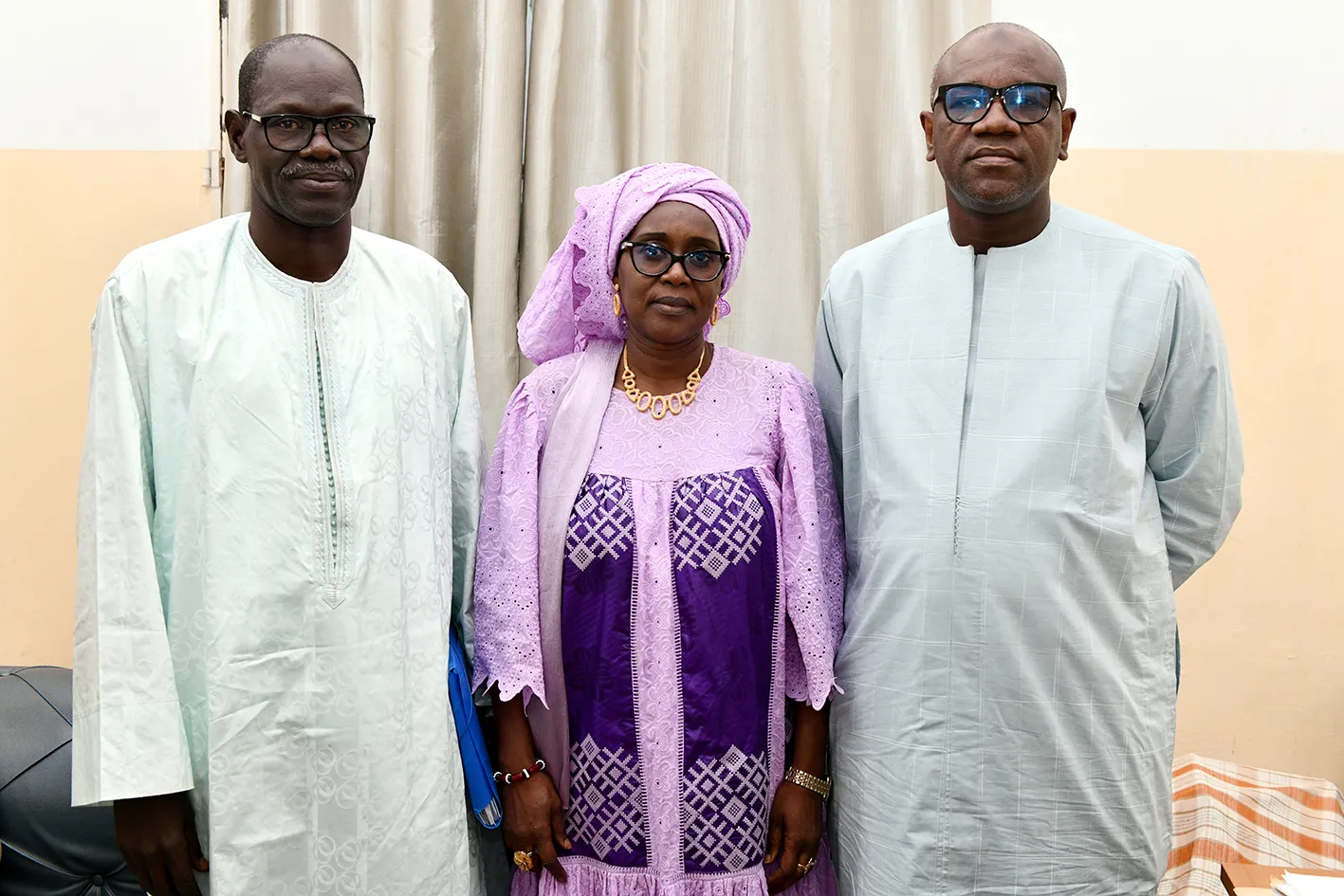
Celebrating 70 years of the Union for Solidarity and Mutual Aid: Autonomy at the heart of popular development
As the celebration of 70 years of existence of the Union for Solidarity and Mutual Aid (Use) approaches, scheduled for December 11, the president of the NGO, Mamadou Diop, takes stock without complacency, but full of hope. From its beginnings on the outskirts of Dakar in the 1950s to its deep rural roots across the country, the organization has resolutely turned towards self-financing and innovation.
Created in 1955 under the name of the Ecumenical Mutual Aid Service (Soe), with the assistance of the French NGO La Cimade, the Union for Solidarity and Mutual Aid (Use) is today much more than a simple non-governmental organization.
“We are an association which has more than 20,000 members spread across the different regions of Senegal and the diaspora,” proudly recalls its president, Mamadou Diop, during an interview with the daily Le Soleil.
Highly decentralized, the organization relies on a structured presence in 20 departments, requiring a minimum threshold of 500 members per local office. In certain historic areas such as Podor, membership reaches up to 3,000 members, and 1,500 for the department of Matam.
On the eve of its renewal general assembly, set for December 13, the Use officially launches preparations for this symbolic anniversary. “We celebrated the 50th anniversary, today the 70th anniversary is here. We want to mark this milestone to show Senegal and the world what Use has accomplished, what it is achieving today and the vision it projects for the future,” underlines Mr. Diop.
Equity
The history of Use is intertwined with the socio-economic evolution of the country. In 1955, the organization’s first actions began in Dakar, in the popular district of Bopp (Dakar), then in full expansion on the urban outskirts. The urgency at the time: fighting epidemics and supporting women and migrant workers through training in hygiene, as well as household and culinary arts.
From 1958, the simple dispensary moved towards medical specialization. “We started the training of nurses and doctors, but especially the first cataract operations,” remembers Mr. Diop.
The Ahmadou Malick Gaye Center also became a key place for integration through sport and education, particularly during the events of 1968, during which catch-up courses and professional training (printing, screen printing, sewing, ceramics) were provided to young people who had dropped out of school. The rural turning point came in 1972, the day after the great drought. Responding to the call of President Léopold Sédar Senghor, the NGO is involved in the “Drought Triangle” (Podor, Matam, Linguère) as well as in the peanut basin.
“From emergency food distribution, we quickly moved to a structured rural development program: agriculture, livestock, literacy and creation of health huts,” says the president.
While the humanitarian and social sector faces a shortage of international funding, the Use is a pioneer in terms of financial independence. By applying the philosophy of “Bamtaaré”, a concept which advocates relying first on one’s own strengths, the NGO ensures its sustainability independently. “Since 2010, our core program has been entirely financed by equity. Even without an external partner, the five major Use programs and our bodies operate thanks to our own resources,” adds Mr. Diop.
Thanks to the income generated by its infrastructures at the Ahmadou Malick Gaye Center, member contributions and service provision, the organization jealously preserves its freedom of action. Furthermore, the secretary general of Use, Oumar Kane, recalls that the NGO is actively involved in the fight against irregular emigration through the Migration and Development Network (Remidev). Likewise, it intervenes on crucial societal issues, such as social cohesion between Senegal and Mauritania, promoted by the Senegal River Valley Resilience and Community Development Project (Prdc-Vfs). The objective of these initiatives, he specifies, is to sustainably strengthen ties between the two peoples.
Souleymane Diam SY
