
YOG Dakar 2026: young people want to have more influence in local governance.
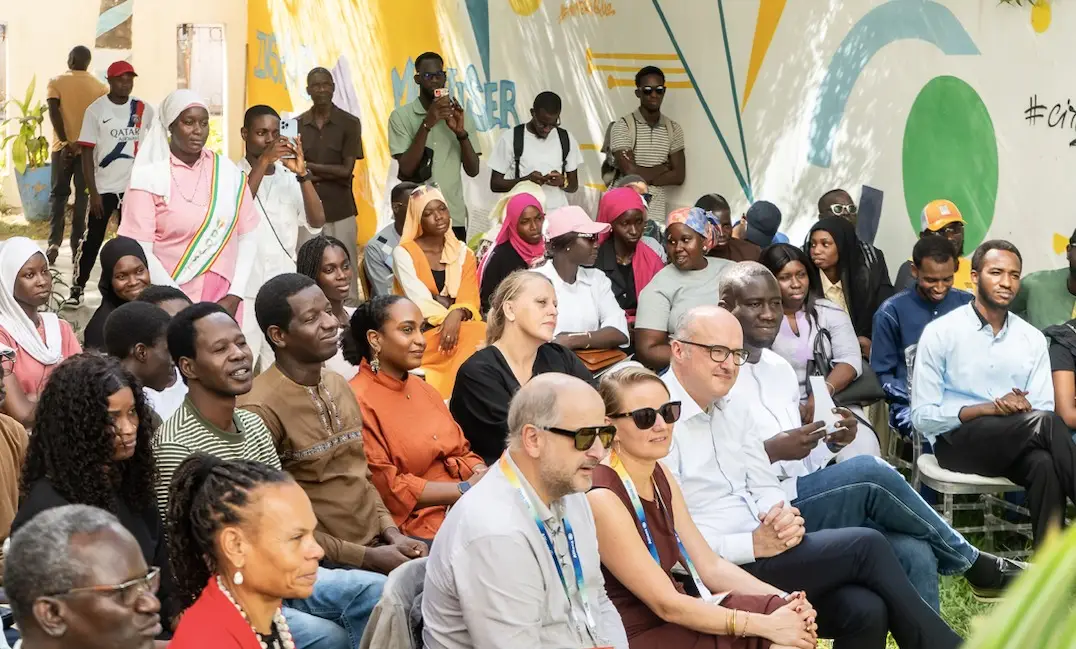
Gathered on Saturday October 31 in Dakar, as part of the “Let’s Talk YOG” program, young people, local elected officials and institutional actors discussed their participation in local governance. Several proposals have been made to move from simple consultation to true joint decision-making.
Being consulted is no longer enough. Young people now want to take part in decisions that affect the future of their communities. This is one of the main demands expressed during the second citizen dialogue of the “Let’s Talk YOG” program, organized on Saturday October 31 by Polaris Asso, with the support of the Swiss Embassy in Senegal, in its youth space in Dakar.
“Let’s Talk YOG” is a citizen dialogue program run by Polaris Asso, in partnership with the Swiss Embassy in Senegal, as part of the Dakar 2026 Youth Olympic Games. It aims to promote democratic values, citizen participation and youth engagement through four dialogues bringing together young people and decision-makers around concrete proposals. Its ambition is to contribute to a lasting YOG legacy, based on informed, engaged youth who are fully involved in decisions that concern their future.
The meeting brought together around forty young people, local elected officials, institutional leaders and representatives of international partners around the place of youth in local governance. At the end of the discussions, several recommendations were made to strengthen their involvement in the management of public affairs.
Three young leaders notably advocated around major issues: the establishment of permanent consultation and co-decision mechanisms, the revitalization of neighborhood councils and the recognition of sport and sporting and cultural associations as levers of citizen participation and local development.
National rapporteur of the Senegal Youth Consultative Council (CCJS), Fatou Touré called for the establishment, in each municipality, of a permanent framework for consultation between young people and municipal councils. She also proposed the creation of a budget line specifically dedicated to youth initiatives, in order to give them the means to realize their projects.
For his part, Babacar Gérard Mbaye, municipal agent in Cambérène, insisted on the need to revitalize neighborhood councils. He recommends a monthly system allowing young people to devote a first week to collective reflection and the following three to the implementation of the selected initiatives. The use of digital tools is also among its proposals to facilitate citizen participation.
For Pape Ousmane Badiane, municipal councilor in Thiaroye-sur-Mer and community player, sports and cultural associations (ASC) must be considered true partners of local authorities. He thus suggested the creation of permanent collaboration frameworks, the formalization of annual citizen commitments and the establishment of sporting, cultural and civic performance conventions, with municipal funding linked to specific objectives.
Towards intergenerational governance
The elected officials present also made their contribution to the discussions. The mayor of Golf Sud, Khadija Mahécore Diouf, invited young people to invest more in decision-making spaces and to move from criticism to proposals, then to action. She defended an approach to local development which involves residents, particularly young people, in the design and implementation of municipal projects.
The mayor of Khombole, Magueye Boye, for his part pleaded for intergenerational governance, in which young people are involved in all stages of municipal development. In particular, he called for their aspirations to be better taken into account in the development of neighborhoods and the conduct of local policies.
Present at the meeting, Patricia Danzi, Director General of the Swiss Directorate for Development and Cooperation (SDC), welcomed the proposals made. In particular, it identified several avenues of action, including the strengthening of public consultations, the financial autonomy of youth associations and better representation of youth advisory councils in decision-making bodies.
The group work also made it possible to broaden the recommendations to other areas. Participants notably discussed civic education from an early age, mentoring, the creation of digital exchange platforms and the transformation of neighborhood councils into real local action structures. The training of young people, the involvement of women in sporting and cultural activities as well as the integration of entrepreneurship in ASC initiatives were also highlighted.
For Ousseynou Gueye, executive director of Polaris Asso, the challenge is to break with a practice which consists of regularly soliciting young people without giving them sufficient space in the decision-making processes. “We talk a lot about young people, but we still talk too little with young people,” he underlined at the opening of the proceedings.
He announced that the recommendations resulting from the “Let’s Talk YOG” dialogues will be transmitted to the highest authorities in the country and will be followed up. The ambition is to make the Dakar 2026 Youth Olympic Games (YOG) a lasting lever for strengthening local democracy and citizen participation.
This second dialogue is part of a cycle of four meetings. After a first meeting dedicated to the cultural and creative industries, the program provides for an exchange on youth entrepreneurship, before a closing meeting intended to submit to the national authorities the priority recommendations resulting from the various consultations.
YEAR
