
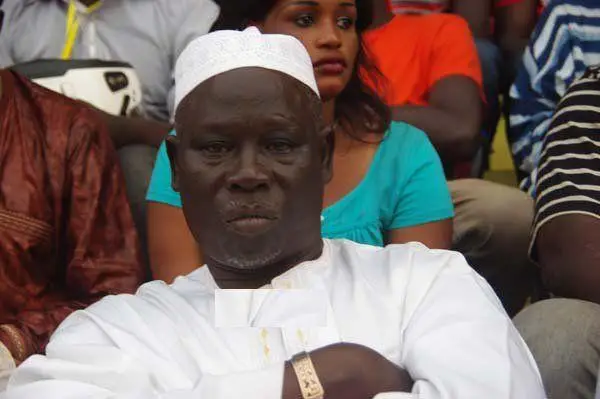
Balla Gaye 1, the builder of champions November 15, 2026
Former wrestling glory, Balla Gaye Ndour, better known as Balla Gaye 1, devoted a large part of his life to the arena and the training of young wrestlers. Mentor of Balla Gaye 2 and founder of the wrestling school that bears his name, he left behind a legacy that goes far beyond his sporting achievements. He died on November 15, 2020, at the age of 71, at his home in Guédiawaye, following a long illness.
There are men whose careers are not measured solely by the number of victories won in the arena. Balla Gaye 1 belongs to this category. A former wrestling champion, he has crossed several generations of the arena, going from the status of fighter to that of trainer and advisor. A trajectory that allowed him to leave a lasting mark in a discipline deeply anchored in Senegalese popular culture.
In the wrestling world, he was affectionately called “Father Balla”. A nickname that said a lot about the place he held among young athletes. Beyond his reputation as a former wrestler, he was especially recognized for his commitment to coaching and transmission. The president of the National Wrestling Management Committee (CNG) at the time, Ibrahima Sène, known as Bira, also saluted, after his death, the memory of a man who had served the discipline in several of its dimensions: sporting practice, training and even fight commentary.
A school to transmit and nurture talents
One of Balla Gaye 1’s major contributions to Senegalese wrestling remains the creation of his wrestling school. After that of Ndakarou, its structure is among the first wrestling schools set up in Senegal. There he developed a true vocation as a trainer, welcoming and supervising young people passionate about this discipline.
His school will gradually become a training space for several wrestlers who will make a name for themselves in the arena. Among them are Elton and especially Oumar Sakho, better known under the pseudonym Balla Gaye 2. The latter, who chose to bear the name of his mentor, owes him an important part of his sporting training.
In a testimony published after the death of his trainer, Balla Gaye 2 did not hide his gratitude: “I lost a great man. He did everything for me. He taught me to fight. He was with me all the time and everywhere. He loved me very much. He considered me his son. » Comments reported by EnQuête on November 16, 2020.
The consecration of his former protégé, who became King of the Arena on April 22, 2012 after his victory over Yékini, also constitutes one of the most striking illustrations of his work of transmission. By training the man who would become one of the big names in striking wrestling, Balla Gaye 1 thus contributed to writing an important page in the history of the arena.
A man of the arena in all its dimensions
His involvement was not limited to training, however. According to Ibrahima Sène, known as Bira, Balla Gaye 1 had also worked as a wrestling commentator. He thus knew the different facets of this discipline: combat, preparation of athletes, supervision and media coverage.
This versatility had earned him the respect of many players in the industry. Boy Niang 2, cited by EnQuête, particularly remembered his qualities as an educator and his proximity to young wrestlers. “He used to say that all the wrestlers are his children,” he reported.
But behind this respected figure there was also a less glamorous reality: that of the precariousness of certain former glories of the struggle. A few months before his disappearance, Balla Gaye 1 had publicly discussed his health difficulties and deplored the lack of support he felt he had received from the wrestling community. His call for help sparked reactions and mobilization around his situation.
A disappearance that leaves a void
On Sunday, November 15, 2020, the news of his disappearance plunged the wrestling world into sadness. Balla Gaye Ndour died at his home in Guédiawaye, at the age of 71, after a long illness. He is buried in the Cambérène cemetery.
The tributes are multiplying. The Ministry of Sports salutes the services rendered to Senegalese wrestling, recalling his career as a former champion, but also his role as a trainer. His school, which helped to bring out several talents, is presented as one of the most concrete testimonies of his commitment.
Six years after his death, his name remains associated with a school, a generation of wrestlers and a champion who carried his pseudonym to the top of the arena. Balla Gaye 1 will not only have transmitted combat techniques. He will also have contributed to shaping courses and preparing the next generation.
YEAR
