
After the success of the YOG: Dakar to challenge the 2031 Francophonie Games
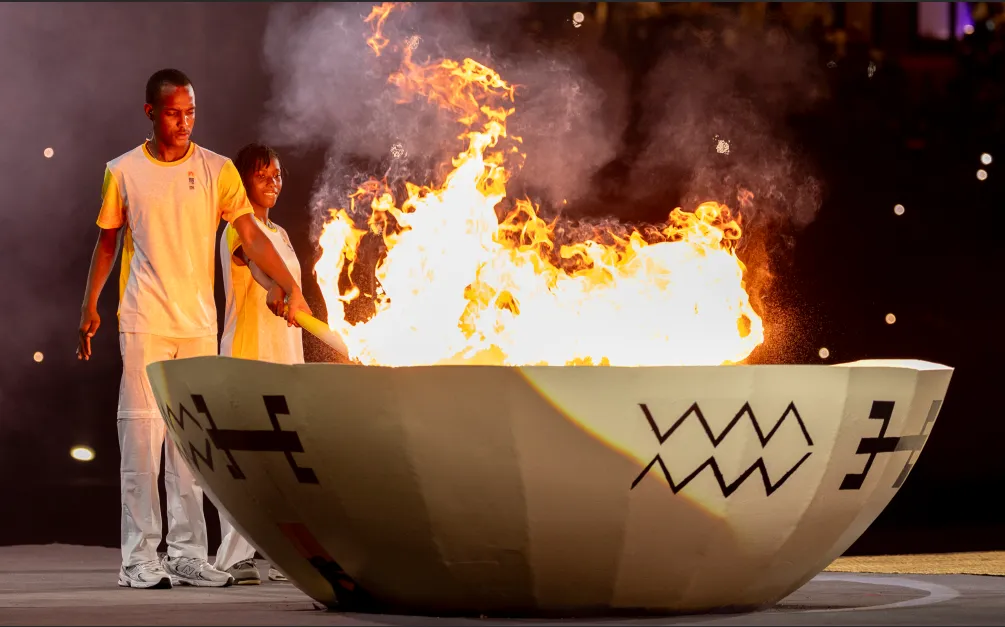
On November 13, 2026, the Joj flame was extinguished in Diamniadio, leaving the memory of a “100% success” hailed by the IOC. Senegal has proven that it knows how to welcome, organize and shine. This success now calls for a new challenge, since the country will host the 11th Francophonie Games in five years.
The “Dakar 2026” Joj marked a historic milestone for Senegal and for the entire continent. Beyond sport, they demonstrated the country’s capacity to welcome the world, to organize a large-scale event and to mobilize its institutions, its local authorities, its youth and its populations around a common ambition. On November 12, at Diamniadio, IOC President Kirsty Coventry said it bluntly, hailing a “100% success” and affirming that “Dakar has changed the image of Africa”. This success is based on cutting-edge sports and transport infrastructures, modern equipment, strengthened organizational capacities and considerable human and technical experience. Senegal now has major assets to host major international events and assert itself as a destination for sport and culture in Africa.
This satisfaction, however, is not an end, it is a starting point. The true impact of the Joj will be measured by the sustainability of their legacy, whether it is infrastructure serving future generations, consolidated skills, new economic opportunities or youth more engaged in building their future. It is in this dynamic that “Dakar 2031” fits. On October 13, 2026, in Paris, in the middle of the Olympic Games, the Permanent Council of La Francophonie designated Senegal to host the XI Games of La Francophonie in 2031. A historic first and a new mark of confidence. The country will thus be able to capitalize on its Olympic experience to host an event that combines sport, culture, creativity and the diversity of French-speaking peoples.
“Dakar 2031” should not be a simple repetition of “Dakar 2026”. The Games of La Francophonie are not the Joj. They combine sport and culture, with athletes and artists, stadiums and stages, medals and creations. It will be necessary to enhance existing infrastructure (Dakar Arena, Léopold Sédar Senghor stadium, Abdoulaye Wade stadium, Olympic Village, Regional Express Train), develop the necessary cultural facilities and offer young athletes and artists an exceptional framework for expression, meeting and surpassing themselves. The challenge will also be to make these Games an accelerator of development, through professional training, job creation, entrepreneurship, cultural and creative industries, tourism promotion and international influence.
A new step to take
Five years is a long time and it’s short. The country will have to mobilize all its strengths and strengthen its capacities, as it did for 2026. The Games of La Francophonie must confirm this, while revealing another wealth of the country, made of cultural heritage, creativity, hospitality and the talent of its youth. Another flame is preparing to take over, that of the Francophonie, of the dialogue of cultures and of fraternity between peoples.
“Dakar 2026” will have been the demonstration of know-how. “Dakar 2031” should be its consecration. Because beyond the Games, a vision is emerging, that of a modern Senegal, attractive and open to the world, which makes its infrastructure, its youth and its talents the engines of its development.
By Samba Oumar FALL
